Kenya Unveils AI-Powered Initiative to Advance Disability Inclusion
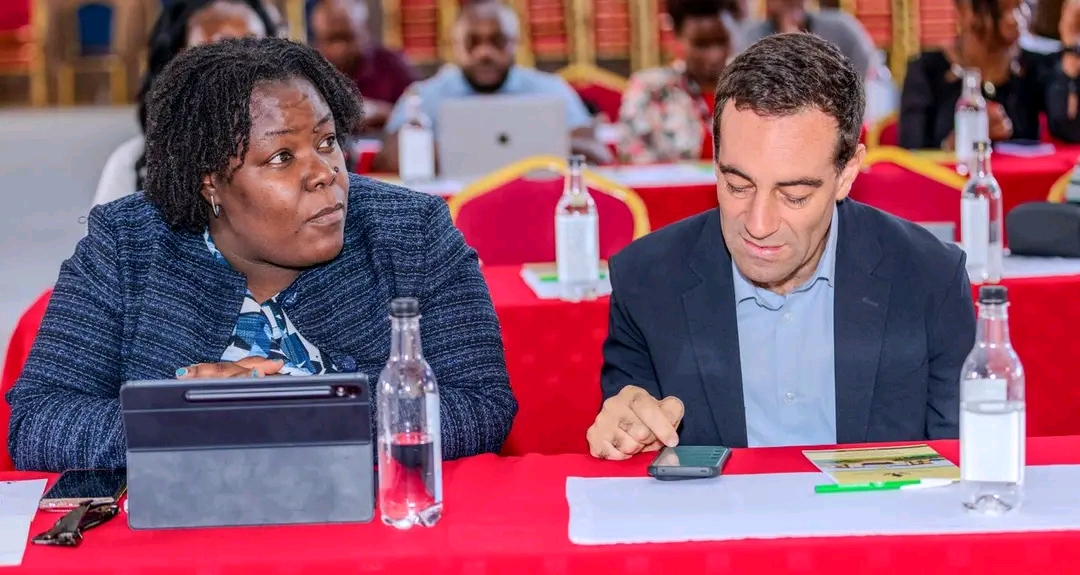
Molocyce Esther – Senior ICT Officer, Partnerships at Ministry of Information, Communications and The Digital Economy and Adam Lane, Policy and Partnerships Lead at Huawei Kenya.
Nairobi, April 24, 2026 — Kenya has stepped up efforts to harness artificial intelligence (AI) to advance disability inclusion, as government agencies, innovators and development partners unveiled progress under the Kenya AI for Disability Project during a media tour at the Kenya Institute of Special Education (KISE) in Kasarani.
The pre-launch tour offered journalists a first-hand look at how AI and Information and Communications Technology (ICT) are being integrated into assistive technologies and learning systems to expand opportunities for persons with disabilities.
The initiative, set for official launch during the Connected Africa Summit 2026, seeks to address persistent barriers to education, employment and entrepreneurship faced by persons with disabilities, amid estimates that only about one per cent of adults in this group are in formal employment.
Speaking during the tour, KISE Director Dr. Norman Kiogora said the institution is positioning itself at the centre of inclusive innovation by ensuring emerging technologies respond to real societal needs.
“Today, we opened our doors not only to showcase the work of KISE, but also to demonstrate our growing commitment to inclusive innovation that ensures persons with disabilities are not left behind in the digital age,” he said.
He noted that limited access to education, assistive technologies and economic opportunities continues to hinder many Kenyans with disabilities, underscoring the need for targeted interventions.
“Our responsibility is to ensure that technology responds to real needs and creates meaningful inclusion,” he added.
Dr. Kiogora highlighted that partnerships with key stakeholders, including Huawei, Assistive Technologies for Disability Trust (AT4D) and UNESCO, have already yielded tangible results through an AI hackathon launched in 2024.
“Those ideas have now matured beyond the concept stage, and the next step is to scale them into a fully resourced programme that delivers tangible impact,” he said.
He further revealed that KISE is investing in local production of assistive devices using AI and advanced manufacturing technologies to ensure affordability and accessibility.
“This will enable us to create scalable, affordable and context-specific devices that expand independence, learning and opportunity for persons with disabilities,” he said.
The Ministry of Information, Communications and the Digital Economy reaffirmed government support for the initiative, describing AI as a critical driver of inclusive development.
Senior ICT Officer for Partnerships Molocyce Esther said disability inclusion must be central to Kenya’s digital transformation agenda.
“Artificial Intelligence is a powerful driver of inclusivity, and we cannot have a serious conversation about inclusion without placing persons with disabilities at the centre,” she said.
She noted that the KISE model demonstrates how technology can be effectively integrated into disability support systems to improve livelihoods.
“This project is both timely and necessary. Kenya needs more facilities, programmes and partnerships that apply innovation to solve social challenges,” she added.
Esther said emerging predictive technologies have the potential to revolutionise disability support systems.
“We have moved from talking about being proactive to now talking about being predictive, and that is the promise of AI. This has the potential to be a true game changer,” she said.
Private sector partners also underscored the importance of inclusive innovation. Huawei’s Policy and Partnerships Lead Adam Lane said disability inclusion should be treated as a mainstream societal priority.
“Disability inclusion is not a niche issue, it is a mainstream societal issue,” he said.
Lane added that AI presents an opportunity to move beyond standardised solutions to more personalised tools.
“The real value of technology lies in its ability to adapt, learn and respond to individual needs,” he said.
He reaffirmed Huawei’s long-term commitment to Kenya through its Tech4All initiative.
“We are proud to partner on a programme focused not only on education, but also on jobs, livelihoods and incomes,” he said.
Other partners echoed the need for locally relevant and accessible innovations. Qhala Chief Executive Officer Shikoh Gitau said assistive technologies are critical to unlocking participation and dignity.
“Assistive technology is not a luxury; it is a gateway to participation, independence and dignity,” she said.
She noted that combining local expertise with emerging technologies would ensure solutions address real challenges faced by persons with disabilities.
Similarly, George Siso of in ABLE emphasised that accessibility must be embedded in every stage of technological development.
“Digital inclusion must mean everyone, including persons with disabilities,” he said.
He added that intentional design and strong partnerships are key to unlocking opportunities in education, employment and entrepreneurship.
The media tour featured demonstrations of assistive technologies, digital learning environments and ongoing innovations by local developers, alongside interactions with beneficiaries whose lives stand to be transformed through the programme.
The Kenya AI for Disability Project is expected to bring together government, industry and the disability ecosystem to scale practical solutions, positioning Kenya as a leader in inclusive digital innovation on the continent.