Civil Society Urges Binding Equity Measures Ahead of Pandemic Treaty Talks in Geneva
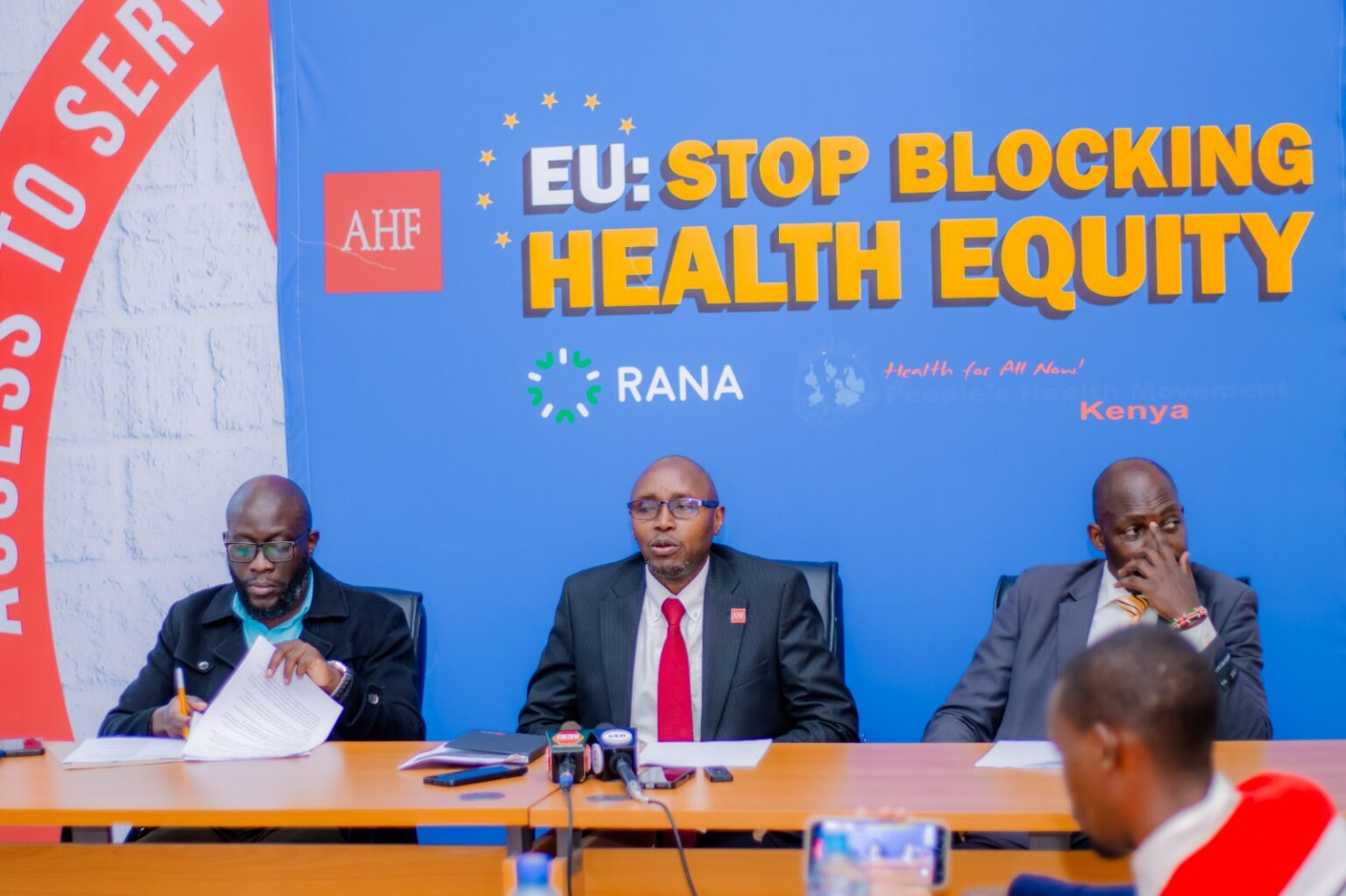
From left: Dan Otieno Owala, People’s Health Movement Kenya; Dr Kinyanjui, Country Director, AHF Kenya; and Mr. Willis Omondi, Programme Manager, Mind to Heart Community-Based Organization, during a press briefing in Nairobi on April 24, 2026, addressing the Pathogen Access and Benefit Sharing (PABS) negotiations.
Nairobi, Kenya — Civil society organisations have issued a forceful call for urgent reforms to global health governance ahead of decisive negotiations in Geneva, warning that a failure to secure binding equity measures will leave developing nations dangerously exposed to future health catastrophes.
Speaking during a high-stakes media briefing in Nairobi, Dr. Samuel Kinyanjui, Country Director of the AIDS Healthcare Foundation (AHF) Kenya, declared that the upcoming sessions in Geneva, involving 194 Member States of the World Health Organization (WHO), represent a “now or never” moment for global health justice.
“In three days’ time, the world’s eyes turn to Geneva for the final round of negotiations on the Pathogen Access and Benefit-Sharing (PABS) annex .What is decided in the next five days will determine whether we build a truly equitable global shield or merely codify the deadly failures witnessed during COVID-19.”Dr. Kinyanjui said.
The Country Director highlighted the chilling disparity of the previous pandemic, noting that while Africa accounts for 17 per cent of the global population, the continent received less than three per cent of COVID-19 vaccines during the most critical phase of the crisis.
He insisted that a “no registration, no access” rule for pathogen data must be the new global standard to ensure that any entity accessing genetic information is held accountable to the global benefit-sharing pool.
“An open-access system without accountability is a recipe for exploitation, and we must know who uses our data and what they return to the communities that provided it,” Dr. Kinyanjui added.
,Programme Manager Willis Omondi at Mind to Heart Community-Based Organization, warned that the PABS annex is currently the “weakest link” in the draft pandemic treaty.
He argued that without legally binding commitments, the Global South will remain at the mercy of “charity-based” models that have historically failed during emergencies.
“We are not asking for a favor; we are asking for a fair exchange. If we share our pathogen data with the world, the world must share the resulting life-saving products with us,” Omondi stated.
The programme manager pushed for negotiators to adopt standardized, “ready-to-use” contracts that would prevent pharmaceutical companies from bypassing their obligations once a pandemic begins.
He emphasized that these legal frameworks must be established now, rather than being deferred to a later date, to protect vulnerable populations in real-time through guaranteed product allocations.
“Contracts are the legal backbone of this system; if we leave these details for later, we surrender our only leverage and leave our people to the whims of the market,” Omondi added.
Dan Otieno Owala, National Coordinator of the People’s Health Movement Kenya, then addressed the media, framing the Geneva talks as a moral and political battleground where the value of human life is being weighed against corporate interests.
He specifically critiqued the push for a “system fee” that remains voluntary, arguing instead for a mandatory financial contribution from any commercial entity profiting from shared genetic resources.
“The PABS annex is more than a technical annex; it is a political declaration on whose life matters. It is a negotiation about who gets to survive the next pandemic and who is expected to wait,” Owala said.
The Coordinator noted that the failures of the past were not failures of scientific capability, but failures of human solidarity.
He warned against “hybrid” systems that allow industry to access data for free while keeping the resulting medicine under lock and key, insisting that true solidarity requires establishing local manufacturing hubs in Africa to ensure regional self-reliance.
“If the private sector can walk away with the science without signed contracts, we haven’t built a treaty we’ve built a permission slip for business as usual,” Owala concluded.
The weight of the upcoming Geneva talks cannot be overstated; they represent a rare opportunity to rewrite the social contract of global health.
As delegates prepare to convene, the message from Nairobi is clear: the world is watching, and for the Global South, a treaty that lacks the teeth to enforce equity is a treaty that has already failed.
The next five days in Geneva will define whether the global community chooses the path of collective safety or remains trapped in a cycle of avoidable tragedy.