Storytelling Takes Centre Stage in Africa’s Social Change Agenda
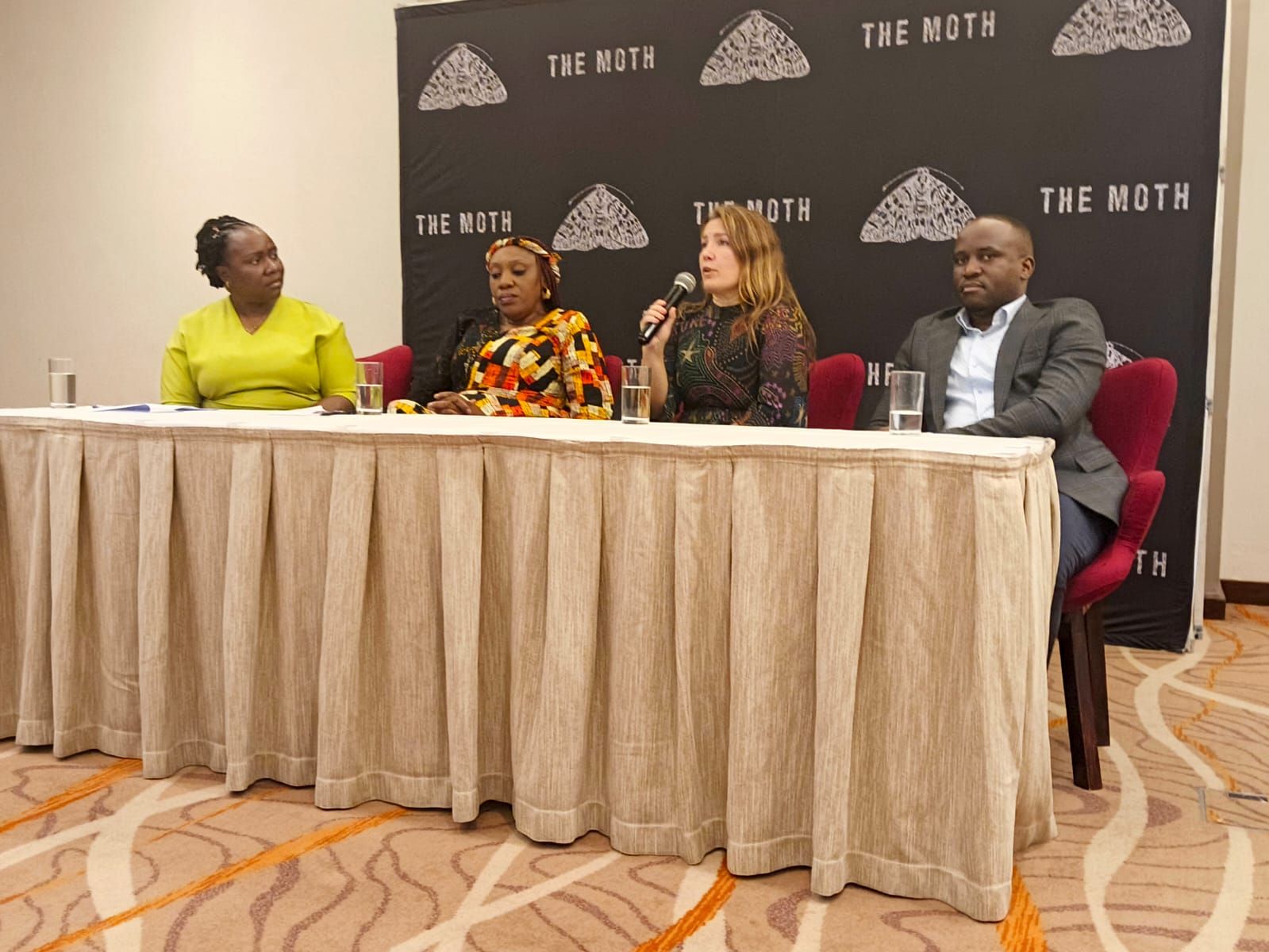
Kenyan storyteller Maureen Amakabane (left), Nigerian gender rights advocate Caroline Onwuezobe (second left), Executive Producer of The Moth Sarah Austin Jenness (second right), and Ugandan innovator Brian Turyabagye (right) during a storytelling forum in Nairobi on Friday, October 31, 2025.
Storytelling, one of Africa’s oldest traditions, is being reimagined as a transformative tool connecting communities, inspiring empathy, and shaping policies across the continent. Once confined to firesides and village gatherings, storytelling now drives conversations on gender, health, and human rights in Kenya and beyond.
At the forefront of this growing movement is The Moth, a global nonprofit arts organization that has spent nearly three decades training storytellers to use personal narratives as instruments of change.
Speaking during a storytelling forum in Nairobi, The Moth Executive Producer Sarah Austin Jenness said storytelling remains one of the most powerful ways to shift perspectives and inspire understanding.
“When people tell their truths, no one can tell them they’re wrong, emotion transcends argument. I’ve seen stories change hearts and even move policies.” She said.
She cited examples such as Kenyan activist Rosalind Orwa, whose story on widowhood inspired a 2022 United Nations resolution to protect widows from discrimination, and Indian advocate Masuma Ranalvi, whose storytelling helped mobilize a global campaign against female genital mutilation.
Jenness emphasized that storytelling must also be ethical and emotionally safe. “No one should ever be pressured to share before they’re ready, we teach people to tell from a scar, not a wound. The process should heal, not harm.” She said.
She added that The Moth has trained over 800 storytellers from 50 countries, many of them from Africa, who are now shaping narratives around gender, health, and equality.
“Every story told is an act of courage and connection,Stories build bridges and remind us we are more alike than different.” Sarah said.
Kenyan storyteller Maureen Amakabane said storytelling remains the heartbeat of African wisdom and identity. “Our stories still have the power to move us and change lives,Even in the digital age, storytelling preserves memory and belonging.” She said.
She noted that authenticity gives a story its strength and connects people on a deeper level. “It’s not about perfection, it’s about truth and courage letting people see your humanity. Our stories are no longer just entertainment; they are bridges between pain and healing.” She said.
For Nigerian gender rights advocate Caroline Onwuezobe, storytelling turned pain into power. After attending a Moth workshop, she began using her story to create safe spaces for survivors of gender-based violence.
“Learning to craft my story gave me courage, telling my story brought healing and opened doors for others to speak and for donors to see the human impact behind the statistics.” She said.
She added that responsible storytelling ensures dignity and prevents retraumatization. “We help storytellers share only what they’re comfortable with and protect them from backlash. It’s about empowerment, not exposure.” Caroline said.
Ugandan innovator Brian Turyabagye said storytelling has helped him connect his innovation work to humanity.
“Through storytelling, I connect my work to real lives, what began as a business idea evolved into a project that now saves children from pneumonia.” He said.
He added that vulnerability helps audiences connect deeply. “When people see your imperfections and courage, they see themselves, Africa’s future lies in reclaiming authenticity and telling lived experiences that humanize statistics.” He said.
Jenness said that while digital platforms have made storytelling more accessible, live storytelling remains unmatched in its power to move people.
As storytelling gains renewed relevance, it continues to unite Africa’s diverse voices under one human thread truth. By reclaiming their stories, Africans are not only preserving culture but also rewriting narratives of power, resilience, and change for generations to come.