
Kenya Targets Circular Labour Migration to Boost Skills, Safeguard Workers, and Grow Investments
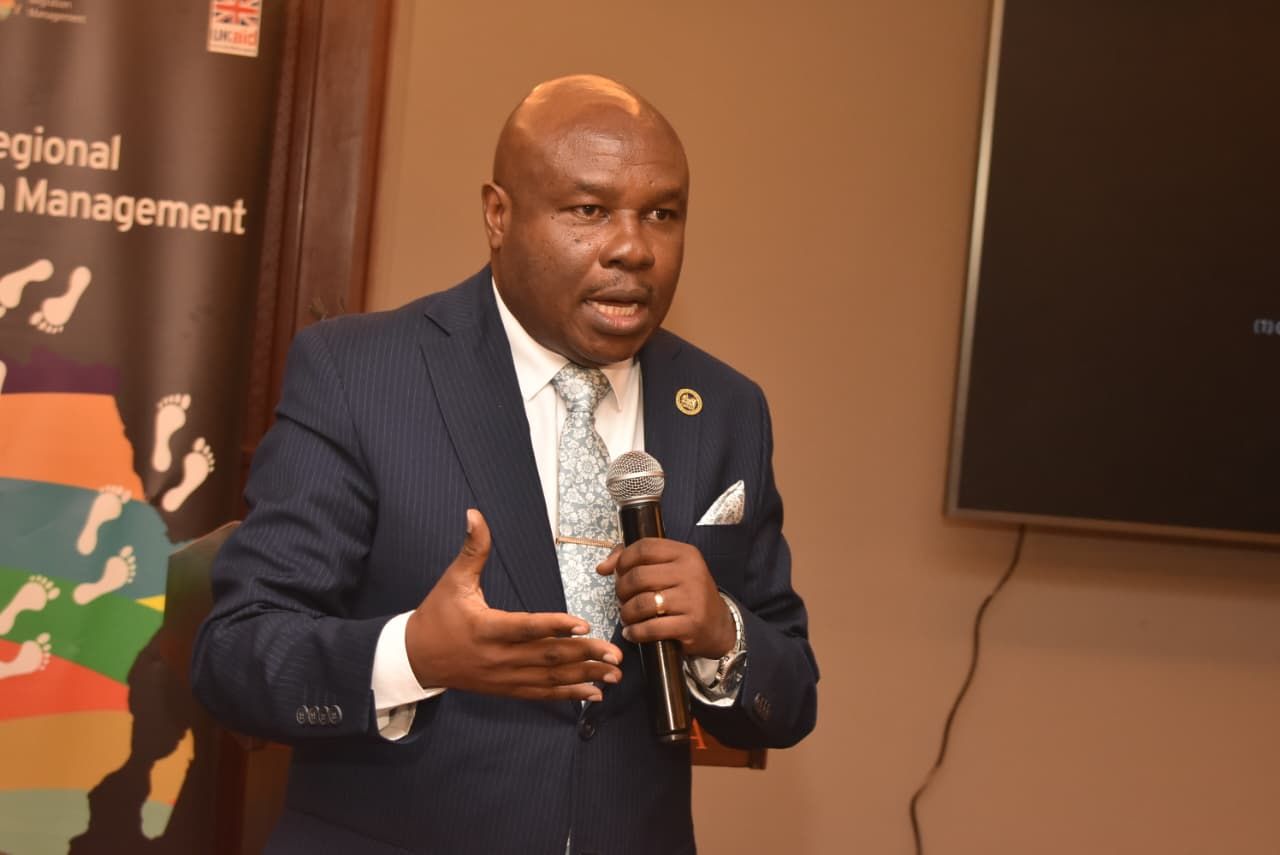
Labour and Skills Development Principal Secretary Shadrack Mwadime speaks to journalists during a media briefing on improving migration reporting at a Nairobi hotel on September 23, 2025.
The government has reiterated its pledge to expand structured labour migration as a key driver of economic growth, aiming to create more opportunities for young people, protect Kenyans working abroad, and channel diaspora remittances into productive investments at home.
Labour and Skills Development Principal Secretary Shadrack Mwadime said during a media briefing in Nairobi that Kenya’s approach centres on circular migration, where citizens take up temporary jobs overseas, gain technical expertise and savings, and later return to invest in the local economy.
“We don’t want permanent migration. We want our youth to go, learn advanced technologies, save, and return as investors. Savings equal investment,” Mr. Mwadime explained, calling Kenyans abroad “economic soldiers” expected to bring back both capital and knowledge.
The PS stressed that migration should be treated as an economic strategy rather than a political debate, noting that 75 percent of Kenya’s population is under 35 an advantage that ageing economies in the West cannot match.
He pointed to China and South Korea as examples of nations that transformed their economies by sending workers and students abroad decades ago.
“China invested in sending its youth to Ivy League universities 40 years ago, while South Korea sent workers to Japan and Germany. Today both countries are global competitors. Kenya must take a similar path,” he said.
According to the PS, diaspora remittances rose to USD 5 billion (around Sh600 billion) in 2024, up from USD 4.3 billion the previous year, representing five percent of national savings.
“If we doubled this to 10 percent, it would equal a quarter of our national budget. That is why structured migration is not optional; it is strategic,” he emphasised.
To maximise these inflows, the government is rolling out diaspora bonds, tax incentives and targeted investment products to encourage Kenyans abroad to put their money into local ventures.
“Our responsibility is to guarantee a high return on investment so that Kenyans abroad choose to invest at home rather than in host countries,” Mr. Mwadime noted.
He added that Kenya continues to secure bilateral labour agreements (BLAs) to safeguard workers’ rights.
“Kenya is the only country in Africa that has signed a BLA with Germany and Brazil. We also have agreements with Austria and the UK on health workers. These agreements are not limited to domestic workers but also cover skilled professionals,” he explained.
On concerns over brain drain, Mr. Mwadime maintained that labour migration should be seen as a source of brain gain.
“When our young people return with skills and technology from advanced economies, they strengthen our industries. Migration is not a loss; it is an investment in knowledge transfer,” he said.
International Labour Organization (ILO) Chief Technical Advisor Aida Awel urged journalists to adopt a balanced narrative on migration by covering both its opportunities and risks.
“Migration is often portrayed negatively, focusing only on abuse cases. Yet in 2024, remittances to Kenya surpassed tea and tourism earnings, reaching nearly Sh600 billion. Migration is a lifeline for families and a driver of growth,” Ms. Awel observed.
She warned that migrant workers are still vulnerable to forced labour, debt bondage, racism, and exploitation, especially where recruitment agencies remain unregulated.
“Abuse often begins at home when workers are overcharged before departure. Once indebted, they are trapped in exploitative jobs abroad,” she said.
Ms. Awel commended Kenya for ratifying ILO Conventions 97 and 143 and for advancing African Union and East African Community migration frameworks, but underscored the need for full implementation.
“Kenya is taking the lead in structured migration, but policies must translate into real protection for workers,” she emphasised.
ILO Communications Officer Yonas Berhane introduced a new media toolkit developed in partnership with the International Federation of Journalists to help reporters cover migration ethically and accurately.
“Studies show migrants boost GDP, create jobs, and pay more in taxes than they consume. Unfortunately, negative stereotypes dominate coverage. Journalists must therefore highlight both the challenges and the contributions of migrants,” Mr. Berhane said.
He called on reporters to avoid sensational headlines and to respect the dignity and voices of migrant workers in their stories.
The briefing highlighted the need for a carefully managed migration system that protects workers, increases remittances, and channels diaspora savings into Kenya’s development. The country’s strategy is built on circular migration—sending workers abroad to acquire skills and capital, shielding them while they are overseas, and enabling their return to invest in the nation’s future.