Govt Moves to Ease Tax Burden as Agriculture Sector Flags Rising Costs

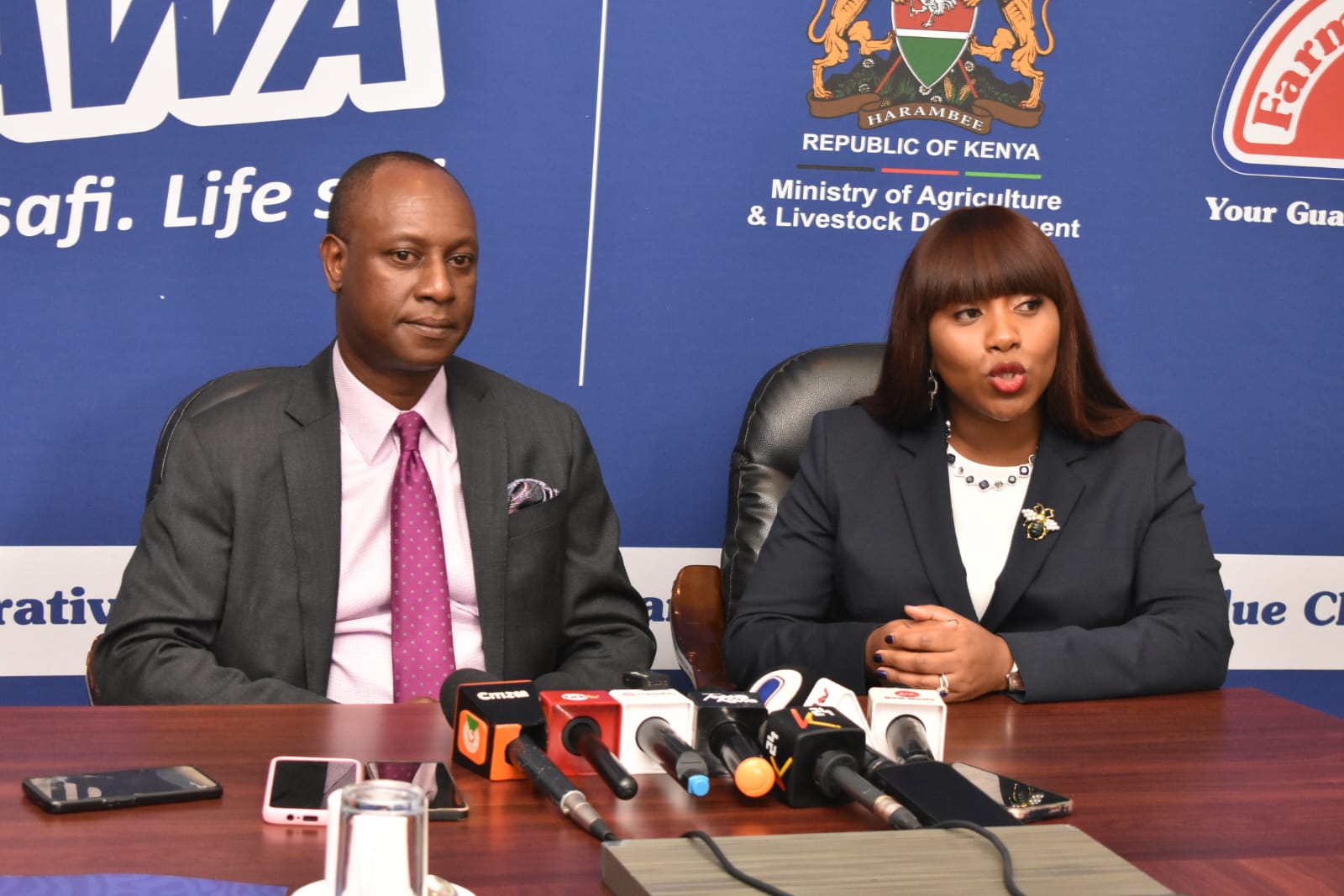
Agriculture Cabinet Secretary Mutahi Kagwe addresses stakeholders during a high-level meeting on reducing production costs and reviewing taxes in Nairobi on 18th November 2025.
Agriculture Cabinet Secretary Mutahi Kagwe on Monday led a high-level engagement with agricultural sector representatives to address rising production costs, regulatory bottlenecks, and taxation challenges while safeguarding Kenya’s competitiveness across value chains.
The breakfast meeting brought together key government officials, including Treasury Principal Secretary Dr. Chris Kiptoo, Agriculture Principal Secretary Dr. Paul Ronoh, Livestock Development Principal Secretary Jonathan Mueke, and Kenya Revenue Authority Commissioner for Micro and Small Taxpayers George Obell. The session aimed to consolidate sector proposals ahead of the upcoming budget cycle and tackle longstanding concerns around taxes, compliance burdens, and operational costs.
Opening the dialogue, CS Kagwe emphasized that the government’s priority is to ensure farmers earn more from their labour, with regulations that support rather than hinder productivity.
“We are here to understand the current situation and what changes will genuinely raise farmer incomes, if a regulator charges a levy, there must be a corresponding service. If no service is provided, it makes no sense to charge.” He said.
He urged value chain actors to present clear, actionable proposals rather than long histories, balancing sector needs with government revenue requirements.
“If something is to be removed, show us how its impact will be recovered elsewhere,” Kagwe added.
Agriculture PS Dr. Paul Ronoh affirmed the ministry’s commitment to improving efficiency across value chains but acknowledged that rising regulatory charges have hindered sector growth. He highlighted challenges such as fertiliser blending issues, inconsistent input taxation, and barriers affecting seedling propagation and extension support.
“The issues raised here are not new, and many are already under review, our commitment is to align all agricultural interventions to lower production costs and strengthen farmer-linked value chains.” Ronoh said.
Ronoh further noted gaps in the supply of certified seedlings, particularly in coffee, and outlined plans to expand seed production through research institutions. He also supported integrating private sector distributors into subsidized fertiliser distribution to improve reach and accountability.
Livestock PS Jonathan Mueke raised concerns from pastoral and livestock-exporting communities over exit point charges, port fees, and new tax classifications affecting sourcing and aggregation.
“Livestock producers and exporters face layers of charges that undermine their margins,” Mueke said.
He added that dairy processors are also burdened by high packaging taxes, costly regulatory fees, and compliance obligations under new tax systems.
Sector representatives cited unpredictable VAT changes on inputs, rising levies, and high packaging costs especially kraft paper taxed at 25% excise duty. They warned that over-taxation of formal producers pushes consumers toward the informal market, raising food safety risks and affecting government revenue.
Tea, dairy, horticulture, macadamia, and grain stakeholders highlighted escalating county cess fees, inspections, and turnover-based levies that increase the cost of doing business.
Treasury PS Dr. Chris Kiptoo acknowledged the challenges but stressed that any policy changes must consider Kenya’s tight fiscal space.
“Revenues have grown, but expenditures have grown faster . The Treasury must balance support for agriculture with national financial stability.” He said.
Kiptoo said Kenya incurs over Sh500 billion annually in tax expenditures, some of which may require review to plug revenue leakages.
He pledged a coordinated review of all regulatory levies to assess value for money and reduce or restructure charges where possible. On VAT refund delays, he said the Treasury is exploring a one-off allocation to clear pending refunds.
KRA Commissioner George Obell assured farmers that smallholders earning below the taxable threshold are not required to pay income tax.
“Taxes are paid on income. If a farmer has not made taxable income, they should not be worried,” he said.
Obell added that KRA would intensify nationwide sensitisation on tax compliance and explore alternatives to direct enforcement that push farmers into informal channels.
CS Kagwe closed the meeting by calling for structured follow-up engagements and urging incremental increases in agriculture funding.
“Agriculture remains the backbone of the economy and must be supported through predictable, transparent, and fair regulation .Let us refine these proposals and move from discussion to action.” He said.