Africa’s First Reparations Festival to Debut in Nairobi
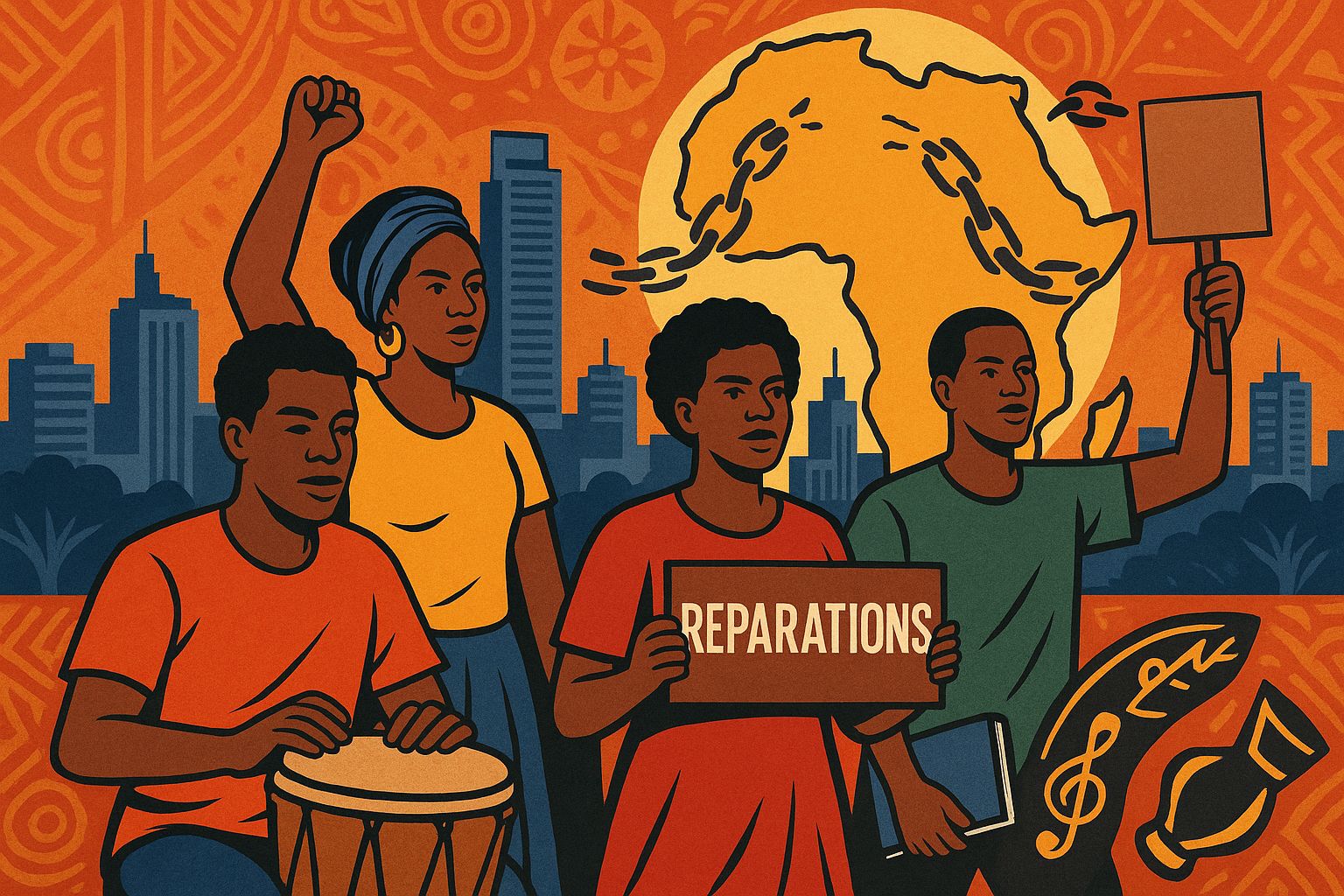
Illustration symbolising the upcoming Wakati Wetu Festival, Africa’s first reparations gathering set for Nairobi on October 22–23.
African Futures Lab, Baraza Media Lab, the African Union’s Economic, Social and Cultural Council (ECOSOCC) and Reform Initiatives today launched the Wakati Wetu Festival, Africa’s first reparations gathering, set to be held in Nairobi on October 22–23 to push for justice, healing and reclamation of the continent’s future.
The two-day event, themed “It’s Our Time – To Resist, Repair and Reclaim”, will take place at the Entim Sidai wellness sanctuary in Karen. It will bring together artists, activists, policymakers and scholars from Africa and the diaspora to shift reparations debates from closed policy circles into the public imagination through cultural expression and dialogue.
Speaking during the festival launch, Dr Liliane Umubyeyi, Co-Founder of the African Futures Lab, said the event aims to elevate and socialise the reparations discourse in Africa.
“Climate change, debt crisis, forced migration, and widening inequalities are not disconnected phenomena; they are contemporary expressions of a global system of racial domination that remains structurally intact,” she said.
Mr William Carew, Head of Secretariat of the AU Economic, Social and Cultural Council (ECOSOCC), echoed the sentiments, describing the festival as a unique platform for engagement.
“The Wakati Wetu festival is unprecedented for many reasons. Primarily, it provides a space for multi-sectoral interaction among policymakers, civil society, cultural actors, and ordinary Africans. As the civil society organ of the AU, we see this as part of the journey to achieve the Africa we want,” he stated.
The AU’s declaration of a reparations decade was the culmination of years of advocacy by African leaders, member states and civil society organisations.
It also comes at a time when Western leaders continue to resist the issue. Earlier this year, former US President Donald Trump dismissed reparations, saying he “doesn’t see it happening,” while many European governments have opposed even discussing it.
Against this backdrop, Nairobi’s hosting of the festival is viewed as a counter-narrative to external resistance. Organisers say it will showcase African cultural strength while pressing for accountability from global systems that continue to undermine the continent’s sovereignty.
“This year’s event is just the opener. The campaign for justice, healing and accountability will continue until it is resolved. We are calling on all Africans and people of African descent who believe in total liberation to join us,” Dr Umubyeyi added.
The programme will be structured around three guiding pillars: Resist ongoing systems of exploitation and racial violence; Repair the damage caused by slavery, colonialism and exploitation; and Reclaim African heritage, identity and cultural artefacts.
To achieve this, the organisers have curated a mix of activities described as “edutainment” education meeting entertainment. They include live concerts, theatre performances, film screenings with filmmaker Q&As, exhibitions, street art demonstrations, roundtable discussions, and healing sessions led by African practitioners. Dedicated storytelling spaces will also provide opportunities for intergenerational sharing and radical imagination.
Artists are expected to play a central role in shaping the mood and narrative of the festival. “Art can shine a spotlight on truth, create moments of joy, or inspire us to act. In times like these, we need to empower artists like never before,” said Tim Jones, founder of Artscape, a supporting partner.
The festival also aims to broaden participation in reparations debates beyond academics and policymakers, targeting youth, feminists, climate justice advocates, diaspora communities, and grassroots activists. By designing for diversity, organisers hope to make the reparations movement personal, urgent and inclusive.
Beyond this year’s edition, the conveners plan to establish a Reparative Justice Biennale every two years through 2035 to deepen connections and sustain momentum alongside the AU’s Decade of Reparations. The long-term vision is to strengthen alliances between Africa and its diaspora, proving that art, activism and scholarship can unite to drive transformation.
For Nairobi, the festival underscores the city’s growing role as a hub of African creativity, activism and cultural diplomacy. Known for its vibrant civil society and thriving art scene, the capital offers what organisers call “a stage where policy papers meet street art, and where Africans see themselves fully represented.”
The Wakati Wetu Festival promises to be more than a cultural event. Organisers say it will be a rallying point for a continent determined to heal and reimagine its future. As the slogan declares: Our stories matter. Our time is now.