Kenya Hosts Africa Climate Investment Summit to Unlock Green Finance
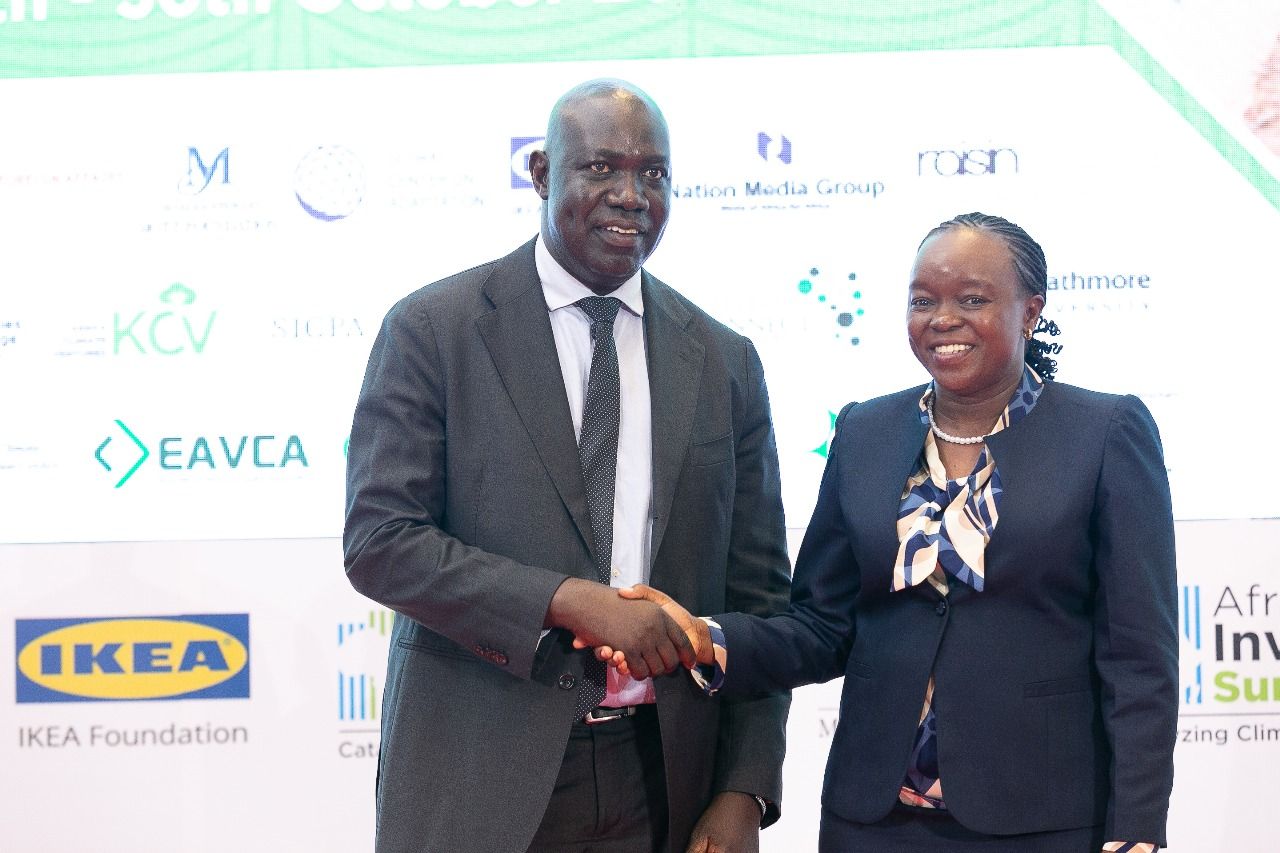
Cabinet Secretary for Environment, Climate Change and Forestry, Hon. Dr. Deborah Mlonga Barasa (right), and Kenya Climate Innovation Centre CEO Joseph Murabula(left) stand together during the opening of the Africa Climate Investment Summit 2025 in Nairobi.
Kenya has reaffirmed its leadership in driving Africa’s green growth agenda as it hosted the Africa Climate Investment Summit (ACIS) 2025 at The Edge Convention Centre, Nairobi. The three-day continental forum, convened by the Kenya Climate Innovation Centre (KCIC), brought together policymakers, financiers, innovators, and development partners to mobilize capital and scale up climate-smart enterprises across Africa.
The summit, themed “Unlocking African Investments into the Green Economy,” seeks to accelerate climate finance through innovation, partnership, and policy alignment. Over 100 senior decision-makers, ministers, and ambassadors from across Africa attended the opening ceremony, signalling a strong continental commitment to financing Africa’s climate transition.
Speaking during the opening ceremony, Cabinet Secretary for Environment, Climate Change and Forestry, Hon. Dr. Deborah Mlonga Barasa, said Kenya is positioning itself as Africa’s green hub through robust policy frameworks and investment incentives.
“On behalf of the Government of Kenya, I welcome you all to NairobiAfrica’s vibrant green capitalfor the second Africa Climate Investment Summit,” she said.
Dr. Barasa noted that despite Africa’s vast natural capital, climate finance remains insufficient and inequitably distributed.
“Finance has become both the key to and a barrier against climate action. Access is slow, complex, and often debt-creating, leaving Africa’s climate ambitions largely unfunded,” she said.
She outlined Kenya’s progress in building a predictable financial and regulatory environment to attract investors, highlighting the Climate Change (Carbon Trading) Regulations, 2025, and upcoming incentives for green bonds and public-private partnerships.
“Our message to the global investment community is clear: Kenya is open for green business. We have policy certainty and regulatory stability,” she affirmed.
Dr. Barasa called upon investors to look beyond outdated risk perceptions and seize Africa’s green opportunities. “Let this summit be defined not by speeches but by deals sealed, not by pledges but by projects funded. Let this be the moment we collectively close Africa’s climate finance gap,” she said before officially declaring the summit open.
KCIC Chief Executive Officer Joseph Murabula emphasized that Africa’s green transition must be driven by African institutions and investors.
“Africa’s green transition cannot rely solely on external financing. It must be powered by African institutions, entrepreneurs, and investors,” he stated.
Murabula revealed that Africa faces a $1.6 billion annual funding gap in climate investment, yet small and medium enterprises hold the potential to deliver transformative green solutions.
“By unlocking local and regional capital, we are not only addressing climate challenges but building resilient economies and livelihoods,” he said.
He announced that during the summit, two key mechanisms will be launched the Africa Climate Investment Platform, which will facilitate collaboration on investment barriers, and the Green Revolution Fund, designed to mobilize patient capital for emerging climate enterprises.
“We want to ensure that by the end of the summit, we speak as one African community, united in creating green businesses across the continent,” he added.
Murabula reaffirmed KCIC’s decade-long commitment to supporting climate-smart enterprises across Africa through partnerships with DANIDA, the EU, the World Bank, and the IKEA Foundation.
“KCIC remains committed to connecting capital with creativity and ensuring every investment supports people, the planet, and shared prosperity,” he concluded.
African Development Bank (AfDB) Division Manager for Renewable Energy, Mr. Joao Cunha, emphasized the need for affordable and patient capital to unlock Africa’s green potential.
“Africa is blessed with resources and talent, but the tragedy is that the cost of capital here is the highest in the world,” he said.
He noted that while investors in Europe or Asia pay interest rates of about 5–7 percent, African entrepreneurs face rates between 15–20 percent, alongside high collateral requirements. “We need concessional and blended finance to make green investments viable,” Cunha stated.
He said the AfDB has launched a $600 million blended finance facility to de-risk innovative business models and lower capital costs for early-stage ventures.
“We are also working with commercial banks, such as Diamond Trust Bank, to extend green credit lines that offer lower-cost, longer-tenure financing for businesses,” he said.
Cunha urged African governments to mobilize more domestic financing, including pension funds and fossil fuel subsidies, to drive the continent’s green transition.
“The resources are here, the ideas are here, the businesses are hereAfrica must finance its own transition without dependence on donations,” he asserted.
The Africa Climate Investment Summit 2025 continues through October 30, with delegates expected to adopt the Africa Climate Investment Manifesto, which will be presented at COP30 in Brazil, showcasing Africa’s unified voice on climate finance and resilience.