

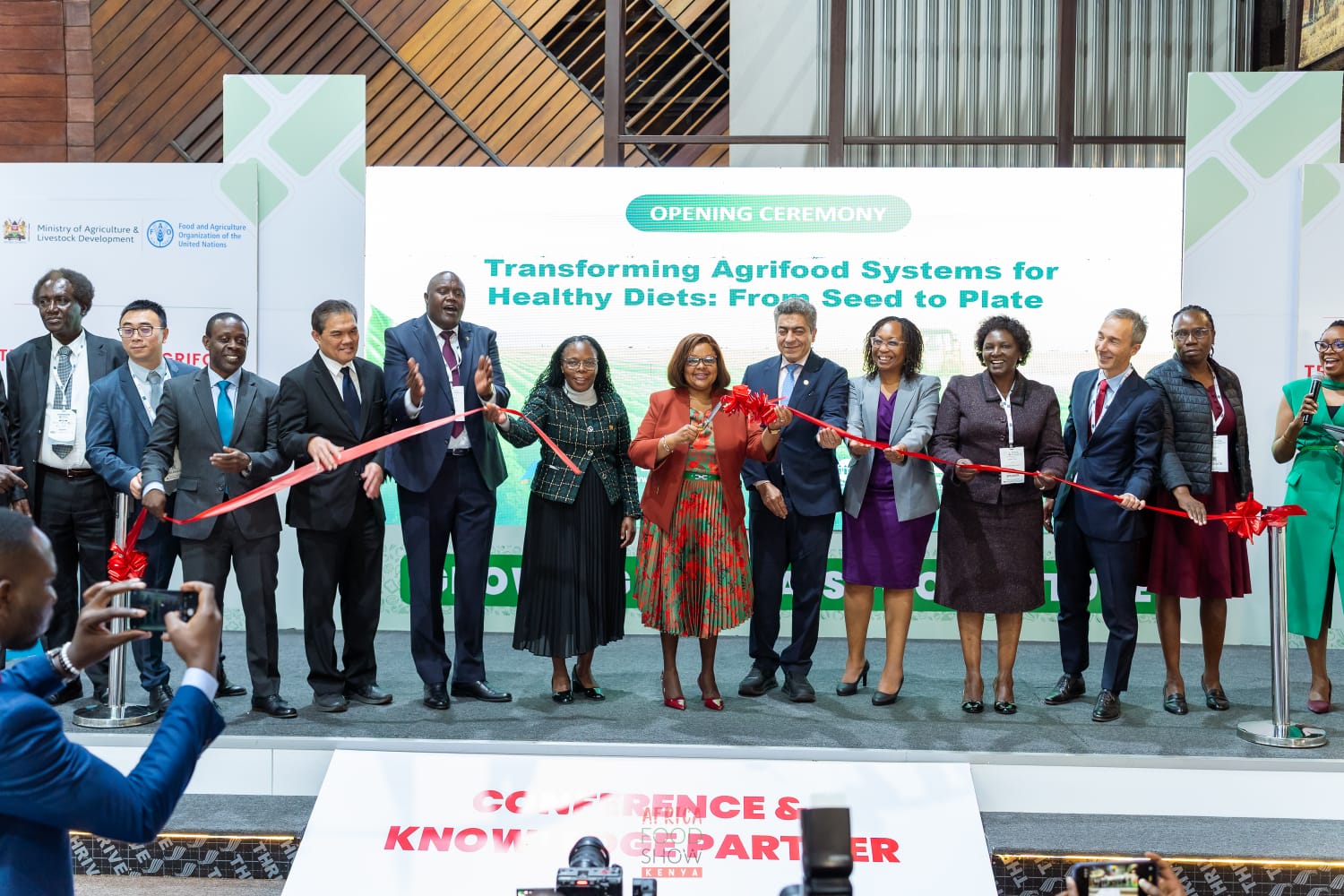
Photo Caption: Participants cut a ribbon during the opening ceremony of the Africa Food Show Kenya 2026 at the Kenyatta International Convention Centre (KICC), Nairobi, on August 20, 2026.
NAIROBI, August 20, 2026 — African agricultural stakeholders have called for reforms in financing and value-chain systems to ensure smallholder farmers and African enterprises secure a greater share of the value generated from farm to market.
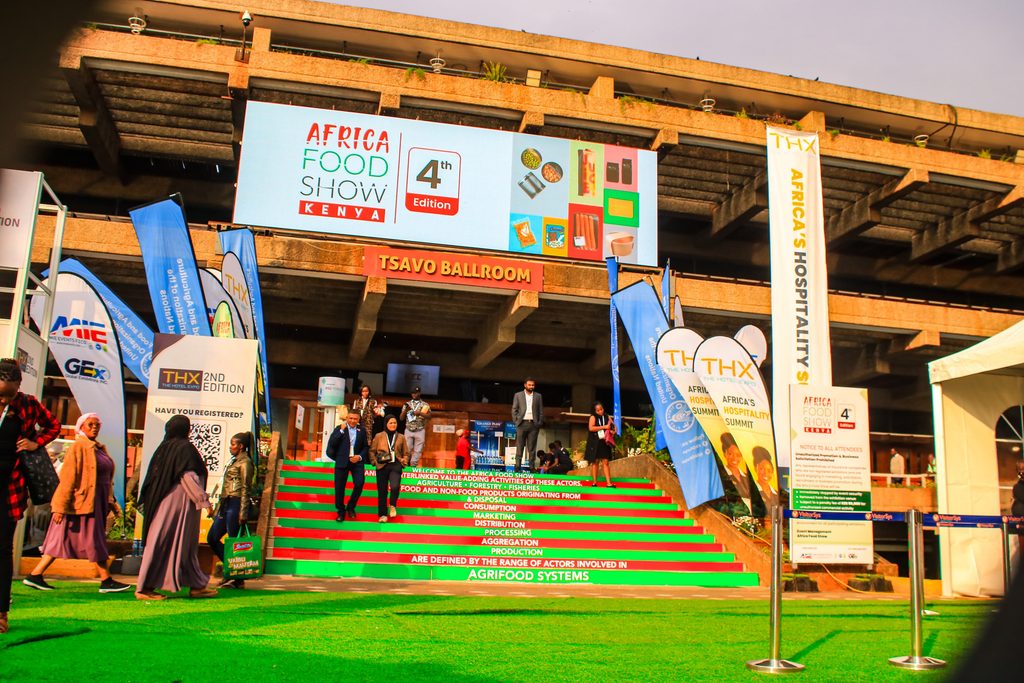
The Africa Food Show Kenya 2026, being held from August 20 to 22 at the Kenyatta International Convention Centre (KICC), brings together players in the agricultural and food sectors under the theme “Transforming Agrifood Systems for Healthy Diets: From Seed to Plate.”
Speaking during the Africa Food Show Kenya 2026 in Nairobi, GaChiku Estate Coffee Business Development Leader Lucy Njine Maina said farmers must be placed at the centre of efforts to build resilient and sustainable African food systems.
“We cannot build resilient African food systems without economically thinking about resilient producers or resilient farmers,” she said.
Njine Maina, who is also a coffee farmer from the Mount Kenya region, said farmers bear significant costs, labour and risks before agricultural products reach the market, yet often receive a limited share of the value created along the chain.
She said agricultural value begins at the farm, where producers invest land, knowledge, inputs, labour and time before their produce enters the market, making their economic resilience critical to the sustainability of the entire value chain.
Njine Maina said African countries should invest more in processing, packaging, branding, financing and market access to retain greater value within producing countries instead of relying mainly on exports of raw agricultural commodities.
She urged African producers, entrepreneurs and international partners to build partnerships that create value throughout agricultural chains, noting that international partners can contribute technology, financing, expertise, processing capacity and access to markets.
“Africa should not be viewed only as a supplier of raw materials or commodities or a destination for finished or processed goods. It should be a place where products are grown, processed, packaged, branded, financed, traded and also consumed,” she said.
Fava Herbs Chief Executive Officer and founder Francisca Ochieng’ said Africa’s agricultural financing architecture remains poorly structured for smallholder farmers and enterprises in the “missing middle”, despite their contribution to food production.
Ochieng’ noted that conventional banking requirements, including collateral, minimum loan sizes and compliance standards, often exclude farmers whose land is held under customary tenure.
“They are not invisible because they are unproductive. They’re invisible because our banking system is designed to not see that,” she said.
She said millions of farmers require financing to purchase inputs, improve storage, mechanise production and expand their enterprises, but many remain outside the formal financial system.Ochieng’ called for agricultural lending to be combined with crop insurance to protect farmers and financial institutions against climate-related risks, including drought, floods and erratic rainfall.
“When we insure the crop, we dis-risk the loan. When we dis-risk the loan, we make the farmer the lender we want to lend,” she said.
She also advocated for agricultural credit-scoring systems that use satellite yield data, mobile-money transaction histories and cooperative payment records to assess farmers’ creditworthiness where formal land titles are unavailable.
Ochieng’ said governments, financial institutions and development partners should develop financing instruments that absorb part of the risks associated with agricultural lending and encourage commercial banks to increase their exposure to the sector.
The speakers said stronger collaboration among farmers, financial institutions, governments, investors and international partners would be essential in developing inclusive agricultural value chains that enable producers and African enterprises to capture more of the value they create.
Njine Maina said shared prosperity should be viewed not only as a social objective but also as a business strategy for building stronger and more sustainable value chains.
“The bigger question becomes who owns the value,” she said.

