
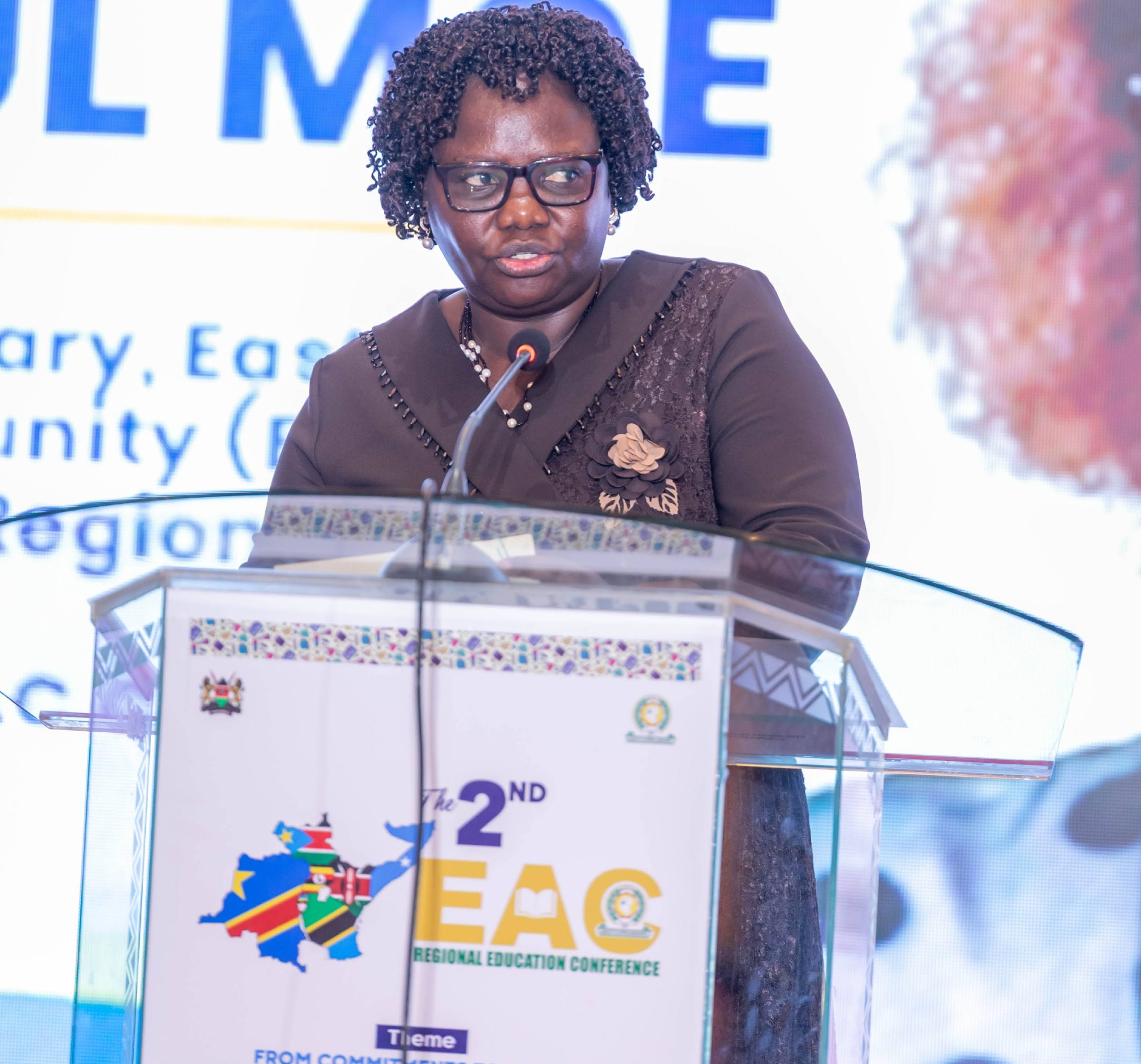
Photo Caption : Cabinet Secretary for East African Community, ASALs and Regional Development Beatrice Askul Moe speaks during the 2nd EAC Regional Conference on Education in Nairobi on August 26, 2026.
NAIROBI, August 26, 2026 — East African Community (EAC) Partner States have been urged to move beyond education policy commitments and focus on delivering measurable improvements in learning outcomes, skills development and opportunities for young people across the region.
Speaking on behalf of President William Ruto at the 2nd EAC Regional Conference on Education in Nairobi, Cabinet Secretary for East African Community, ASALs and Regional Development and Chairperson of the EAC Council of Ministers Beatrice Askul Moe said East Africa must focus on turning its education commitments into tangible results.
“Education policy must be judged not by the elegance of our policy documents, but by what a learner can know, do and access,” Askul said, stressing the need to move from commitments to implementation, results and impact at scale.
She said East Africa, with more than 300 million people and one of the youngest populations globally, must invest in education to transform its demographic strength into human capital, productivity and prosperity.
The region has made significant progress in expanding access to education, but learning outcomes remain a concern, with many learners completing years of schooling without acquiring adequate foundational literacy, numeracy and relevant competencies.
Beatrice called for stronger regional cooperation in teacher development, digital literacy and the use of technology and artificial intelligence in education, while ensuring technology complements rather than replaces teachers.
“Technology can carry information. A teacher builds a human being,” Askul said, underscoring the need for investment in teacher education, professional development and better working environments.
Partner States were also urged to make their education systems more interoperable by improving the portability of qualifications and ensuring learners are not disadvantaged when moving across borders.
Representing Education Cabinet Secretary Julius Migos Ogamba, Principal Secretary, State Department for Higher Education and Research, Ministry of Education, Dr. Beatrice Muganda Inyangala, said the conference provided an opportunity for Partner States to assess progress made since the inaugural conference held in Arusha in 2024.
She said the previous conference generated commitments on increasing budgetary resources for education to 20 per cent of GDP, improving equity and expanding access, particularly for marginalised communities, refugees and girls.
“Member states are here to share the progress that has been made so far in pursuing these targets,” Inyangala said, adding that countries would also learn from one another how to overcome challenges in implementing the commitments.
EAC Deputy Secretary General Ariik Aguer Malueth said the Community had developed regional frameworks aimed at harmonising education, strengthening skills development and facilitating mobility of qualifications and talent across the region.
“Our responsibility now is to ensure that these frameworks translate into better learning, stronger institutions, relevant skills and greater opportunities for East Africans,” Malueth said.
He identified stronger implementation, regional mobility and preparation of education systems for the future as key priorities, noting that young people would require stronger analytical, digital, creative and problem-solving skills.
The conference, themed “From Commitments to Impact,” brings together education ministers, policymakers, researchers, development partners and other stakeholders to review progress and agree on practical measures for transforming education across the region.
Delegates were urged to leave the conference with clear actions, responsibilities and measurable outcomes, with the success of regional education cooperation ultimately judged by the changes it brings to the lives of East African learners.