
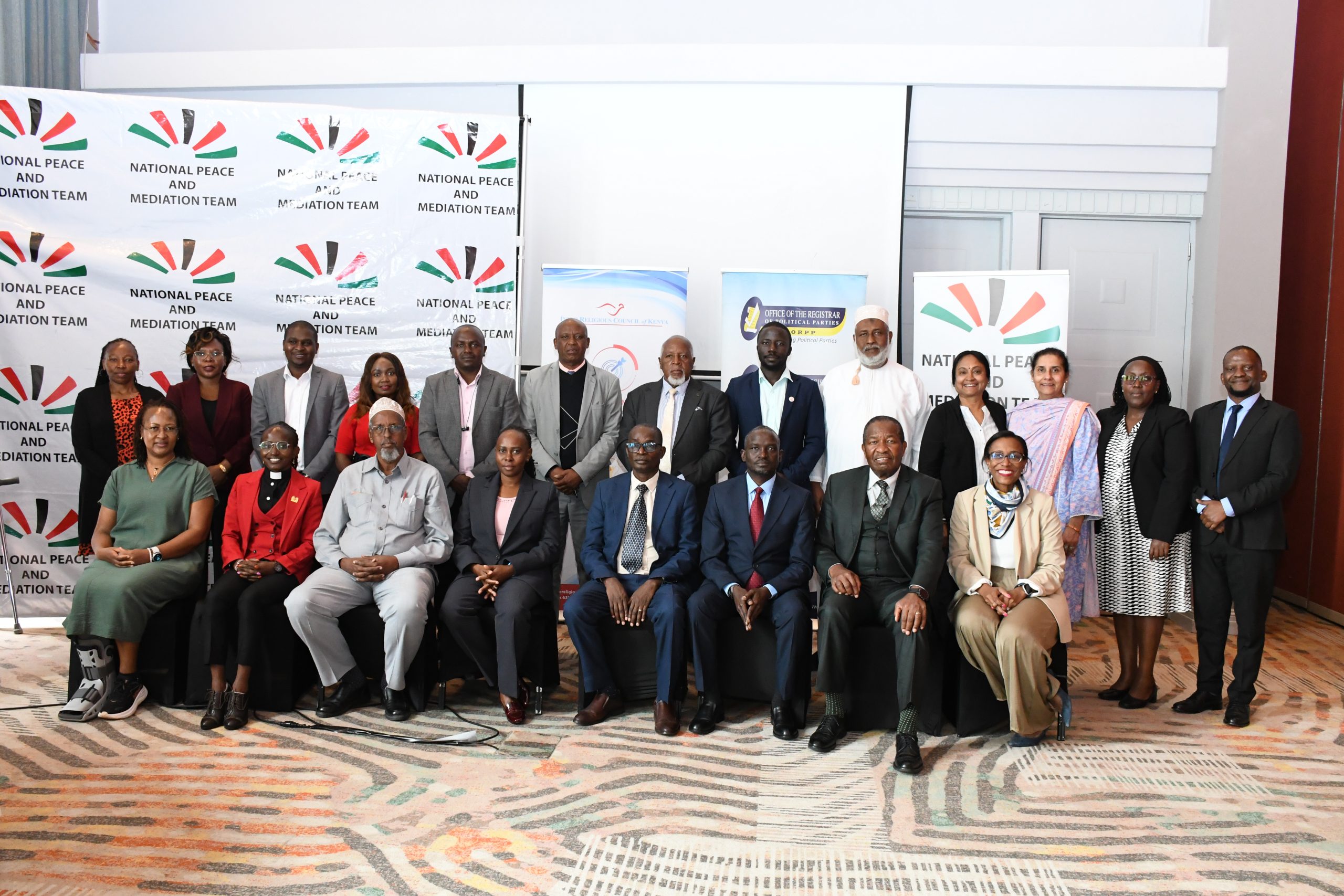
Photo Caption: from the Office of the Registrar of Political Parties (ORPP), the Inter-Religious Council of Kenya (IRCK) and the National Peace and Mediation Team pose for a group photo during a consultative meeting on peaceful, fair and inclusive party nominations ahead of the 2027 General Election in Nairobi on November 3, 2026.
NAIROBI, November 3,2026 – The Office of the Registrar of Political Parties (ORPP), religious leaders and the National Peace and Mediation Team have agreed to establish a framework for cooperation to prevent political conflicts and promote peaceful, fair and inclusive party nominations ahead of the 2027 General Election.
The agreement follows a consultative meeting involving the ORPP, religious leaders under the Inter-Religious Council of Kenya (IRCK), the National Peace and Mediation Team (NPMT) and the United Nations Kenya, which reviewed political parties’ preparedness for the August 10, 2027 elections.
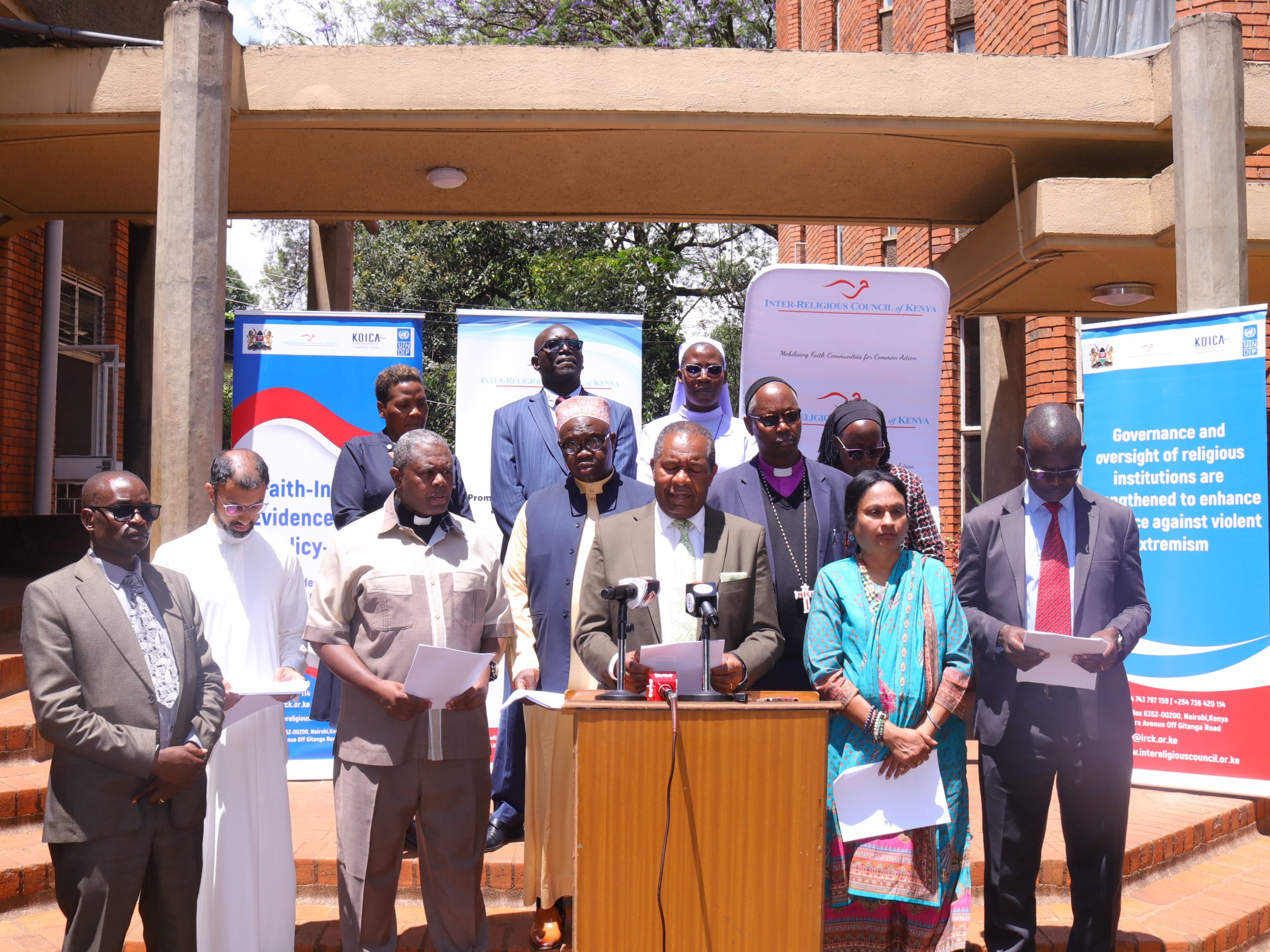
Speaking during the press briefing, Bishop Dr Geoffrey Njuguna, representing IRCK and the National Peace and Mediation Team, said party nominations had historically been among the earliest and most volatile flashpoints of the electoral cycle, requiring deliberate interventions to prevent disputes from escalating into violence.
“Preventing conflict at this stage is essential for a credible and peaceful General Election,” he said.
Njuguna noted that political parties were finalising their election and nomination rules ahead of the May 8, 2027 deadline for concluding party primaries, adding that early engagement among stakeholders was necessary to safeguard the electoral process.
He also commended Registrar of Political Parties John Cox Lorionokou and Assistant Registrar Agatha W. Wahome on completing their first year in office, particularly for issuing binding electoral timelines early and insisting on compliance with the law.
“Both parties recognised that party nominations have, in past elections, been among the earliest and most volatile flashpoints of the electoral cycle,” he said.
Registrar of Political Parties John Cox Lorionokou reaffirmed the Office’s commitment to discharging its mandate firmly, transparently and impartially, saying democratic and inclusive political parties were essential to national stability.
“The Registrar reaffirmed the Office’s commitment to discharge its mandate under the Political Parties Act firmly, transparently and even-handedly, in a way that serves all political parties and all Kenyans,” he said.
Under the proposed partnership, the ORPP, IRCK and NPMT will develop a Memorandum of Understanding (MoU) to guide their joint activities throughout the 2027 electoral cycle, with each institution appointing focal persons to coordinate implementation.
A key component will be insider mediation of party disputes, with respected religious leaders supporting dialogue between rival aspirants, factions and party organs, particularly during party primaries and coalition negotiations.
The mediation initiative will complement, rather than replace, existing internal dispute resolution mechanisms within political parties and the Political Parties Disputes Tribunal.
The institutions will also jointly convene political party leaders and secretaries-general to commit to peaceful, fair and inclusive nominations while exploring the participation of religious leaders in Political Parties Liaison Committee activities at national and county levels.
Lorionokou further defended the independence of his office amid concerns over delays in registering political parties, saying the number of registered parties had increased from 91 when he assumed office to 107 currently.
“If we were to say that parties have not been registered, I think that is not even correct in the first place because we have registered 16 in the last one year,” he said .
He explained that registration involved several legal stages, including name reservation, provisional registration and full registration, which required documentation, due diligence and the establishment of operational systems.
“There has been no intentional delay on any application of a party except by the requirements provided by the Act, which gives steps on what to do and what not to do,” he said, adding that he respected decisions of the Political Parties Disputes Tribunal as required by the rule of law.
IRCK Executive Director Linus Nthigai called on political parties to comply with the Political Parties Act, the Political Parties Code of Conduct, their respective constitutions and binding electoral timelines.
“In particular, they should conduct nominations that are free, fair and transparent and that follow their certified rules,” he said.
Nthigai further urged party leaders and aspirants to reject violence, intimidation, bribery and the recruitment of young people for political purposes, calling on them to resolve disputes through lawful channels.
“We urge party leaders and aspirants to reject violence, intimidation, bribery and the hiring of youth for political ends,” he said.
He also encouraged members of the public to verify their party membership through *509# or eCitizen, where they can register, join or resign from political parties, and participate in party processes peacefully.
The institutions further committed to sharing information on emerging political tensions with relevant agencies to facilitate early intervention and encouraging political parties to provide fair opportunities for women, youth and persons with disabilities during nominations.