
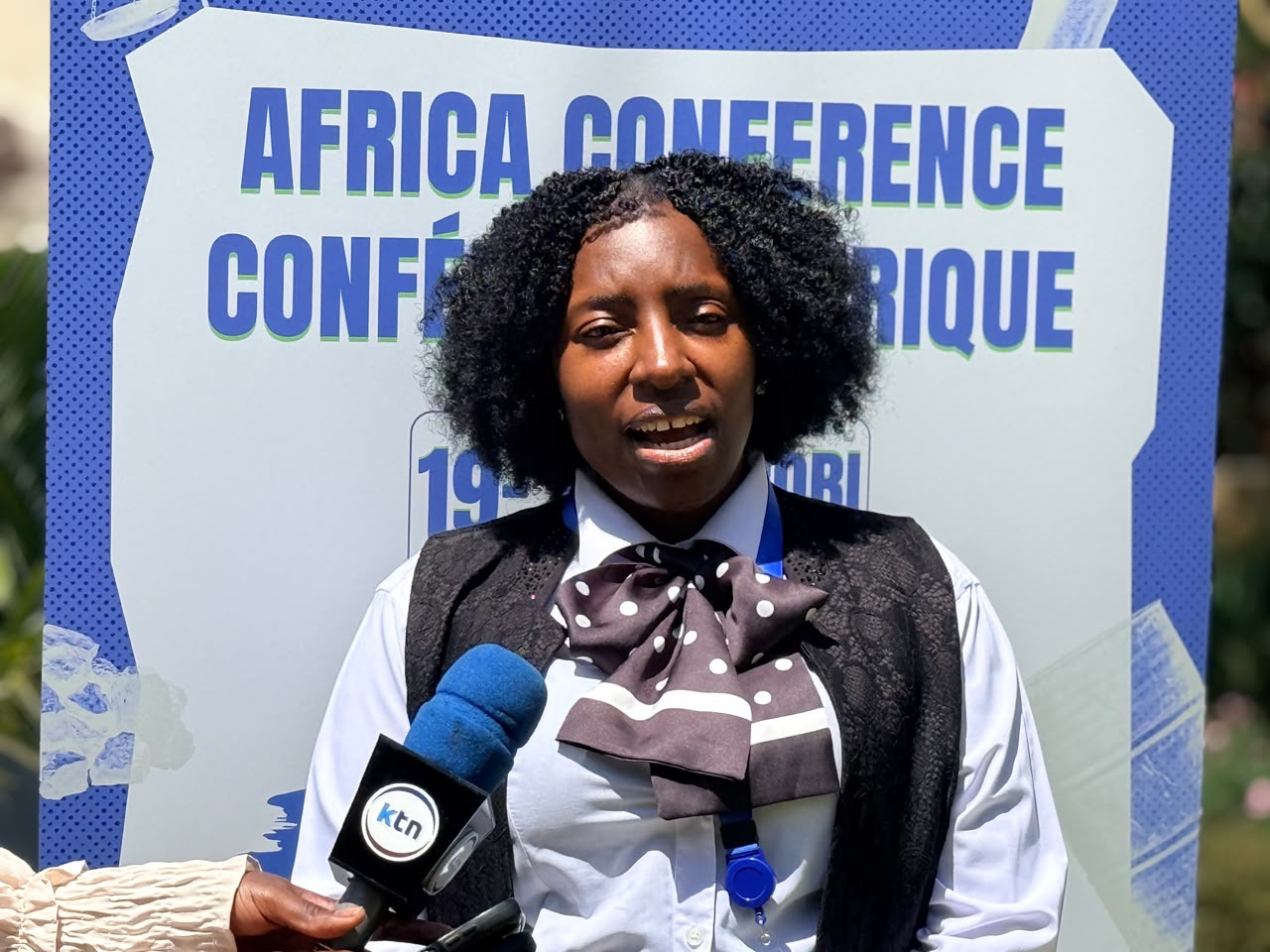
Photo Caption : Joyce Nyamukunda of the Zimbabwe Environmental Law Organisation speaks during a press briefing held on the sidelines of the Resource Justice Network Africa Conference in Nairobi.
NAIROBI, October 19, 2026 — African countries have been urged to strengthen transparency, accountability and regional cooperation in managing critical minerals to ensure local communities benefit from investments and the continent’s natural wealth.
Corruption, illicit financial flows and opaque mining agreements continue to deprive African countries of revenues that could support economic development, improve public services and advance a just energy transition.
Speaking during a press briefing at the Resource Justice Network Africa Conference in Nairobi, Joyce Nyamukunda of the Zimbabwe Environmental Law Organisation (ZELO), who also coordinates the Resource Justice Network in Zimbabwe, said communities must be empowered to participate in decisions concerning mineral extraction and the energy transition.
“What we really want to see at the end of the day is the communities benefiting. We want to see a just energy transition that benefits the communities,” Nyamukunda said.
She said governments were taking steps to improve mineral governance and attract investment, but local communities needed to benefit directly from the resulting economic activities.
Nyamukunda emphasised the importance of raising awareness among communities about their rights and their ability to influence decisions affecting their livelihoods.
She said responsible investment, legal reforms and effective implementation of existing laws were necessary to ensure communities participated meaningfully in the energy transition.
Nyamukunda also called for greater value addition and beneficiation of minerals before export, saying exporting raw materials limited opportunities for job creation and economic growth.
“What we need is to set up systems that can be able to add value to the minerals before they are exported,” she said.
She urged African countries to strengthen regional cooperation and establish mineral-processing hubs, noting that individual countries might lack the financial resources and technical expertise needed to develop such facilities independently.
Nyamukunda said collaboration among African nations would enable them to process minerals further, create employment and retain a greater share of the value generated from their natural resources.
Meanwhile, Transparency International Kenya Executive Director Sheila Masinde said Africa had failed to translate its vast mineral wealth into tangible economic benefits for its population.

“Unfortunately, we have not been able to effectively convert those minerals into tangible wealth that can drive our economies forward,” Masinde said, noting that many African countries continued to struggle with providing basic services, including healthcare, education and sanitation.
She said corruption, illicit financial flows and a lack of transparency in mining agreements between governments and companies were depriving African countries of resources that could support development.
Masinde noted that some minerals extracted in Africa were exported for processing and later returned as finished products at exorbitant prices, leaving producing countries with limited economic gains.
“We need to really strategise as citizens of Africa, as organisations, civil society and the private sector, working towards transparent and accountable governance of our mineral wealth,” she said.
Masinde called for joint advocacy and coordinated interventions to curb corruption, strengthen domestic resource mobilisation and ensure mineral revenues contributed to addressing public debt and development challenges.
She further emphasised the need for transparency in negotiations and contracts involving governments and mining companies, alongside stronger accountability in climate financing to ensure funds allocated for adaptation and mitigation were properly utilised.
Masinde said access to information and effective public participation were essential to ensuring local communities were not excluded from decisions concerning mineral resources and climate governance.
“Access to information, enhancing public participation and coming up with clear mechanisms for them to participate is key,” she said, describing communities as important custodians of mineral wealth and environmental conservation.
The two-day conference, held on October 19 and 20, brought together civil society organisations and other stakeholders to discuss strategies for improving the governance of Africa’s mineral wealth, with a focus on community participation, accountability, regional cooperation and a just energy transition.