
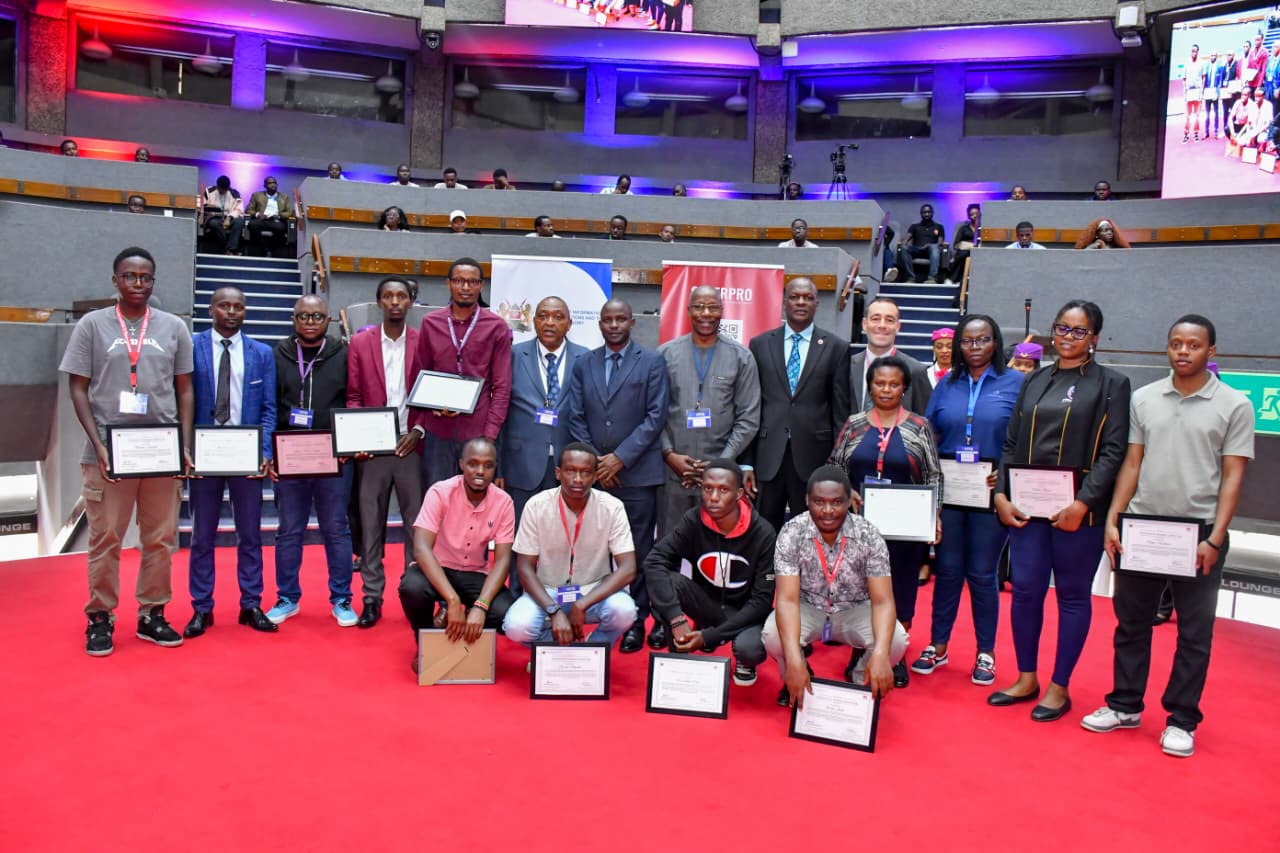
Photo Caption: Cybersecurity trainees and officials pose for a group photo after receiving certificates during the closing ceremony of Cyberweek Africa 2026 in Nairobi.
NAIROBI, October 30, 2026 – African governments and technology stakeholders have been urged to strengthen artificial intelligence (AI) governance, invest in cybersecurity skills and improve policy implementation to address emerging digital threats.
The call was made during the closing of Cyberweek Africa 2026 in Nairobi, where participants discussed the growing risks of AI-powered cyberattacks, online fraud, deepfakes and the misuse of emerging technologies.
Speaking on behalf of the Principal Secretary for Internal Security and National Administration during the closing ceremony, Principal Administrative Secretary Jacob Narengo Namulen described AI as both an opportunity and a threat, depending on how it was deployed.
“AI is a force multiplier both shield and spear. Threat intelligence is how defenders stay ahead, knowing about the attack before it strikes, so AI can help defenders detect threats in seconds or it can help attackers fake voices, craft convincing scams and target mobile money users,” he said.
Narengo warned that the rapid expansion of digital services without adequate security measures could expose African countries to increased cyber threats.
“Given preparation, AI multiplies resiliency; but given neglect, it multiplies exposure. For Africa, expanding our digital ecosystem without hardening its defences means building our future on sand,” he added.
He called for stronger implementation of the National Cybersecurity Strategy and National AI Strategy, alongside policies under development covering digital policy, cybersecurity, data governance and AI and emerging technologies.
Director of Policy and Partnership Development at Huawei Kenya Adam Lane said the company had supported cybersecurity awareness programmes in universities and technical and vocational education and training (TVET) institutions, alongside capacity-building initiatives targeting government ICT officers.
Lane said Huawei had worked with the Ministry of Information, Communications and the Digital Economy, the Office of the Data Protection Commissioner, the Ministry of Education and the State Department for TVET to reach more than 21 institutions across the country.
“Through these engagements, we have reached tens of thousands of young people to help them understand the importance of cybersecurity, how to stay safe online, protect themselves from threats and explore career opportunities in the sector,” he said.
He noted that the programmes also introduced students to training opportunities through initiatives such as the Huawei ICT Academy and Huawei ICT Competition.
Lane said approximately 130 government ICT officers had enrolled in a network security training programme, with 21 receiving certificates during the conference’s closing ceremony, while the training would continue in the following weeks.
He observed that AI was rapidly changing the cybersecurity landscape, creating new challenges for defenders while providing opportunities to strengthen responses to digital threats.
“AI makes life harder for defenders because attackers are also using it, but it presents opportunities for those of us defending systems to use the same technology to fight back,” Lane said.
During a panel discussion on AI governance, Michael Gershin, responsible for AI at the Global Council for Responsible AI and co-founder of eBasic, said accountability for AI-related harm should be shared between technology developers and users.
“AI is just a tool. The maker of the technology and the user of the technology both have responsibilities,” he said.
Gershin explained that developers needed to establish safeguards against misuse, while users required adequate training to ensure they deployed the technology responsibly.
He further distinguished AI adoption from AI readiness, noting that organisations needed ethical standards, accountability structures and mechanisms to assess the consequences of deploying AI systems.
The discussions also examined the challenges African countries face in implementing AI governance frameworks, with participants identifying inadequate funding and technical capacity as major obstacles.
Dr Martin Koyabe, Chairperson of the Board of Directors of the National Cybersecurity Agency, called for stronger collaboration between government, regulators and industry players, emphasising that trust among stakeholders was essential for effective information sharing.
He cautioned against interpreting digital sovereignty as digital isolation, urging stakeholders to strengthen cooperation in addressing cybersecurity challenges.
The four-day conference, held under the theme of cyber threat intelligence in the age of AI, brought together more than 1,200 participants from 20 countries, including representatives from government, the private sector, academia, non-governmental organisations and start-ups.
The event was led by the Ministry of Information, Communications and the Digital Economy in collaboration with the Kenya School of Government, Ministry of Interior and National Administration, National Cybersecurity Agency and the University of Nairobi, among other partners.
The opening ceremony was attended by Principal Secretary for Broadcasting and Telecommunications Stephen Isaboke, Kenya School of Government Director General Prof. Nura Mohamed and European Union Ambassador to Kenya Andreas Peschke, among other dignitaries.
During the ceremony, Peschke congratulated 19 newly certified Kenyan SIM3 cyber auditors, while Expertise France representative Tahar Benattia recognised winners of the hackathon supported by Expertise France and the European Union.
The conference also featured cybersecurity awareness sessions in 21 higher education institutions across the country ahead of the event.It concluded with participating organisations committing to actions aimed at strengthening information sharing and cooperation in tackling cyber threats across the continent.