Kenya Launches National VbE Program to Fix the ‘Moral Gap’ in Schools
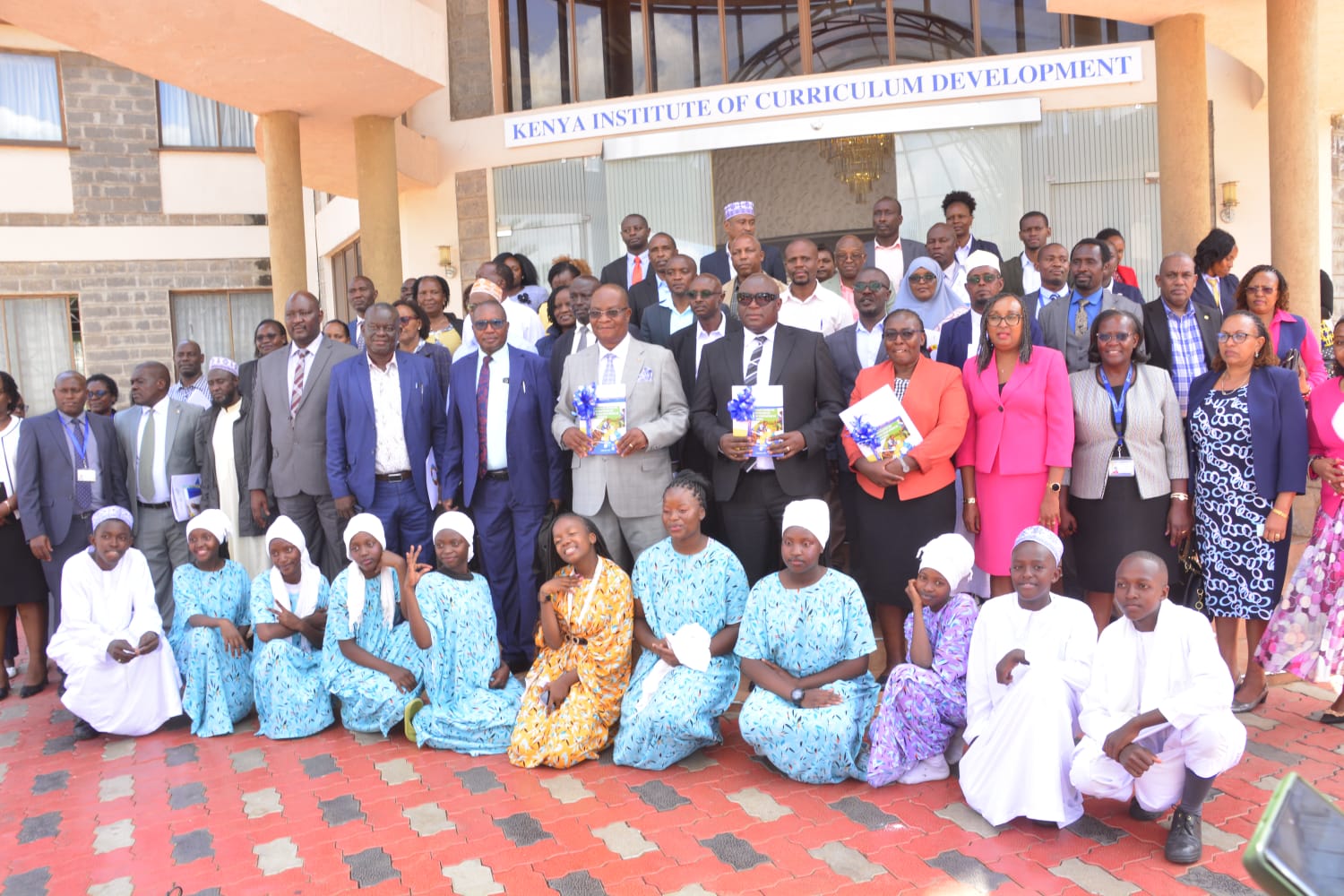
Education officials and students pose for a commemorative photo during the national launch of the Values-Based Education (VbE) programme at KICD, where new curriculum materials were unveiled to promote values and character development in schools.
NAIROBI, Kenya – The government has officially hit the “go” button on a nationwide rollout of the Values-Based Education (VbE) programme. This transition represents far more than just another routine curriculum update; it is a deliberate and strategic move to ensure that while Kenyan students are becoming academically sharp under the Competency-Based Curriculum (CBC), they are also maturing into ethical, responsible, and engaged citizens.
Spearheaded by the Kenya Institute of Curriculum Development (KICD) in a robust partnership with Mizizi Elimu Afrika, the initiative follows a highly successful pilot phase conducted in over 70 schools across 19 counties.
The results from this trial period were telling, showing notable improvements in student behaviour, ethical awareness, and a renewed community spirit. Stakeholders believe that by grounding education in character, the nation can finally begin to address the social erosion that has long challenged the country’s progress.
Driving Values in Education Reform
Speaking during the national launch, Fred Haga who represented the Principal Secretary for Basic Education described the move as a defining turning point for the nation’s future. He noted that the primary goal of the Ministry is to move beyond the production of certificates and instead focus on the quality of the person holding them.
“What we are doing today may appear like a small step, but it is a giant leap for this country as we begin to breathe life into one of the most critical components of our education system by focusing on the values that define responsible citizenship,” Haga said.
Haga emphasized that the ministry is fully committed to an education system that doesn’t just produce workers, but humans who can navigate modern social challenges with integrity. He underscored the government’s belief that for a country to thrive, its education system must prioritize the heart and the conscience as much as it does the intellect.
“This is not just the responsibility of teachers or education officers, but it is the responsibility of all of us including parents, communities, and partners to ensure that we work together to realise the full benefits of values-based education,” he added.
Embedding Values Across Schools
The program moves away from the outdated idea that “values” are just a subject to be tested or a chapter to be memorized for an exam. Instead, it adopts a comprehensive Whole-School Approach where ethics are woven into the very fabric of the school environment, from classroom teaching and daily lessons to the school culture found on the playground and in the principal’s office.
Director of Quality Assurance, Violet Mundia,who represented the Director General, Elyas Abdi Jillaow noted that this inclusive and collaborative style is exactly what the CBC was originally designed to achieve.
“The successful implementation of the pilot programme is a clear testimony that partnerships are key in transforming education and ensuring that we foster a generation that upholds integrity and responsibility in every aspect of their lives,” Mundia stated.
She reinforced the long-term vision of the Ministry by asserting that the success of the pilot was a direct result of different sectors working toward a common goal. This holistic method ensures that learners see these values modeled in every interaction they have throughout the school day. Looking toward the future impact of the rollout .
“The positive impact on ethical behaviour among learners and the school community is truly commendable and aligns perfectly with the goal of nurturing responsible and ethical citizens who will lead this nation with a conscience.” She said.
Research-Backed National Rollout
KICD CEO, Prof. Charles Ong’ondo, highlighted that the national rollout isn’t a gamble or a sudden reaction to social trends; rather, it is a scientific progression backed by hard evidence and academic research. He explained that for any curriculum change to be sustainable, it must be proven to work in the diverse environments found across Kenya’s 47 counties.
“Whatever we do in curriculum development must be grounded in research because this programme has been piloted, tested, and proven to deliver results that give us the confidence we need to scale it up nationally,” Ong’ondo stated.
This data-driven approach ensures that teachers are equipped with methods that have already shown positive behavioral shifts in real-world Kenyan classrooms. Prof. Ong’ondo made it clear that the KICD views this as the most important legacy they can leave for the youth of the nation. He noted that character is the ultimate foundation of a stable and prosperous society.
“If there is one thing we can do for this country, it is to ensure our learners grow up with strong values because these values define the kind of citizens we want to build for a better Kenya.” he stated.
Building Character for Kenya’s Future
The timing of this rollout is critical as Kenya grapples with systemic issues like corruption and social erosion. Stakeholders believe the classroom is the best place to start a long-term societal transformation by intervening early in a child’s development to create a “vaccine” against social ills.
The focus is now shifting toward a massive logistical effort to ensure that the program is implemented uniformly across every corner of the republic.
The national rollout will focus on several key pillars to ensure sustainability, including extensive teacher training to equip educators to model ethics effectively and the development of resources that reflect authentic Kenyan values. Furthermore, there is a strong emphasis on inclusivity to ensure learners with special needs are at the heart of the program.
As the CBC continues to evolve, the VbE program stands as the “moral compass” designed to ensure Kenya’s future leaders are guided by more than just high grades they will be guided by unwavering character.