KEMRI and Partners Launch “The Value of Vaccines” Policy Brief to Combat AMR in Kenya
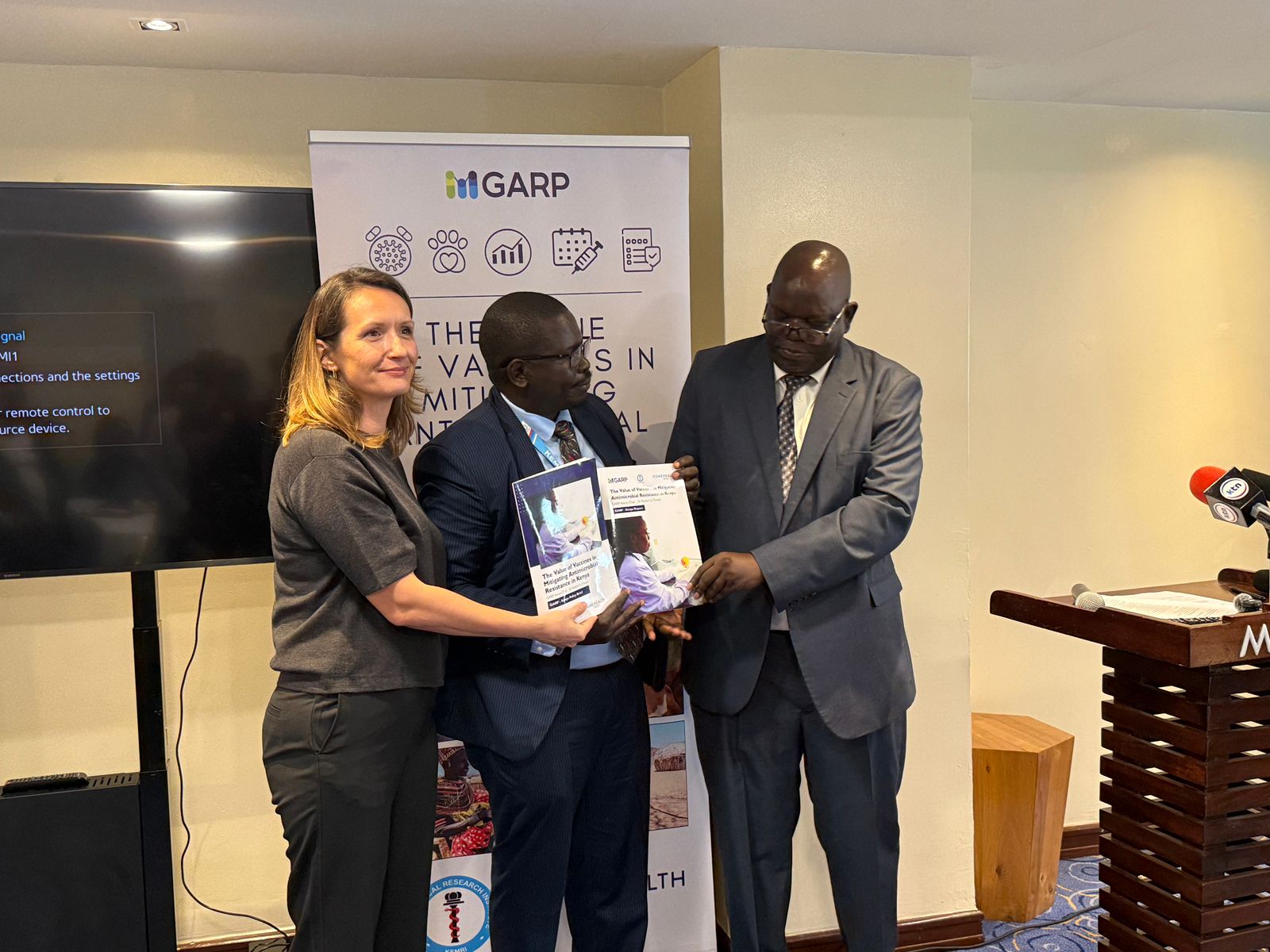
Dr Erta Kalanxhi (left), Director of Partnerships at One Health Trust, and Dr. Robert Onsare (centre), Acting Deputy Director at KEMRI, officially present “The Value of Vaccines” policy brief to Dr. Erick Muok (right), KEMRI Acting Director of Research and Development, during the launch in Nairobi.
Health experts, researchers, and policymakers have emphasized the critical role of vaccines in combating antimicrobial resistance (AMR), describing prevention through immunization as one of the most effective strategies to safeguard modern medicine.
The remarks were made during the unveiling of a new policy brief titled “The Value of Vaccines,” launched in Nairobi through collaboration between the One Health Trust, the Kenya Medical Research Institute (KEMRI), and global partners.
AMR Described as a “Silent Pandemic”
Speaking on behalf of KEMRI Director General Prof. Elijah Songok, Acting Director of Research and Development Dr. Erick Muok described antimicrobial resistance as one of the greatest threats facing modern medicine. He warned that AMR is no longer a future risk but a present public health crisis affecting Kenya, East Africa, and the wider continent.
“Today we confront one of the greatest threats of modern medicine. AMR is no longer distant it is a reality we must control together,” he said.
Dr. Muok emphasized that vaccines help combat antimicrobial resistance by reducing infections, lowering transmission between individuals, and supporting herd immunity.
He added that preventing infections reduces reliance on antibiotics, helping preserve their effectiveness for future generations.
“By investing in vaccines, we are investing in the longevity of our current antibiotics and the safety of future generations,” he said.
He noted that KEMRI is investing in surveillance systems to track resistance patterns and provide real-time data for policymakers, while also supporting research and innovation to develop new vaccines.
Global Effort to Expand Vaccine Access
Dr. Erta Kalanxhi, Fellow and Director of Partnerships at the One Health Trust, said initiatives promoting vaccines extend far beyond Kenya and aim to address global inequalities in access to treatment and prevention.
“We want to spread this message globally because many communities still do not have choices when it comes to treating infections or accessing vaccines,” she said.
She explained that many populations worldwide still lack access to antibiotics and vaccines, limiting their ability to treat infections effectively.
Dr. Kalanxhi noted that the organization develops country-specific vaccine recommendations, recognizing that disease burdens and healthcare needs differ across nations.
She highlighted the Global Antibiotic Resistance Partnership (GARP) as a platform that brings together local experts to address AMR challenges through evidence-based solutions.
“Our goal is to ensure that every country can develop policies suited to their local disease burden and healthcare needs,” she said.
The initiative has already conducted situational analyses assessing Kenya’s antimicrobial resistance burden and continues to promote preventive approaches rather than reactive treatment.
She also referenced the DART Kenya project, a collaboration between KEMRI and the One Health Trust, which forms part of a wider international network spanning Africa and Asia.
Vaccines vs Antibiotics: Prevention Over Treatment
Dr. Robert Onsare, Acting Deputy Director of the One Health Approach Research Programme at KEMRI, highlighted findings from the newly launched policy brief, saying antimicrobial resistance remains a growing global crisis.
He noted that an estimated 1.3 million deaths worldwide in 2019 were directly linked to drug-resistant infections.
“Vaccines stimulate the immune system to prevent infections before they occur, rather than treating them after exposure,” he said.
According to Onsare, antibiotics treat infections after exposure, increasing pressure that drives resistance.He warned that excessive antibiotic use accelerates resistance.
“The more we use antimicrobials, the more we risk losing them,” he said.
He explained that Vaccines act as primary prevention by reducing disease transmission and benefiting entire communities through herd immunity.
AMR Burden in Kenya
“By preventing infections, vaccines protect not only individuals but the wider community, reducing dependence on antibiotics,” he added.
Findings presented in the policy brief show that Kenya’s population stands at about 55 million people, with infectious diseases accounting for over 43 percent of deaths.
AMR-related deaths were estimated at 8,500 annually, rising to about 37,000 deaths when associated factors are included, placing Kenya 28th globally in antimicrobial resistance mortality.
Common resistant pathogens identified include Klebsiella pneumoniae, E. coli, Staphylococcus aureus, Streptococcus pneumoniae, and Salmonella typhi.
Experts also noted that more than 70 percent of patients are treated empirically with antibiotics, often due to limited laboratory diagnostic capacity.
Impact of Vaccination in Kenya
Researchers highlighted vaccines already contributing to reduced antimicrobial resistance, including the pneumococcal conjugate vaccine (PCV10), tuberculosis vaccine, Haemophilus influenzae type B vaccine, and rotavirus vaccine.
Evidence showed that pneumococcal vaccination reduced invasive pneumococcal disease in children under five by up to 92 percent between 2011 and 2019.
However, vaccine coverage gaps remain a major concern, with some vaccines still reaching limited portions of the population.
Collaborative Policy Development
The policy brief was developed over two years by a multidisciplinary technical working group comprising researchers, clinicians, economists, and public health experts from academia, government institutions, and international partners.
The process included literature reviews, online consultations, and a two-day intensive workshop held in Nairobi in October 2024. Onsare thanked contributors and partners, noting that translating scientific research into policy is a milestone many scientists aspire to achieve.
A Call for Prevention-Focused Healthcare
Speakers concluded that strengthening vaccination programs is essential not only for preventing disease but also for protecting antibiotics, a cornerstone of modern healthcare.
The launch of “The Value of Vaccines” policy brief marks a shift from discussing antimicrobial resistance to implementing concrete solutions aimed at prevention, improved access, and evidence-based policymaking.