Ruto Takes Over COMESA Leadership, Calls for Digital Integration and Inclusive Growth
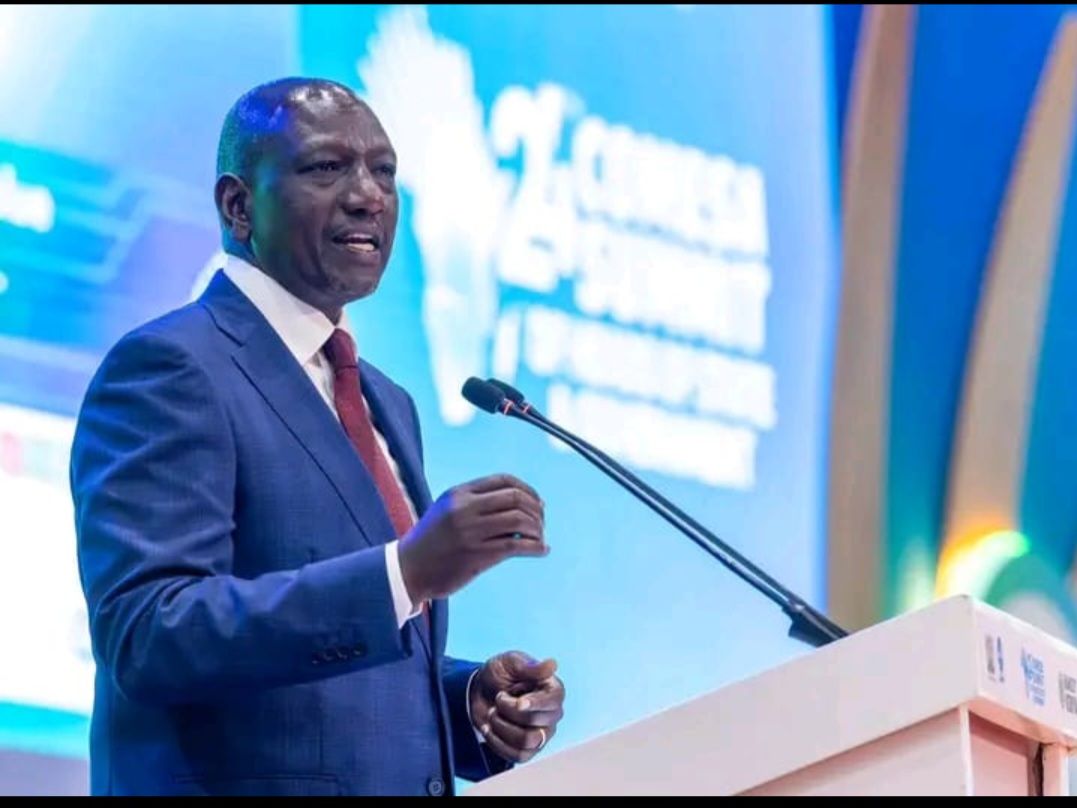
President William Ruto speaks after assuming the chairmanship of COMESA during the 24th Heads of State and Government Summit held at KICC, Nairobi, on October 9, 2025.
President William Samoei Ruto has officially assumed the chairmanship of the Common Market for Eastern and Southern Africa (COMESA), vowing to champion a new era of digital transformation, inclusive trade, and sustainable economic growth across the continent.
The 24th COMESA Heads of State and Government Summit, held at the Kenyatta International Convention Centre (KICC) in Nairobi, brought together regional leaders, ministers, and heads of continental institutions under the theme “Leveraging Digitalisation to Deepen Regional Value Chains for Sustainable and Inclusive Growth.” The forum focused on harnessing technology to expand regional value chains, enhance industrialisation, and strengthen Africa’s participation in global trade.
Speaking during the opening session, President Ruto said his tenure as Chairperson will prioritise accelerating the digitalisation of trade, improving connectivity, and empowering Africa to become a global producer of digital innovations rather than a consumer.
“It is time for Africa to move from being a passive recipient to a producer, innovator, and exporter of digital solutions that shape our own economic destiny,” he said.
Citing Kenya’s M-Pesa innovation as a home-grown success story, the President said the continent must “ignite the spirit of African ingenuity and scale it across all regions.” He added that digitalisation must extend beyond urban centres to reach every village, farmer, and entrepreneur.
“This digital superhighway must connect every citizen and link our landlocked nations to the arteries of global trade,” he stated.
Ruto called for the harmonisation of digital policies and regulatory frameworks within COMESA, describing policy fragmentation as “a modern form of non-tariff barrier.” He urged member states to adopt common e-commerce standards, cross-border payment systems, and data protection laws to build a single digital market.
He further announced Kenya’s decision to become visa-free for most African nationals, noting that true integration must go beyond trade to include the free movement of people.
“An African should be able to travel, work, and invest freely anywhere on the continent,” said Ruto, adding that unity and openness are central to Africa’s strength.
The President also called for the expansion of Africa’s homegrown financial institutions such as the Trade and Development Bank (TDB), Afreximbank, ZEP-RE, and ATIDI to reduce reliance on foreign capital.
“By strengthening our institutions, we ensure that Africa’s development is financed on our own terms and in line with our priorities,” he said.
He revealed that Kenya has invested $150 million in TDB and Afreximbank, enabling the country to access long-term facilities at interest rates as low as two percent. “This is proof that investing in our own institutions yields sustainable value for our people,” he said.
Ruto reaffirmed that peace, democracy, and stability remain the bedrock of Africa’s progress. “There can be no development without peace and no investment without stability. We must uphold democracy and good governance as our foundation for shared prosperity,” he emphasized.
COMESA Secretary-General Chileshe Mpundu Kapwepwe congratulated President Ruto on his election, describing it as a reflection of Kenya’s leadership in promoting regional cooperation and digital innovation.
“Your election as Chairperson is a clear endorsement of Kenya’s commitment to advancing COMESA’s integration agenda,” she said.
Kapwepwe also commended outgoing Chairperson, President Evariste Ndayishimiye of Burundi, for his leadership, under which COMESA recorded significant milestones, including an increase in intra-regional trade from $2 billion in 2000 to $14 billion in 2024.
She cited the $2.5 billion COMESA–World Bank Digital Acceleration Programme, which will connect 180 million people by 2030, and the Africa Cloud Ecosystem Project as examples of ongoing efforts to modernise trade and improve access to digital services in agriculture, education, and health.
“We are sparing no effort to simplify trade processes, reduce barriers, and connect businesses across borders,” she said.
Kapwepwe reaffirmed COMESA’s focus on empowering women and youth, who form over 60 percent of Africa’s population, and strengthening climate resilience. “Empowering women and youth remains a top priority as we build a resilient, inclusive economy,” she stated.
Zimbabwe’s President Emmerson Mnangagwa, elected Vice Chairperson of the COMESA Authority, expressed his country’s continued commitment to regional integration and trade liberalisation.
“Zimbabwe is committed to the ideals of regional integration, trade liberalisation, and collective self-reliance that underpin this organisation,” he said.
He praised COMESA as “a vital platform for fostering cooperation, harmonising policies, and promoting intra-regional investment.” He urged member states to address non-tariff barriers, infrastructure gaps, and policy misalignments to unlock the bloc’s potential, while reaffirming Zimbabwe’s dedication to peace and stability.
“The aspirations of Agenda 2063, ‘The Africa We Want,’ are achievable if we harness our collective strengths and leverage the opportunities before us,” Mnangagwa said.
The Nairobi Summit, attended by leaders from the African Union, AfCFTA Secretariat, and African Development Bank, ended with a renewed call to deepen digital transformation, foster inclusive trade, and promote sustainable industrialisation.
“As we look to the future,” President Ruto concluded, “we must build a COMESA that is digital, dynamic, and deeply inclusive a bloc that truly reflects the promise of a rising Africa.”