
Kenya Targets AfCFTA to Unlock Ksh 1 Trillion Tourism Potential
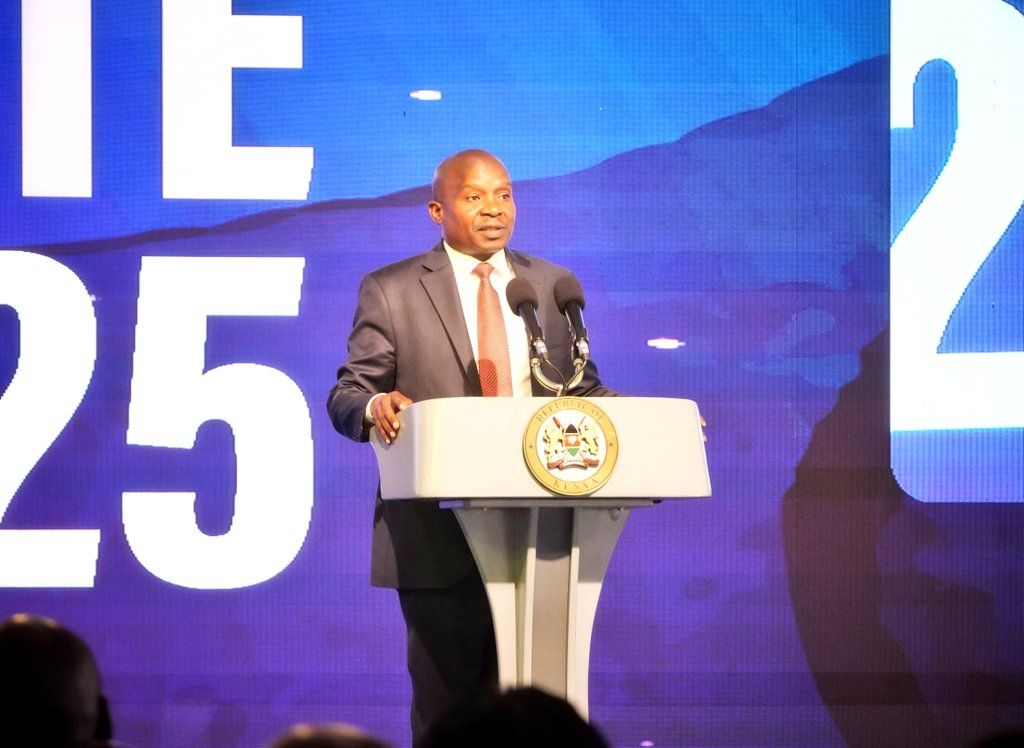
Deputy President Kithure Kindiki speaks during the official opening of the 15th Magical Kenya Travel Expo (MKTE) at Uhuru Gardens, Nairobi, on October 2, 2025.
The government of Kenya has announced plans to leverage opportunities within the African Continental Free Trade Area (AfCFTA) to accelerate intra-Africa tourism and unlock the sector’s projected Ksh 1 trillion contribution to the economy by 2027.
AfCFTA, which brings together 54 African nations into a single market of more than 1.3 billion people, is seen as a game-changer for regional integration and trade. By easing cross-border travel, harmonizing regulations and creating new investment opportunities, the framework is expected to spur greater mobility of tourists within the continent and deepen linkages between tourism, transport, and other critical sectors.
Speaking at Uhuru Gardens during the official opening of the 15th edition of the Magical Kenya Travel Expo (MKTE), Deputy President Kithure Kindiki emphasized that while Kenya remains the region’s leader in visitor arrivals, tapping into continental integration would enable the country to achieve double-digit growth rates comparable to Asian and European markets.
“Tourism is a critical anchor of Kenya’s economy and a pillar of our Bottom-Up Economic Transformation Agenda (BETA). With Africa emerging as one of the strongest-performing regions in global tourism recovery, we must capitalize on AfCFTA opportunities. The tourism sector must become a critical interlocutor in transport, logistics, trade, investments and MSME sectors, driving synergized policy outcomes,” Kindiki said.
According to the World Tourism and Travel Council (WTTC), Kenya’s tourism sector is expected to contribute KSh 1.2 trillion to the economy in 2025, accounting for more than 7 percent of the national GDP. The sector is also projected to sustain 1.7 million jobs, representing over 8 percent of total national employment.
The Deputy President highlighted government investments aimed at boosting the sector, including the Nairobi–Nakuru–Mau Summit Highway, Lamu Port development, the expansion of the Standard Gauge Railway (SGR), and new direct international flight routes.
He underscored the need for diversification beyond traditional attractions, pointing to emerging products such as astro-tourism in Samburu, desert safaris in Chalbi, and tech-tourism driven by Kenya’s “Silicon Savannah.”
“We must market the complete Kenya story – from our technological innovation to our athletic excellence, from the Cradle of Humankind to our forty vibrant communities,” Kindiki added.
The Deputy President also linked the government’s ongoing tree-planting initiative to eco-tourism, stressing the importance of sustainability and ensuring that tourism benefits reach grassroots communities.
The MKTE, which has attracted over 6,500 delegates from 40 countries, has drawn participation from 400 exhibitors and 200 international buyers. It provides a platform for stakeholders to explore strategic investments and collaborative frameworks aimed at strengthening Africa’s tourism ecosystem.
Tourism and Wildlife Cabinet Secretary Rebecca Miano described the expo as a continental platform that has evolved to play a critical role in accelerating investment flows in tourism infrastructure. She noted that infrastructure development remained key to Kenya’s target of 5.5 million international visitors by 2027.
“Infrastructure development through public-private partnerships remains our cornerstone strategy. By leveraging private sector expertise and government support, we are building world-class facilities that enhance visitor experiences while creating sustainable employment for our communities across the tourism value chain,” Miano said.
On her part, Emily Mburu, Director of Trade in Services, Investment, and Digital Trade at the AfCFTA Secretariat, emphasized the importance of partnerships in advancing continental market integration through tourism.
“Tourism shows how AfCFTA works in practice. Public-private frameworks attract foreign direct investment, build world-class infrastructure and create employment across borders. When tourists move seamlessly across Africa, they activate supply chains, stimulate trade and prove that integration delivers immediate, tangible benefits to African economies,” Mburu observed.
The focus on intra-African partnerships comes at a time when Africa’s contribution to Kenya’s tourism earnings is on the rise. In 2024, the continent was the leading source of arrivals, accounting for 40.8 percent of international visitors.
This year’s edition of MKTE incorporates digital matchmaking technology to facilitate pre-scheduled B2B meetings between buyers and sellers, maximizing business opportunities. The expo will also feature five-day familiarization trips, integrated marketing campaigns, and specialized sessions on linking the creative economy with tourism.
MKTE, East Africa’s premier international tourism trade fair, connects Kenyan tourism service providers with international buyers and media to showcase the country’s diverse attractions.