
ICPAK Reaffirms Support for Whistleblowers, Calls for Fairness in SHA Recruitment Dispute
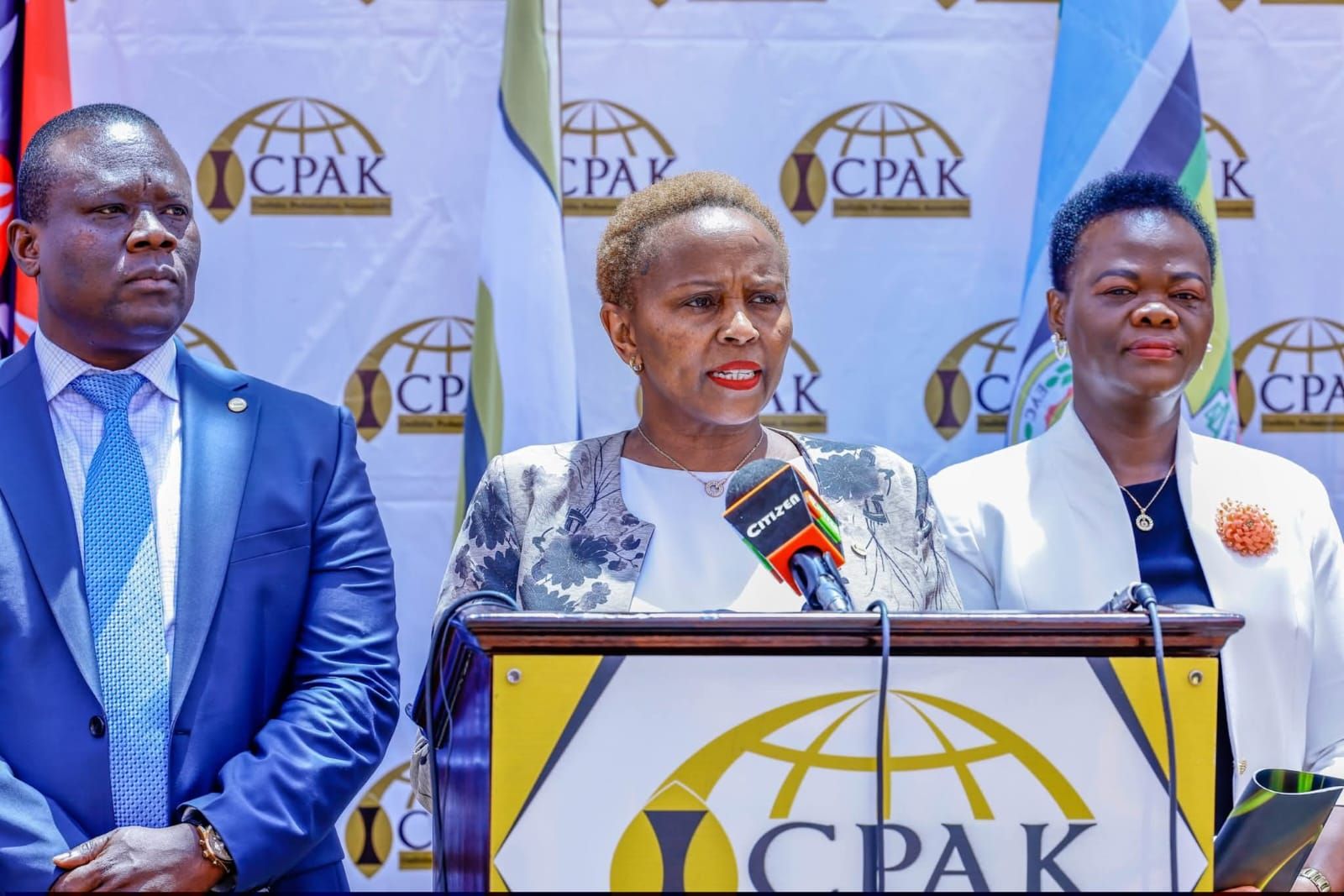
ICPAK Chairperson Prof. Elizabeth Kalunda (center) addresses the media in Nairobi on October 1, 2025.
The Institute of Certified Public Accountants of Kenya (ICPAK) has raised concern over the removal of CPA Andrew Kipkirui Rotich from his position as Deputy Director of Forensic Audit and Risk Assurance at the Social Health Authority (SHA), urging fairness, transparency and protection of whistleblowers in public service.
Rotich, an ICPAK member since 2012, was among three deputy directors affected by a court-ordered review of SHA’s April 2025 recruitment process. His exit was widely reported in the Daily Nation on September 26. He previously served at the defunct NHIF and was part of audit teams that unearthed suspected irregularities in medical billing, findings that triggered ongoing investigations.
Speaking during the release of the statement, ICPAK Chairperson Prof. Elizabeth Kalunda said the exclusion of Rotich raised serious questions of public interest.
“While recruitment processes remain the prerogative of appointing authorities, the non-inclusion of CPA Rotich risks discouraging professionals from speaking out on accountability matters,” she remarked.
She reaffirmed the Institute’s commitment to supporting members who act in the public interest, describing whistleblowers as critical in safeguarding resources and strengthening trust in institutions.
“ICPAK stands firmly with CPA Andrew Rotich and commends his professionalism and dedication. His contribution from NHIF to SHA reflects the best traditions of our profession,” she stated.
Prof. Kalunda urged SHA and the Ministry of Health to uphold justice and due process in handling the case while renewing the Institute’s call for the enactment of a Whistleblower Protection Act to safeguard professionals who expose misconduct.
“Through our Whistleblower Protection Policy and professional framework, we continue to stand with members who act ethically and in the public interest. We renew our call for urgently enacting a Whistleblower Protection Act to strengthen Kenya’s governance systems,” she said.
Underscoring the broader role of accountants, Prof. Kalunda pointed out that the profession is central to tackling corruption through sound governance frameworks, risk management and ethical compliance.
She highlighted ongoing ICPAK initiatives such as the Accountability Index, the mandatory Unique Document Identification Number (UDIN) to curb fraud, reviews of Auditor General reports, and collaboration with the National Treasury and Attorney General’s office on strengthening the Accountants Act.
“Financial scandals in both public and private sectors have widespread effects, undermining trust and weakening institutions. Ethical conduct in accountancy is therefore not optional but critical for investor confidence and economic growth,” she observed.
The Chairperson also applauded the initiative by the Office of the Chief of Staff and Head of Public Service to strengthen internal audit functions in government through the “zero-fault audit campaign,” describing it as an important step toward greater public accountability.
“The Chief of Staff’s support for internal audit is commendable and will go a long way in entrenching transparency in public institutions,” she noted.
In addressing Rotich’s case, she called for an independent inquiry into SHA’s recruitment process consistent with Article 47 of the Constitution on fair administrative action. She further urged the safeguarding of all evidence provided by auditors and whistleblowers, the acceleration of whistleblower protection laws, and closer collaboration between SHA and ICPAK on matters involving professional conduct.
Prof. Kalunda added that the Institute would formally submit its action points to the Ethics and Anti-Corruption Commission (EACC), noting that EACC remains a key partner in strengthening ethical leadership and financial integrity.
“This engagement emphasizes our shared commitment to transparency, institutional reform and the protection of public trust,” she remarked.
ICPAK concluded by pledging to continue weeding out unqualified individuals, holding its members accountable through disciplinary action where necessary, and supporting oversight bodies including the National Treasury, Auditor General, Controller of Budget, Senate and Parliament in safeguarding accountability.
“As an Institute, we shall continue to uphold the highest professional standards while protecting those who act ethically and in the public interest,” Prof. Kalunda affirmed.