
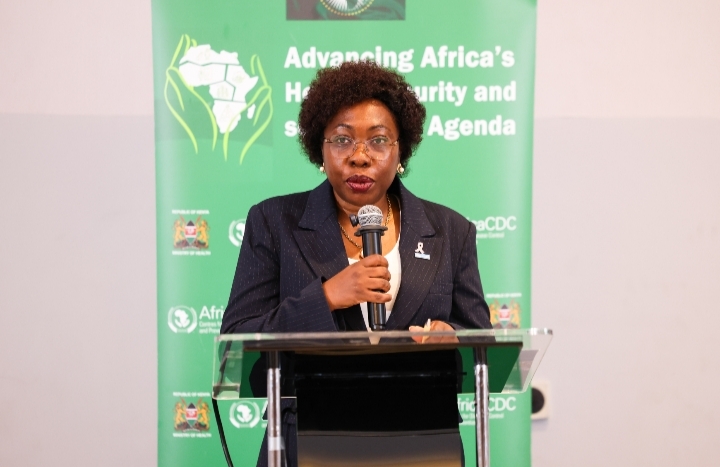
Photo Caption: Dr. Neema Kimambo, World Health Organization (WHO) Representative to Kenya, addresses journalists during an Ebola media engagement in Nairobi, urging accurate reporting and efforts to counter misinformation to strengthen public awareness and support outbreak containment.
NAIROBI, October, 2026 — The World Health Organization (WHO) has urged journalists and editors to provide accurate, timely and responsible reporting on Ebola to strengthen public awareness and prevent misinformation from undermining efforts to contain the disease.
Speaking during a media workshop in Nairobi, WHO Representative to Kenya Dr. Neema Kimambo said the media had a critical role in ensuring communities received reliable information, sought medical attention early and cooperated with public health authorities during outbreaks.
“In any outbreak, information is a critical part of the response. And even more so for Ebola in a country that had never had any case of Ebola before,” she said.
Kimambo said Kenya had an opportunity to contain the recently confirmed Ebola case and prevent further transmission through effective contact tracing, public awareness and sustained preparedness.
She noted that the Ministry of Health announced the country’s first confirmed Ebola case on October 6, after the patient entered Kenya on October 3 and sought medical attention at Nairobi Hospital.
She said the rapid detection and timely reporting had been commended by the global public health community.However, she cautioned that the risk remained high because Ebola cases were still being reported elsewhere in the region, calling for continued vigilance even as health authorities worked to contain the case.
The WHO representative said the organisation’s latest assessment showed that nine in 10 people had heard of Ebola, but about half had limited knowledge of how the disease spreads and how to protect themselves.
“If people don’t have the right information, then there may be excessive fear, but they may also not take the appropriate action,” Kimambo said.
She urged journalists to verify information with official sources, including the Ministry of Health, the National Public Health Institute, WHO and the Africa Centres for Disease Control and Prevention (Africa CDC), before publication.
Kimambo warned that sensational reporting and unverified social media claims could create unnecessary fear, discourage people from seeking care and expose patients and their families to stigma.
She called on media practitioners to protect patients’ privacy, avoid publishing identifying details of suspected cases and contacts, and provide practical information that would help the public recognise symptoms and take appropriate action.
Kimambo said Ebola’s early symptoms, including fever, headache, muscle pain, vomiting and diarrhoea, could resemble those of malaria, making it important for people experiencing symptoms, particularly after possible exposure, to seek medical attention promptly.
She also urged journalists to ask difficult questions on behalf of the public to address concerns and improve understanding of the outbreak.
Meanwhile, Africa CDC Director of the Centre for Disease Preparedness and Response Dr. Mankoula said misinformation and community mistrust remained among the biggest challenges facing the Ebola response in the Democratic Republic of the Congo (DRC).
“During an epidemic, a virus can infect a person, but information can influence behaviours of thousands and millions of people,” he said.
Mankoula said journalists, editors, social media influencers and community leaders were essential in correcting false information, raising awareness and encouraging communities to adopt preventive measures.
He urged the media to go beyond breaking news by explaining Ebola symptoms, how the disease spreads, where people should report suspected infections and why early medical care improves patient outcomes.
Africa CDC Regional Director for Southern Africa Dr. Lul Riek called on African countries to take greater ownership of their health security agenda, warning that reliance on external partners could leave health systems vulnerable when support was unavailable.
He highlighted the Africa CDC’s efforts to strengthen continental health security and sovereignty, urging stakeholders to support African-led preparedness, innovation and responses to public health emergencies.
The speakers reaffirmed the importance of collaboration between governments, health agencies and the media in ensuring communities receive credible information and remain prepared to respond to emerging health threats.