

NAIROBI, Kenya, Aug 20 – Nairobi’s vacant commercial buildings could provide much-needed space for the country’s growing creative industry if property owners, government and cultural practitioners find new ways of making the facilities accessible, a new study has established.
The study commissioned by the Trust for Indigenous Culture and Health (TICAH) and conducted by researcher Maurice Otieno found that the main challenge facing cultural practitioners in Nairobi is not a lack of space, but limited access to existing premises.
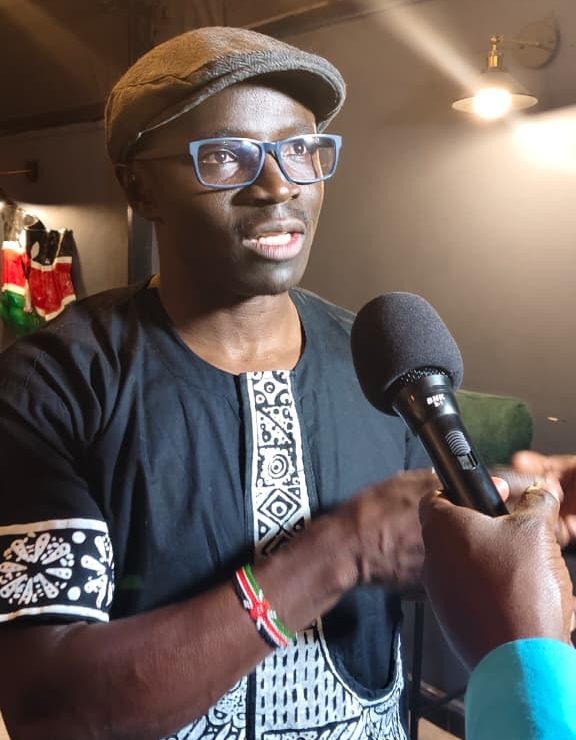
Speaking during the launch of the study in Nairobi on Thursday, Otieno said many commercial properties remain underutilised while artists, musicians, dancers, filmmakers and other cultural practitioners struggle to find affordable and suitable places to work, perform and exhibit their work.
“One of the biggest challenges is just access to information where these spaces are accessible, who are the owners of these spaces and whether these spaces are relevant for them to be able to do their work well,” he said.
The research, which surveyed 86 cultural practitioners and involved focus group discussions and interviews with venue operators, cultural institutions and property-market players, found that 47 per cent of practitioners mainly work from home, while 35 per cent consider their current workspace inadequate.
It further established that 78 per cent of practitioners consider rent too high, 69 per cent cited rigid lease terms, 65 per cent said available spaces were not designed for cultural work, while 62 per cent cited lack of information on available spaces.
The findings come against a backdrop of significant vacant commercial property in Nairobi. Commercial property data reviewed by the study indicated an estimated 5.7 million square feet of office oversupply in 2024, which fell to 3.4 million square feet in 2025.
Otieno said the situation presented an opportunity for Nairobi to transform existing buildings into productive cultural infrastructure rather than focusing entirely on constructing new facilities.
“We do not need to build more. We might need to basically retrofit the ones that we have to serve the purpose that we need, which is economic gain through youth employment, through the creative culture and other benefits that the creative culture brings,” he said.
He said some creative activities require specialised spaces, noting that the mere availability of an empty building does not necessarily make it suitable for cultural work.
He gave the example of a tap dancer who requires an appropriate floor to perform, saying such infrastructure gaps were limiting the ability of practitioners to earn a living from their work.
The study also found that cultural practitioners incur significant additional costs when using conventional commercial premises, with some event organisers spending up to 80 per cent of their event budgets modifying spaces through flooring, soundproofing, staging, lighting and electricity.
Eric Manya, Arts Programme Curator at TICAH, said the challenge became apparent to the organisation after it took almost eight months to secure a suitable venue for a major exhibition held in Nairobi last year.
He said the experience prompted TICAH to examine why numerous vacant spaces could not be easily accessed by cultural practitioners.
“We felt that there is a need for all these spaces that we are seeing that are empty and yet we, the cultural practitioners, are actually in need of these spaces,” Manya said.
He said landlords were often reluctant to lease premises to creatives because of concerns over irregular income and the ability of practitioners to meet long-term rental obligations.
“There’s that mistrust with the landlords that yes, I’ll give you a space, you bring me the people but at the end of the day, maybe you’ll be able to pay for the next three, four months,” he said.
Manya said TICAH was exploring a pilot model that would allow cultural organisations to negotiate shorter-term arrangements with property owners and bring different practitioners together to activate vacant premises.
“Can we be able to figure out something with these landlords even if it’s something like, for six months, we come in, let’s activate these spaces,” he said.
Suzanne Mieko, Senior Programme Manager of the Art Programme at TICAH, said the proposed initiative would create safe third spaces where cultural practitioners could meet, experiment, organise workshops and showcase their work.
She said such spaces would also provide opportunities for practitioners to sell their work and hold exhibitions and events, while enabling them to build sustainable creative enterprises.
Mieko said TICAH was also considering developing a cultural-space toolkit to help practitioners understand issues surrounding permits, environmental requirements and other regulations when seeking to use vacant premises.
The study recommends intermediary-led arrangements such as master leases and structured trust pilots, where organisations can help bridge the gap between property owners and individual cultural practitioners.
It also proposes the creation of a cultural-space directory, flexible lease mechanisms and simplified county and National Environment Management Authority (NEMA) licensing processes.
Otieno said national and county governments could play a major role in unlocking vacant properties by introducing policies and incentives that encourage property owners to make underutilised premises available for cultural activities.
He said the future of creative spaces in Kenya should not necessarily be defined by new and expensive buildings, but by the ability to repurpose existing infrastructure.
“Spaces for creatives will not be new; they will be old refurbished spaces that focus on building community and focus on bringing people together,” he said.
The research identifies upper floors of CBD buildings, pension fund-owned properties, secondary malls and industrial areas as some of the potential locations that could be converted into cultural and creative spaces.
It proposes the CBD and Mombasa Road corridor for more affordable cultural spaces, while Ngara, Ruaraka and Eastlands could support production, rehearsal and maker spaces.
Mieko said TICAH would also convene a series of webinars bringing together practitioners from different parts of the world to exchange ideas on how cities can make better use of vacant spaces for cultural and creative activities.
The initiative, she said, would seek to move the conversation from the construction of new facilities to finding practical ways of unlocking spaces that already exist.
The study ultimately calls for stronger collaboration between government, property owners, cultural organisations and practitioners to turn Nairobi’s vacant commercial spaces into productive hubs that can support employment, enterprise and the growth of Kenya’s creative economy.
A new TICAH-commissioned study has found that Nairobi’s creative practitioners are not short of physical space, but face major barriers accessing vacant commercial premises. The study calls for flexible leasing models, refurbishment of existing buildings and stronger collaboration between government, landlords and the creative sector to unlock underutilised spaces.
Breaking News and Prime Updates
Breaking News and Prime Updates