
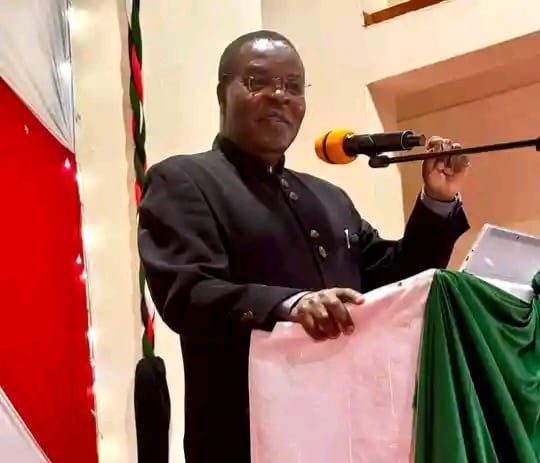
Photo Caption: EACC Chairperson Dr. David Oginde speaks during the National Stakeholders’ Convention on Democratic, Credible and Peaceful 2027 Elections at Ufungamano House in Nairobi on September 3, 2026.
NAIROBI, September 3, 2026 — Religious leaders have been urged to reject and refrain from legitimising illicit funds ahead of the 2027 General Election, amid concerns that dirty money could distort voters’ choices and fuel corruption in government.
Speaking during the National Stakeholders’ Convention on Democratic, Credible and Peaceful 2027 Elections at Ufungamano House in Nairobi, Ethics and Anti-Corruption Commission (EACC) Chairperson Dr. David Oginde warned that politicians who finance campaigns using proceeds of corruption, money laundering and unexplained wealth could later be pressured to reward their financiers through inflated tenders, manipulated procurement and other corrupt deals.
“There is no way we are going to build a society of integrity if we are beneficiaries of illicit resources,” Dr. Oginde said.
Dr. Oginde said election campaigns should be driven by leadership, values and principles rather than candidates’ financial muscle, noting that illicit wealth gives wealthy candidates an unfair advantage and undermines voters’ ability to choose leaders based on merit.
He was addressing delegates on the theme, “Corruption and Politics in Kenya: How Illicit Money Drives Democracy and Viable Mitigations,” where he called for greater vigilance among religious and other community leaders in safeguarding the integrity of the electoral process.
He cautioned that the influence of illicit money does not end with elections, as politicians who depend on corrupt financing may feel obligated to facilitate the interests of their financiers once in office, potentially compromising public resources and governance.
National Cohesion and Integration Commission (NCIC) Commissioner Joseph Nguyo, meanwhile, urged Kenyans to remain vigilant and actively support efforts to safeguard national cohesion as the country prepares for the 2027 General Election and beyond.
Nguyo stressed that protecting the independence of the NCIC was essential in preventing hate speech, ethnic incitement and politically motivated violence.
He called on Kenyans to report incidents that threaten peace and national unity, saying early intervention was critical in preventing disputes from escalating into conflict.
Nguyo also highlighted the Commission’s continued engagement with political leaders and public officials to promote responsible leadership and issue-based politics ahead of the polls.
“Democratic space is rarely lost all at once it slips away quietly, one compromise at a time, and the antidote is participation: we secure peace by showing up, asking the hard questions, and standing up for our country,” he said.
The convention, organised by the National Council of Churches of Kenya (NCCK), Kenya Conference of Catholic Bishops (KCCB), Supreme Council of Kenya Muslims (SUPKEM) and Evangelical Alliance of Kenya, has brought together more than 150 religious leaders, electoral stakeholders and civil society representatives.
Participants emphasised the need for stronger collaboration among institutions, political actors and citizens to protect democratic processes, strengthen public trust in electoral institutions and promote peaceful, credible and inclusive elections.
The forum is also developing strategies to safeguard the 2027 electoral cycle and strengthen the role of religious leaders and other stakeholders in promoting electoral integrity, national cohesion and accountable leadership.