

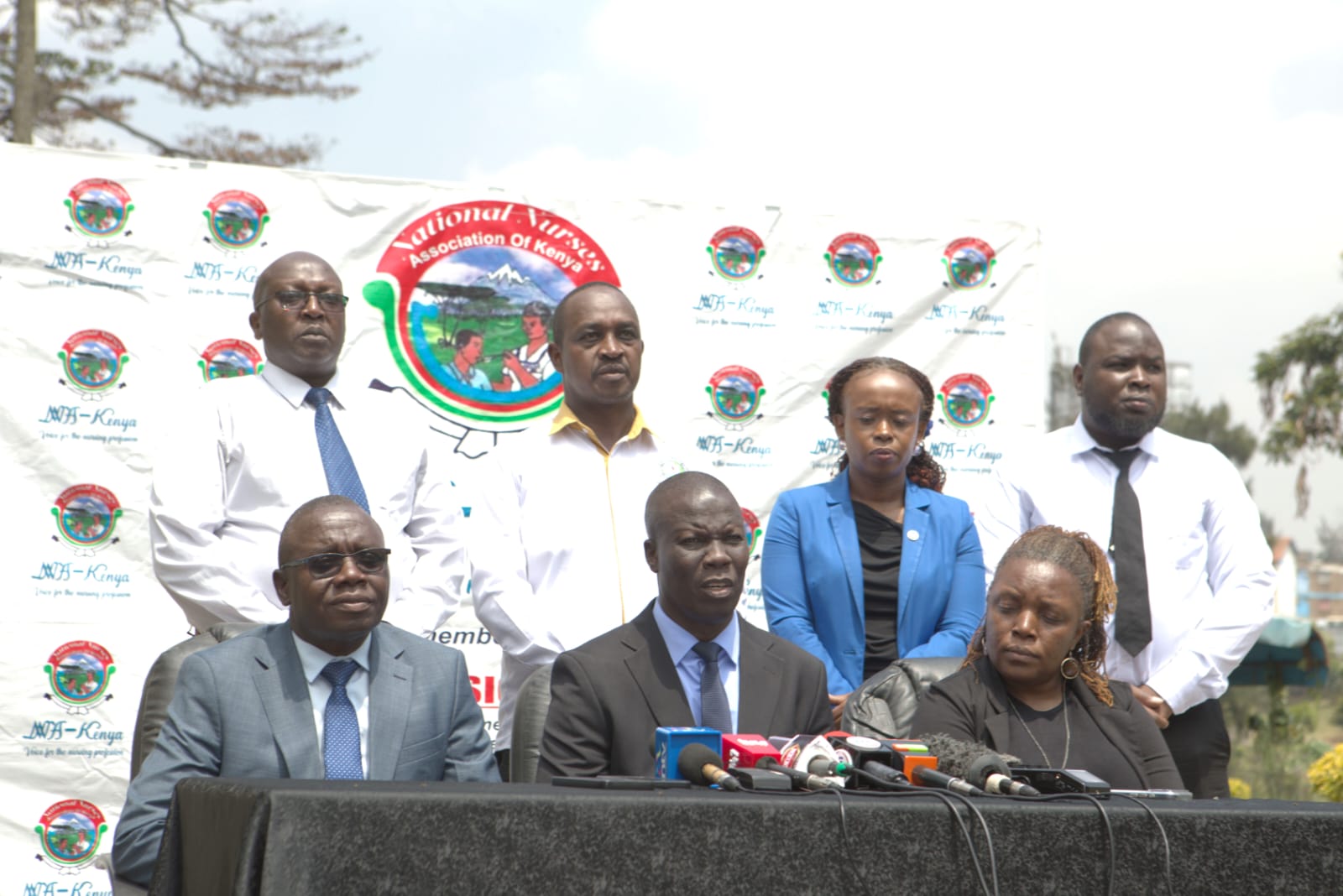
Photo Caption:NNAK President Collins Otieno Ajwang (center) speaking during a media briefing in Nairobi on Thursday, September 3, 2026.
NAIROBI, September 3, 2026 — Healthcare professional associations have raised alarm over the growing impact of the nurses’ strike, now in its 37th day, warning that the prolonged disruption is affecting patients, healthcare delivery and the wider public health system.
Speaking during a media briefing in Nairobi on Thursday, National Nurses Association of Kenya (NNAK) President Collins Otieno Ajwang said the prolonged impasse had moved beyond a labour matter and was increasingly becoming a public health and patient safety concern.
“Nurses account for nearly 70 per cent of Kenya’s health workforce and are central to service delivery across all 47 counties. The current impasse is therefore not simply an employment issue; it has direct implications for the stability of our health system and the quality of care Kenyans receive,” said Ajwang.
The professional bodies said the effects of the prolonged strike were already being reflected in health outcomes, citing data from the EWENE dashboard showing that eight maternal deaths, 16 neonatal deaths and 55 perinatal deaths were recorded between Monday and Wednesday this week.
They said the figures compared with 22 maternal deaths, 44 neonatal deaths and 130 perinatal deaths recorded during the previous full week. Last month alone, the associations said, 75 maternal deaths and 458 perinatal deaths were recorded nationally.
Addressing concerns over whether the available figures reflected the full extent of the disruption, Ajwang said fewer women were reaching health facilities, while some patients could be seeking care outside the formal health system.
“These figures represent only part of the impact, with fewer women reaching health facilities and growing concern over patients who may now be seeking care outside the formal health system,” said Ajwang.
The associations said efforts were underway to obtain and verify additional facility-level data to better establish the full extent of the disruption.Beyond immediate patient care, the professional bodies warned that the strike was also affecting the wider health workforce and its future pipeline.
Nursing, medical and clinical students depend on functioning health facilities for clinical placements, practical training and mentorship, with the prolonged disruption potentially delaying their studies.
They added that nurses work alongside doctors, clinical officers, midwives, specialists and other healthcare professionals, meaning their continued absence affects the functioning and continuity of care across the health system.
The associations also raised concern over specialised nursing services such as critical care, renal and neonatal care, which require years of focused training and experience.
They said retaining such expertise was essential to maintaining complex health services and ensuring patients receive appropriate care.
Highlighting the broader consequences of the strike, Ajwang said the disruption affected more than individual healthcare facilities and had implications for the sustainability of the health system.
“This is a concern for the entire health sector,” said Ajwang, noting that the consequences of prolonged disruption extend beyond individual facilities to service delivery, patient safety, clinical training and the sustainability of the healthcare workforce.
The professional bodies further underscored the importance of coordinated healthcare teams in maternal, newborn and child health, urging all stakeholders to find common ground and resolve the impasse in a way that protects mothers, newborns, children and families.
They called on the national and county governments, unions and all relevant stakeholders to urgently engage and resolve the dispute, with the priority being to restore safe and uninterrupted healthcare services while addressing the wider challenges facing the health system.
The associations said their intervention was intended to bring the professional and public health perspective into the national conversation and highlight the consequences of continued disruption across the health sector.