

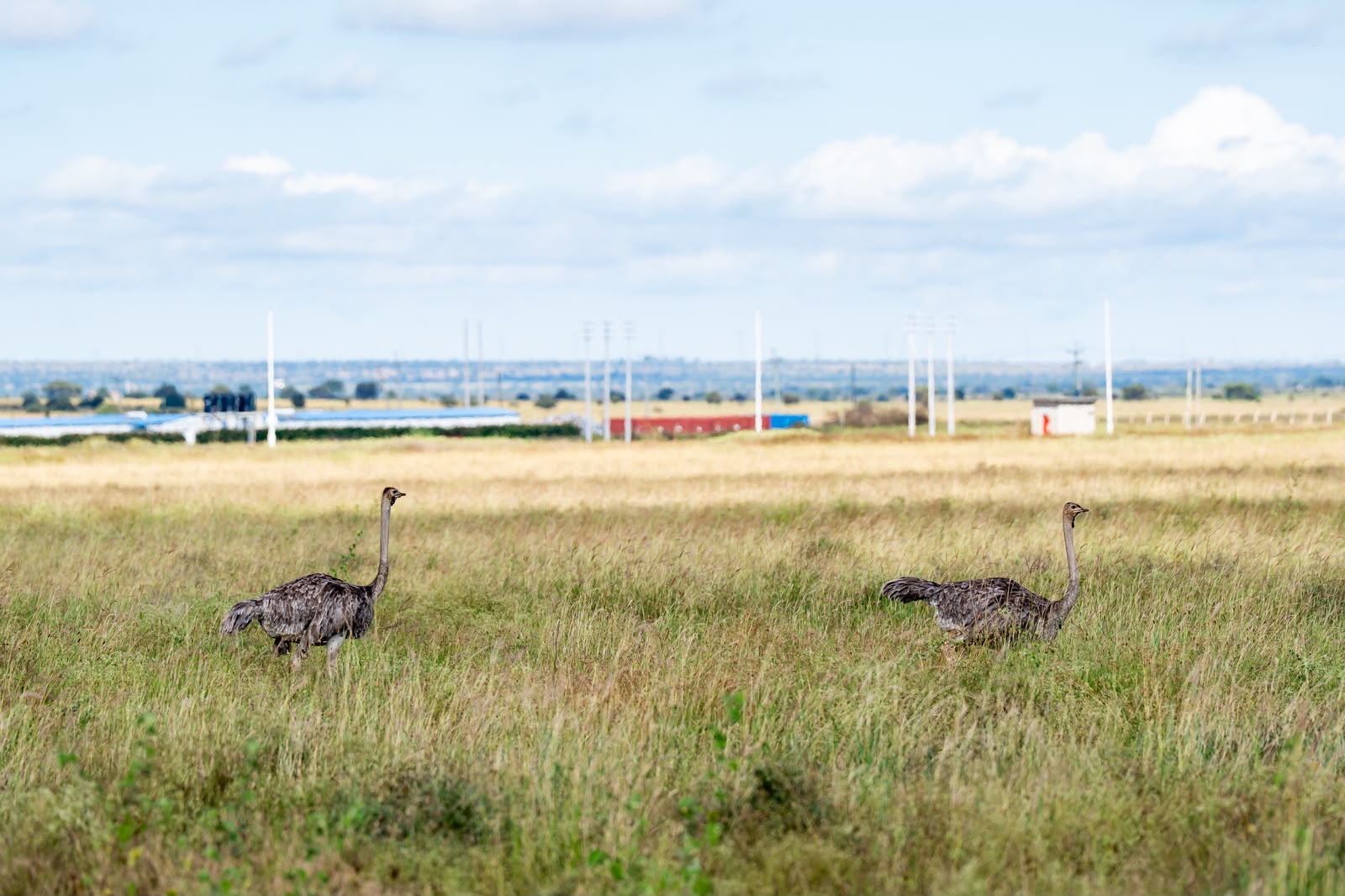
Ostriches roam within the Konza Technopolis Wildlife Conservancy, which has been provisionally registered by the Kenya Wildlife Service as part of efforts to integrate wildlife conservation into smart city development.
Konza, Kenya – Konza Technopolis has achieved a major milestone in sustainable urban development after receiving provisional registration of a wildlife conservancy from the Kenya Wildlife Service (KWS), becoming the first purpose-built smart city in Africa to host a formally registered wildlife conservancy.
The newly registered Konza Technopolis Wildlife Conservancy covers 404.69 hectares and forms part of the smart city’s broader environmental conservation strategy, which has set aside about 1,000 acres of its 5,000-acre development area as a wildlife corridor.
The registration marks a significant step in integrating environmental conservation with technological innovation and urban development, reinforcing Konza’s vision of building a world-class smart city where economic growth, biodiversity protection and modern infrastructure coexist.
The conservancy lies within the larger Athi-Kapiti ecosystem and provides habitat for a variety of wildlife species, including the Grey Crowned Crane, Rüppell’s Griffon Vulture, White-backed Vulture, Maasai Ostrich, Maasai Giraffe, zebra and gazelles.
According to the registration requirements, the conservancy will be maintained for a minimum of 15 years and supported through an established wildlife conservancy management plan to ensure the protection and sustainability of the ecosystem.
Speaking following the registration, Konza Technopolis Development Authority (KoTDA) Chief Executive Officer John Paul Okwiri described the achievement as a defining moment in the development of Africa’s leading smart city.
“The registration of the Konza Technopolis Wildlife Conservancy marks a defining moment in our journey to build Africa’s leading smart city. This achievement demonstrates that technological advancement and environmental conservation are not competing priorities; they are complementary pillars of sustainable development,” said Okwiri.
He noted that as Konza continues to attract investments, innovation centres, research institutions and world-class infrastructure, the city remains committed to preserving biodiversity and protecting its natural heritage.
“This conservancy reflects our vision of creating a smart, resilient and inclusive city where people, nature and technology thrive together,” he added.
Beyond environmental conservation, the registration is expected to unlock new opportunities in eco-tourism, wildlife research, biodiversity conservation, carbon-credit initiatives, climate-finance programmes and environmentally sustainable investments.
The conservancy is also expected to support nature-based recreation, environmental education and premium eco-living developments, further enhancing Konza’s attractiveness as a destination for investment and innovation.
The development aligns with Kenya’s commitments to climate resilience, biodiversity conservation and sustainable land use while supporting global environmental goals, including the United Nations Sustainable Development Goals (SDGs) 11 and 15, which promote sustainable cities and the protection of terrestrial ecosystems.
Officials said the initiative demonstrates how future cities can successfully integrate advanced digital infrastructure with ecological preservation to create resilient communities and long-term economic value.The conservancy will further support the planned Luxury Eco-Living Zone within Konza Technopolis.
The proposed 80-acre mixed-use development will feature bespoke villas, eco-lodges, premium holiday homes and hospitality investments designed to coexist with the protected natural environment.