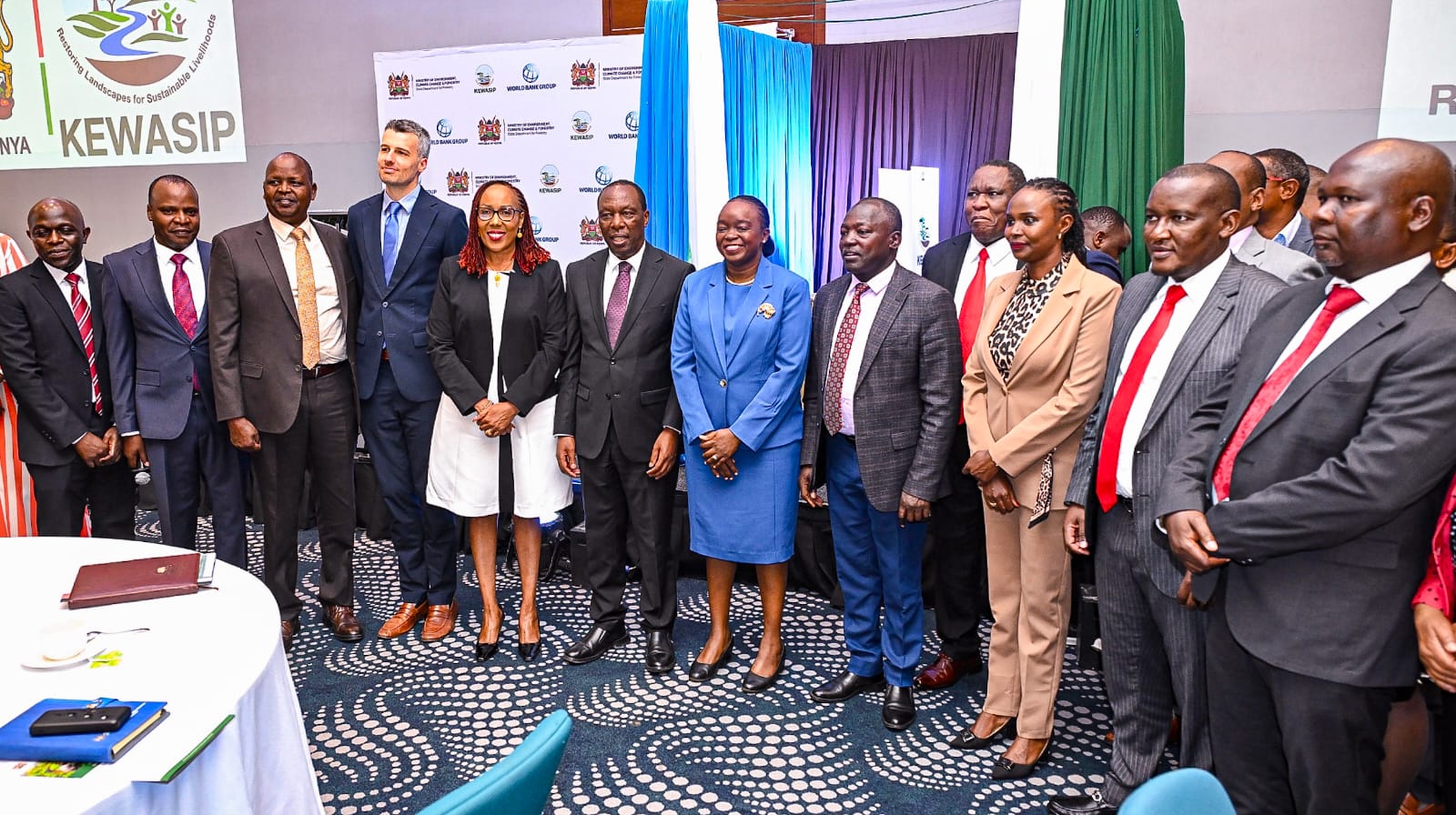

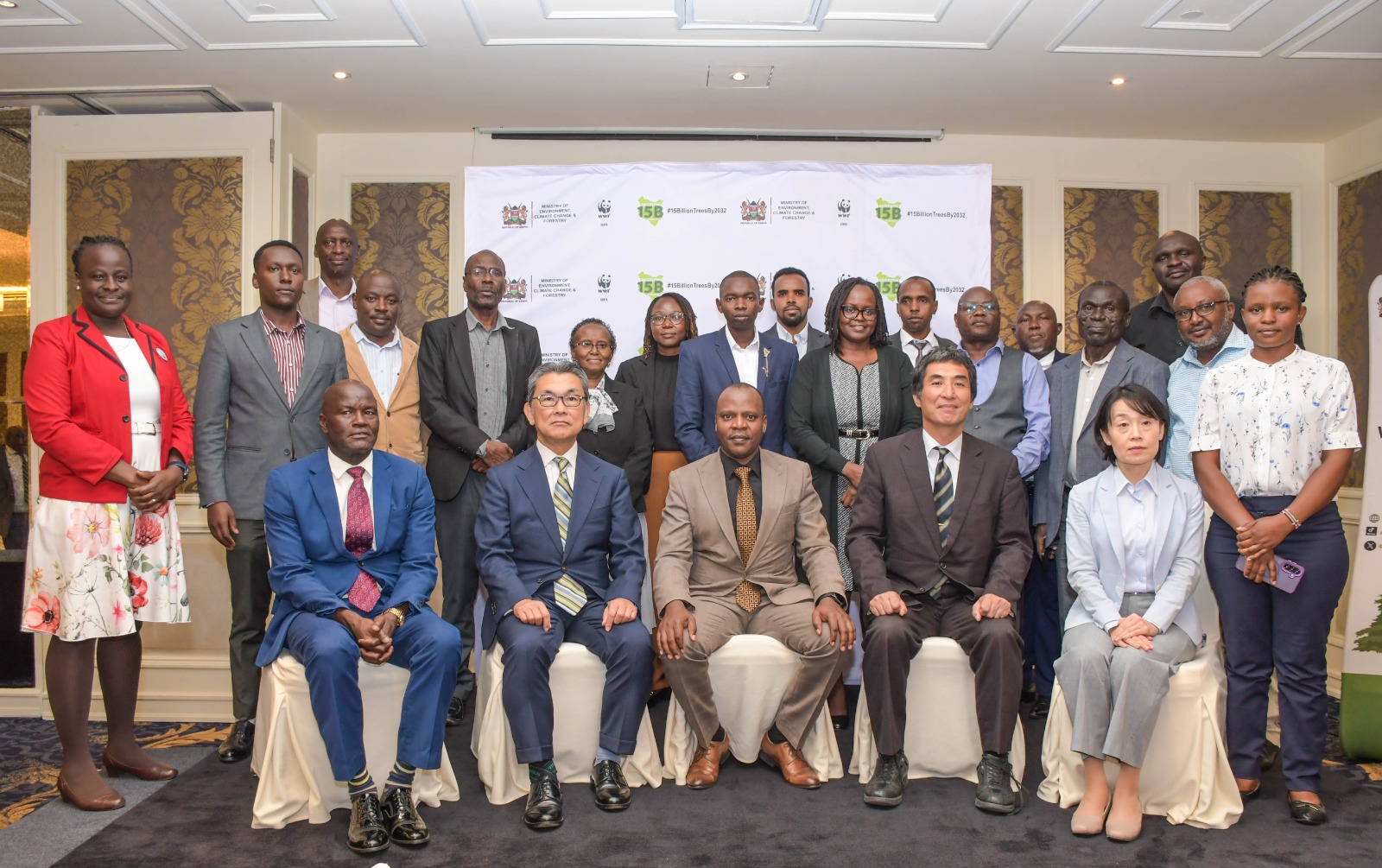
Photo caption: Kenyan and Japanese officials and forestry stakeholders during the final seminar of the SFS-CORECC Project on 15th October, 2026 Nairobi.
NAIROBI, October 15, 2026 — Kenya and Japan have launched digital tools to strengthen forest monitoring and track tree cover as the country pursues its target of growing 15 billion trees and increasing national tree cover to 30 per cent by 2032.
The tools were unveiled during the final seminar of the Strengthening Forestry Sector Development and Community Resilience to Climate Change through Sustainable Forest Management and Landscape Restoration (SFS-CORECC) Project in Nairobi, where stakeholders reviewed the project’s achievements and discussed ways to sustain its gains.
Speaking on behalf of Principal Secretary for Forestry Mugambi Gitonga, Forest Development Secretary George Tarus said Japan had contributed significantly to Kenya’s forestry sector through more than 40 years of bilateral cooperation.
“This commitment reflects our determination to restore degraded landscapes, enhance climate resilience, safeguard vital ecosystems, and create sustainable livelihood opportunities for present and future generations,” Tarus said.
He said the project had supported policy and strategy development, tree breeding, commercial forestry and forest information systems, including the development of improved planting materials and drought-tolerant tree species suited to dryland conditions.
Tarus noted that sustaining the project’s achievements would require continued collaboration among government institutions, researchers, communities and development partners.
“Success will depend on our ability to turn the knowledge, strategies and relationships developed through SFS-CORECC into sustained action on the ground,” he said.
Japan International Cooperation Agency (JICA) Senior Director of the Global Environment Department Akiko Tabata said the initiative built on a longstanding partnership that began in Kenya in 1985.
“I am truly delighted that we’re able to add outstanding achievements of the SFS-CORECC project to our legacy,” Tabata said.
She said eight forestry projects had been implemented through the partnership over the years, covering forest conservation, afforestation, social forestry, tree breeding and climate change adaptation.
Nearly 150 Japanese experts have contributed to forestry cooperation in Kenya, while JICA’s capacity-building programme with the Kenya Forestry Research Institute (KEFRI), which began in 1995, has supported more than 500 forestry professionals from over 20 countries.
“Through this training programme, I hope to disseminate the project’s findings to strengthen networking,” Tabata said, urging Kenyan institutions to share the project’s findings with other stakeholders and potential donors to support further investment in forestry and climate finance.
Japan’s Ambassador to Kenya, Hiroshi Matsuura, emphasised the importance of balancing commercial forestry with the conservation of natural forests, saying both were essential to sustainable development.
He noted that commercial timber harvesting should not be viewed negatively when undertaken legally and sustainably, reaffirming Japan’s commitment to continued cooperation with Kenya in forestry development.
Representing Chief Conservator of Forests Alex Lemarkoko, Principal Deputy Chief Conservator of Forests in charge of Forest Conservation and Management Dr. Clement Ng’oriareng’ said the project had strengthened forest monitoring systems and improved the collection, management and use of forest data.
“Achieving Kenya’s forestry and landscape restoration goals requires strong institutions, reliable information, sound management practices and effective partnerships,” Clement said.
He said reliable forest data was essential for evidence-based planning, monitoring forest conditions, evaluating interventions and reporting on national forestry and climate commitments.
Clement also said commercial forestry could increase timber supply, attract investment and diversify livelihoods, particularly in dryland areas. He noted that realising these benefits depended on strong value chains supported by quality planting materials, technical expertise, processing capacity and access to markets.
The digital tools launched at the seminar include the National Forest Monitoring System–Forest Information Platform (NFMS-FIP) and the Tree Cover Monitoring Tool.
They are expected to improve access to forest information, track changes in tree cover and support implementation of the 15 Billion Tree Growing Campaign.
The SFS-CORECC Project is being implemented in collaboration with the State Department for Forestry and KEFRI in Embu, Kitui, Kilifi, Kwale, Makueni, Nyeri, Taita-Taveta and Tharaka-Nithi counties.
Its interventions include improved tree breeding, sustainable commercial forestry and the promotion of drought-resistant species such as Melia volkensii, with the aim of strengthening climate resilience, restoring degraded landscapes and supporting sustainable livelihoods.