
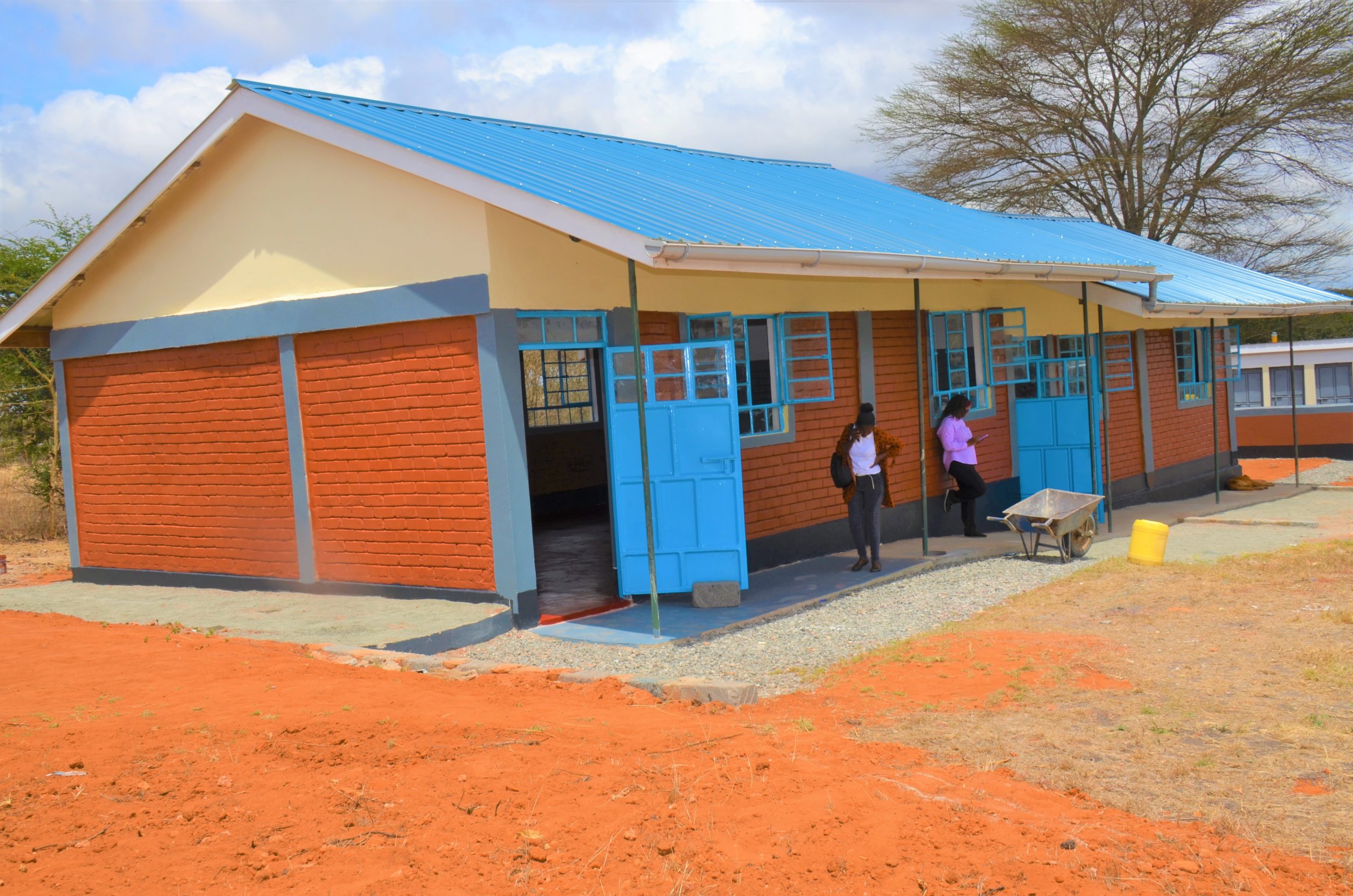
At Kalima Kathei near Makutano Junction (Kyumbi), Machakos County, ordinary red soil is being transformed into Interlocking Stabilized Soil Blocks (ISSBs), offering a cheaper and more environmentally friendly way to build classrooms and homes.
Habitat for Humanity Kenya showcased the technology during World Habitat Day, themed “Adequate Housing for All.”Unlike quarry stones, ISSBs can be made on-site using local soil, reducing transportation costs.
Charles Misao, a Construction Supervisor at Habitat for Humanity Kenya, says one bag of cement can produce 100 blocks.“You can actually bring soil at the site, then you produce on site.”The blocks require less cement, no joint mortar and little or no external plastering, helping reduce construction costs and carbon emissions.
The approach also creates employment for local artisans, whom Habitat for Humanity trains and supports with manual block-pressing machines.ISSB buildings can also offer better thermal comfort.
The technology comes amid growing housing pressures in Kenya, where a 2026 Habitat for Humanity report found that 89 per cent of respondents had cut back on at least one expense to afford housing, while 55 per cent worried an unexpected problem could threaten their ability to remain housed.
For Irene Mwongeli Wayua, the technology has translated into something much more personal a home.Irene, a single mother supporting her two children and her mother, who was born deaf and dumb,through casual work, had been living in a vulnerable house whose roof leaked and walls weakened before eventually collapsing during heavy rains.
“With little financial capacity to rebuild, my family faced the uncertainty of living without adequate shelter,” she said Habitat for Humanity stepped in and constructed a new house for the family using the same approach to affordable construction.The new home has given Irene and her family safer and more stable shelter, particularly as communities prepare for periods of heavy rainfall and flooding.
At Kalima Kathei Preschool, two new ECD classrooms have replaced the cramped space previously shared by PP1 and PP2 learners.
Headteacher Jacinta Nduku Musyoka, who has taught at the school for 26 years, recalls the difficulties teachers faced.
“PP1 and PP2 were learning under one roof. It was difficult for teachers because one class had to wait while the other was being taught.”Parent Sherine Makau recalls that the old classrooms were overcrowded, forcing teachers to take turns during breaks.
The new classrooms now provide a safer and more suitable environment for learning and play.Pastor Elizabeth Makau of Africa Brotherhood Church says the school was established in 1999 because children had to walk long distances to access education.
“The classrooms were very cramped, making it difficult for teachers to reach individual students and causing noise disruptions.”She says the new classrooms will allow the school to accommodate more learners.
Habitat for Humanity is working with county governments and TVET institutions to promote appropriate building technologies and train more young people.
As construction costs continue to rise, the humble soil block is emerging as more than just an alternative building material. At Kalima Kathei, it has become a tool for creating classrooms, supporting livelihoods and for families such as Irene’s, turning the dream of a decent home into reality.