
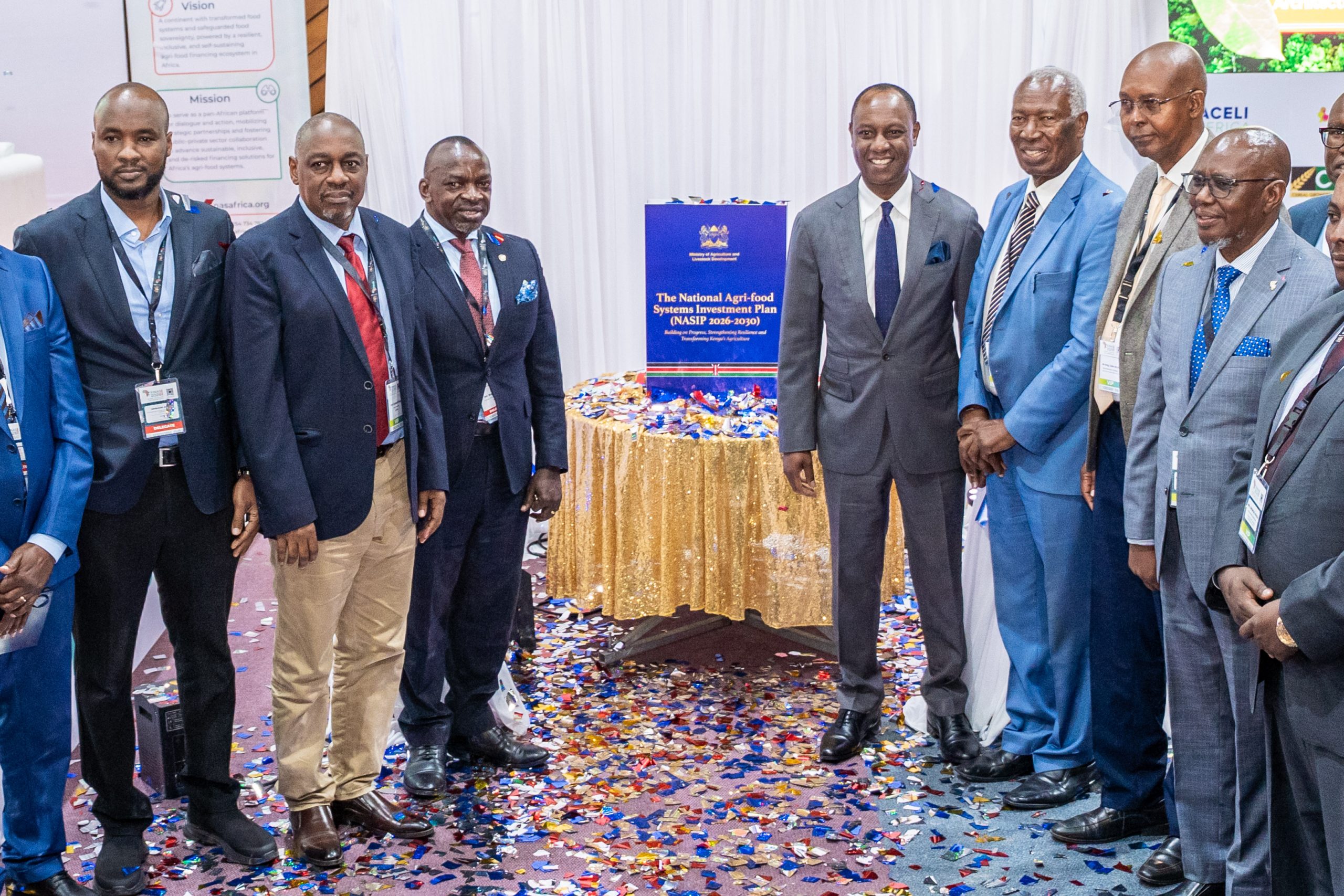
Livestock Development Principal Secretary Jonathan Mueke (4th left) joins stakeholders and partners for a group photo during the official launch of the National Agri-food Systems Investment Plan (NASIP) 2026–2030 at the FINAS 2026 Summit held at the Kenyatta International Convention Centre (KICC), Nairobi.
NAIROBI, June 30, 2026 — Kenya has unveiled the National Agri-food Systems Investment Plan (NASIP) 2026–2030, a Sh1.081 trillion investment blueprint aimed at transforming the country’s agricultural sector through increased financing, enhanced food security and stronger public-private partnerships.
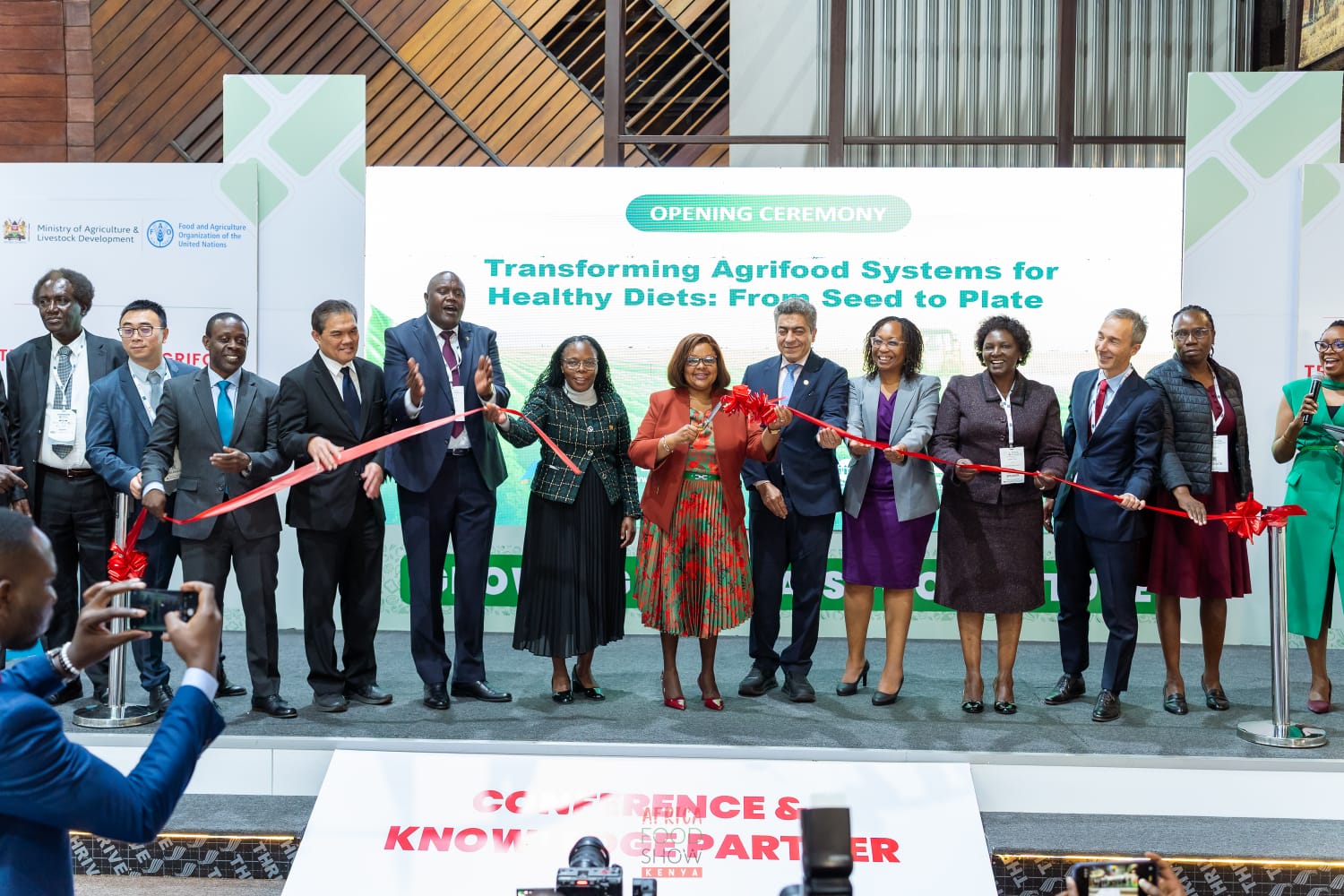
The five-year plan was launched during the opening of the 2026 Financing Agrifood Systems Sustainably (FINAS) Summit at the Kenyatta International Convention Centre (KICC), bringing together policymakers, development partners, financial institutions, researchers, farmers and private sector players to explore sustainable financing solutions for Africa’s agri-food systems.
Speaking on behalf of Cabinet Secretary for Agriculture and Livestock Development Sen. Mutahi Kagwe, Principal Secretary for Livestock Development Hon. Jonathan Mueke said agriculture remains the backbone of Kenya’s Bottom-Up Economic Transformation Agenda but continues to face a financing gap that has hindered implementation of key programmes.
“We have always developed good plans, policies and strategies to increase agricultural production, increase productivity and strengthen the entire agricultural value chain, but there has always been a glaring gap, which is financing. NASIP provides a clear financing path to ensure these plans are implemented,” Mueke said.
He said the investment plan will channel more than Sh1 trillion into priority value chains over the next five years, targeting crops, livestock, fisheries, irrigation, agro-industrialisation, climate resilience, digital agriculture and agricultural finance.
Mueke noted that the government is prioritising key value chains under the Bottom-Up Economic Transformation Agenda, including tea, rice, edible oils, macadamia, leather, meat and dairy, while expanding access to affordable credit through the Agricultural Finance Corporation (AFC), Savings and Credit Cooperative Organisations (SACCOs) and other financing mechanisms.
“This investment is not simply about financing agriculture. It is about financing Kenya’s future by strengthening food security, creating more than two million jobs, increasing farmers’ incomes and positioning Kenya as a competitive regional hub for sustainable agricultural investment,” he added.
FINAS Summit and Dialogue Director Charity Lutegi said the annual forum was established to address longstanding challenges in financing Africa’s food systems by focusing on practical and sustainable solutions rather than policy discussions alone.
“We do not want to be labelled a talk show. We want to transition the conversation on food systems financing into action through partnerships and by ensuring that recommendations from this dialogue are implemented,” Lutegi said.
She said this year’s summit will focus on policy reforms, innovative financing models, de-risking agricultural investments, strengthening collaboration between governments and financial institutions, and developing bankable investment opportunities capable of attracting private capital.
Lutegi welcomed the launch of NASIP, describing it as one of the key achievements of the FINAS dialogue process.
“Kenya is among the first countries to develop a national investment instrument aligned with the Kampala Declaration, and we expect this framework to strengthen accountability while accelerating investment in the country’s agri-food systems,” she said.
Representing development partners, General Coordinator of the Secretariat of the Coalition for Africa Rice Development (CARD), Takanori Satoyama, said NASIP was the result of more than three years of consultations involving government ministries, county governments, farmers, pastoralists, fisherfolk, women, youth, researchers, private sector players and development partners.
“NASIP is the product of extensive consultations and collective efforts to ensure it addresses the needs of all stakeholders while strengthening Kenya’s resilience against emerging challenges, including climate change, pandemics and global economic shocks,” Satoyama said.
He commended the Ministry of Agriculture and Livestock Development, the Agriculture Transformation Office, technical experts and development partners for developing an investment framework aligned with the Kampala Declaration and Africa’s agricultural transformation agenda.
“The launch marks the end of one journey but the beginning of implementation, which is even more important. Development partners remain committed to supporting the Government of Kenya in translating this investment plan into tangible benefits for farmers and the wider economy,” Satoyama said.
The three-day FINAS Summit is expected to strengthen partnerships among governments, investors, financial institutions and development partners while generating practical financing solutions to accelerate sustainable agricultural transformation across Africa.