

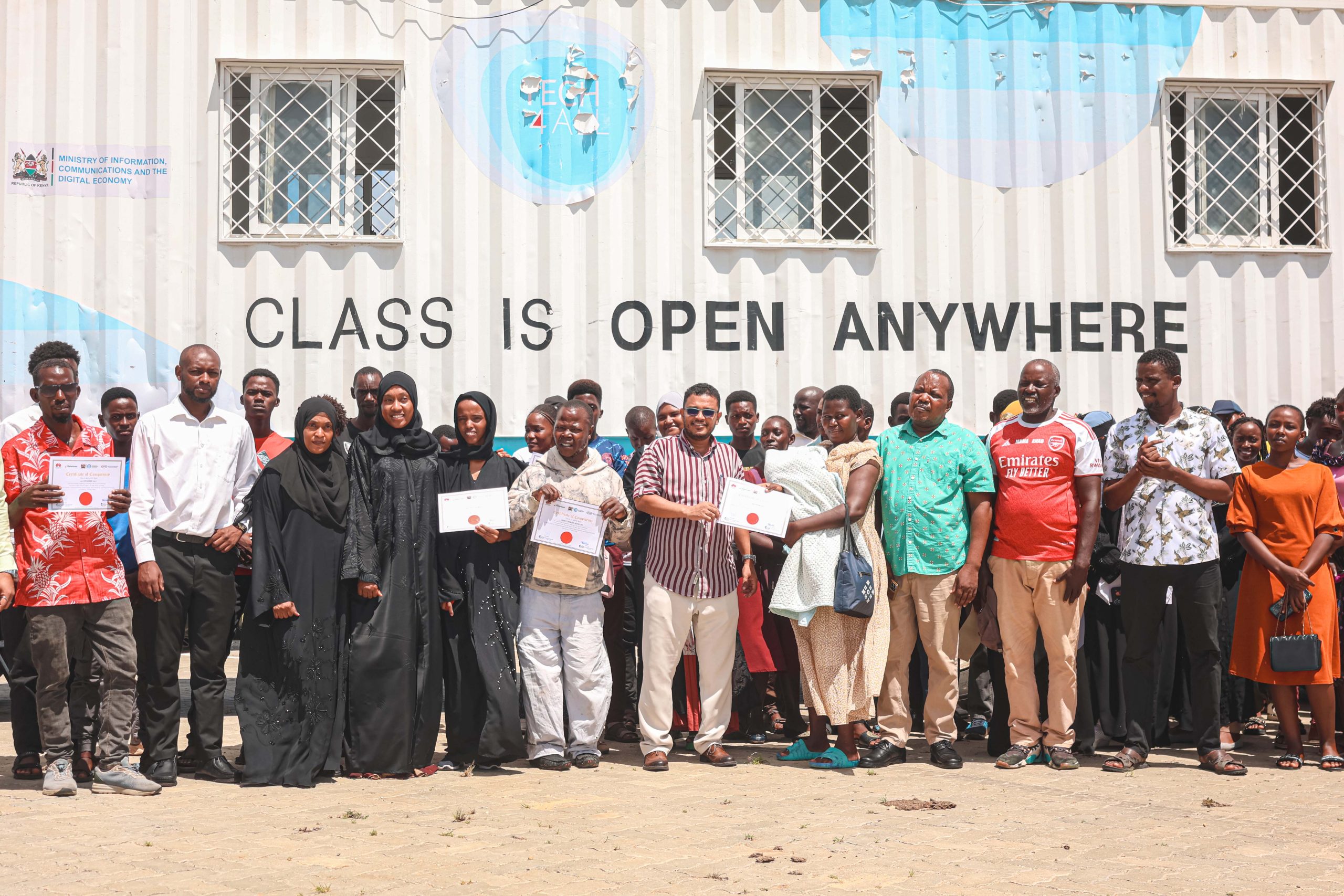
Center, in a striped shirt: H.E. Dr. Mbarak Bahjaj, Deputy Governor of Lamu County presents a Certificate of Completion to Rose Waithera during the DigiTruck Graduation at Mokowe, Lamu. Rose, a new mother, successfully completed the training despite delivering during the course of the five-week programme was also recognized for her resilience and commitment.
MOKOWE, May 11, 2026 — More than 140 youths graduated from the Huawei DigiTruck Programme in Lamu County, with leaders and beneficiaries praising the initiative for expanding digital literacy and creating opportunities for underserved communities.
The event brought together youth from across Lamu, highlighting growing demand for digital skills training in coastal regions in 2026.
Speaking during the graduation ceremony held at the Mokowe Kenya Maritime Authority Command Centre, Lamu Deputy Governor Dr. Mbarak Bahjaj said the programme was helping bridge the digital skills gap among young people in the county.
“By equipping Lamu’s youth with practical digital knowledge and modern ICT competencies, this initiative is opening pathways to innovation, entrepreneurship and meaningful participation in the digital economy,” said Bahjaj.
He noted that the programme was empowering local communities through access to digital opportunities and inclusive growth.
The programme also aligns with Kenya’s broader digital economy agenda aimed at empowering youth through technology and innovation programmes across counties.
Huawei Kenya Public Affairs and Media Director Khadija Mohammed commended the graduates for their determination and encouraged them to apply the skills acquired during the training to improve their livelihoods.
“Digital literacy and skilling are critical enablers for youth to actively participate in the digital and knowledge economy. Through opportunities such as online jobs, e-commerce and digital entrepreneurship, young people can unlock new pathways to income generation and self-reliance,” she said.
Khadija affirmed Huawei’s commitment to supporting Kenya’s digital transformation agenda through partnerships aimed at increasing access to digital learning in remote areas.
“At Huawei, we believe that technology and digital literacy form the foundation of a thriving digital economy. By investing in programmes like DigiTruck, we aim to support youth from historically underserved communities like Lamu to actively participate in Kenya’s digital future,” she added.
The company noted that partnerships with government and NGOs remain central to expanding connectivity and access to digital education nationwide.
Among the graduates was Rose Waithera, a young mother who joined the five-week training programme while pregnant and later returned after giving birth to complete the course.
“Joining the Huawei DigiTruck programme gave me hope and confidence for my future. During the training period, I delivered my baby but returned to continue learning because I did not want to miss this opportunity,” said Waithera.
She described graduating while carrying her newborn baby as a proud moment for her family, adding that travelling daily by two boats from Manga to Mokowe was worth the sacrifice.
Her story resonated with many participants who saw her perseverance as highly inspiring and motivational.
Also recognised during the ceremony was Simon Murimi, a person living with disabilities affecting both his hands and legs, who attended all training sessions and successfully completed the programme.
“This programme has shown me that disability is not inability. Despite the challenges I face, I attended every session because I believe these digital skills will shape my future,” Murimi said.
His success was widely celebrated by peers who viewed him as a symbol of resilience.
The DigiTruck Programme is implemented through a partnership between Huawei Kenya, the Lamu County Government and Computers for Schools Kenya to equip youth with practical ICT and digital literacy skills.
The Huawei DigiTruck, a solar-powered mobile digital classroom, has trained nearly 11,000 youths in 43 counties since its launch in 2019, including recent deployments in Wajir and Garissa counties. It continues to expand digital inclusion across Kenya’s underserved regions significantly.