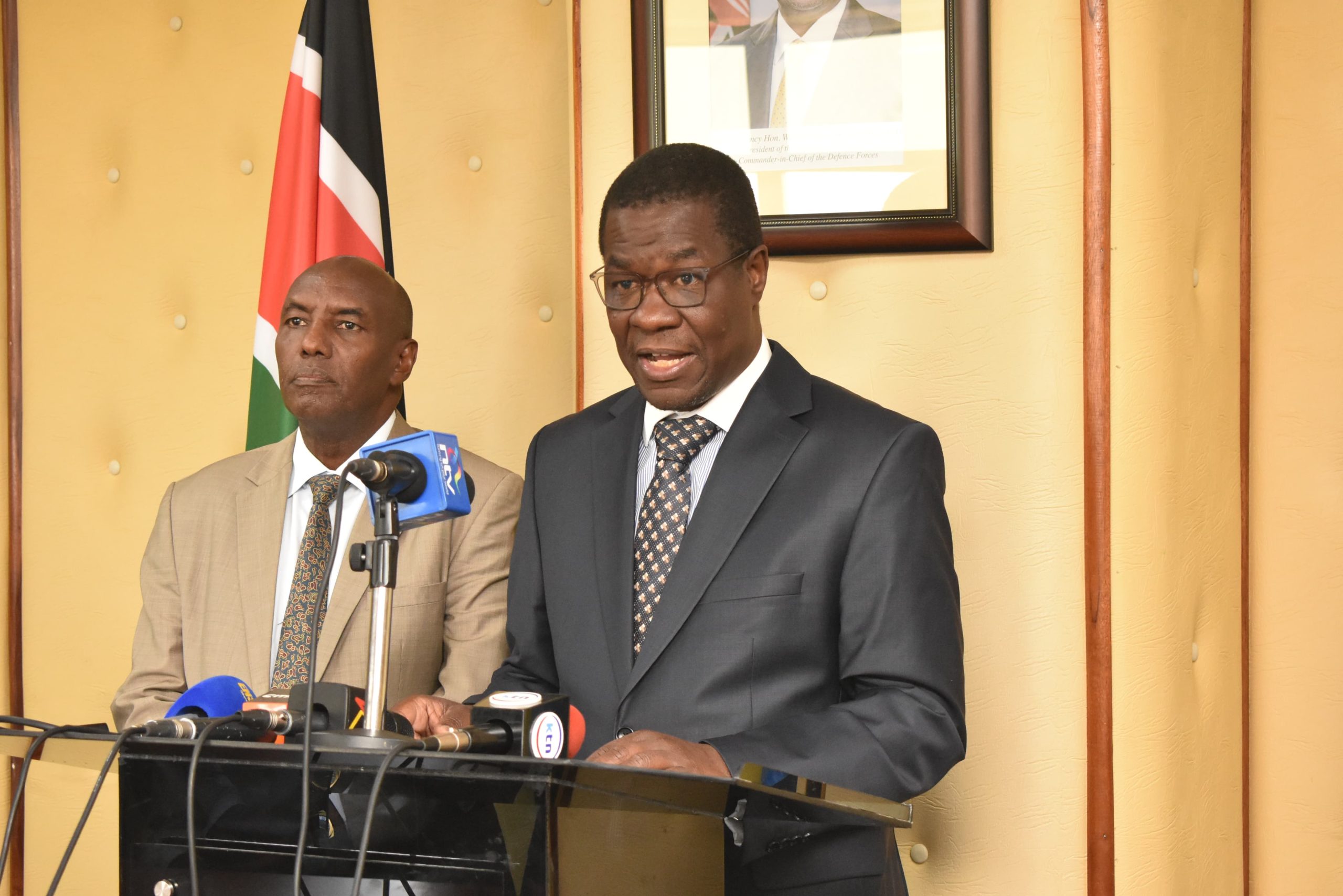

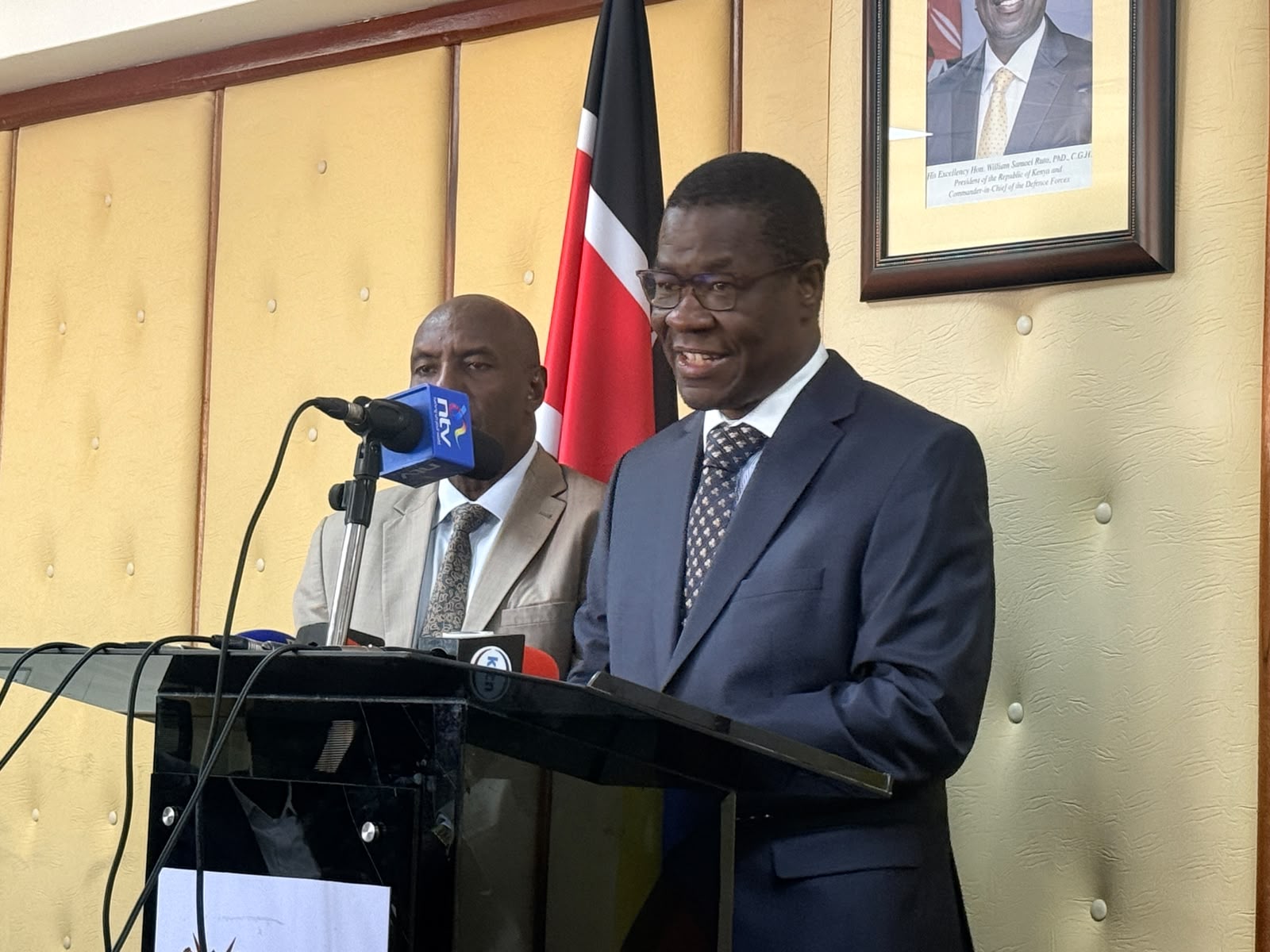
Energy and Petroleum Cabinet Secretary Opiyo Wandayi (right) addresses the media on the state of Kenya’s petroleum supply in Nairobi on July 14, 2026.
NAIROBI, July 14, 2026 – The government has assured Kenyans that the country has sufficient petroleum stocks and a stable fuel supply despite renewed geopolitical tensions in the Middle East that continue to disrupt global oil markets and shipping routes.
Speaking during a press briefing in Nairobi on Tuesday, Energy and Petroleum Cabinet Secretary Opiyo Wandayi said Kenya’s Government-to-Government (G2G) fuel import arrangement had enabled the country to maintain uninterrupted fuel supplies even as international markets remained volatile following renewed military escalation in the Middle East.
“The foremost objective of government has been to ensure a stable and uninterrupted supply of petroleum products. Under our Government-to-Government arrangement, every scheduled cargo has arrived on time, fuel has remained available across the country, and we have continued to source cargoes from alternative loading regions beyond the Gulf,” said Wandayi.
He explained that while the Strait of Hormuz has experienced repeated disruptions, causing uncertainty in international energy markets and increasing freight and insurance costs for spot market buyers, Kenya’s fixed freight and premium costs under the G2G framework have shielded consumers from the full impact of global price shocks.
“The arrangement is doing exactly what it was built to do. While international benchmark prices continue to fluctuate, the fixed freight and premium costs have kept Kenya’s landed fuel costs under control and allowed suppliers to source cargoes from alternative regions without passing the additional costs to Kenyan consumers,” he said.
Opiyo noted that although international oil prices have started rising again following renewed tensions in the Middle East, the government will continue working with industry players to safeguard fuel supplies, maintain the favourable terms of the G2G arrangement and keep the public informed of market developments.
To cushion households and businesses from global price increases, Wandayi announced that the government, in consultation with the National Treasury, has extended the application of the eight per cent Value Added Tax (VAT) on petroleum products for a further three months until October 14, 2026.
He further announced that the government will deploy Sh945 million from the Petroleum Development Levy during the July-August 2026 pricing cycle to sustain current pump prices and minimise the impact of rising international oil prices.
“As part of our commitment to protecting consumers and supporting businesses, the government has extended the eight per cent VAT application period on petroleum products and will deploy Sh945 million from the Petroleum Development Levy to sustain the current fuel prices,” Wandayi said.
The CS reaffirmed that Kenya has adequate national fuel stocks, a resilient import and distribution system and strengthened energy security through strategic investments made over the past few years.
He assured motorists, manufacturers, farmers, transport operators, investors and other consumers that the government would continue implementing measures to guarantee reliable fuel supplies while protecting the economy from external shocks.