

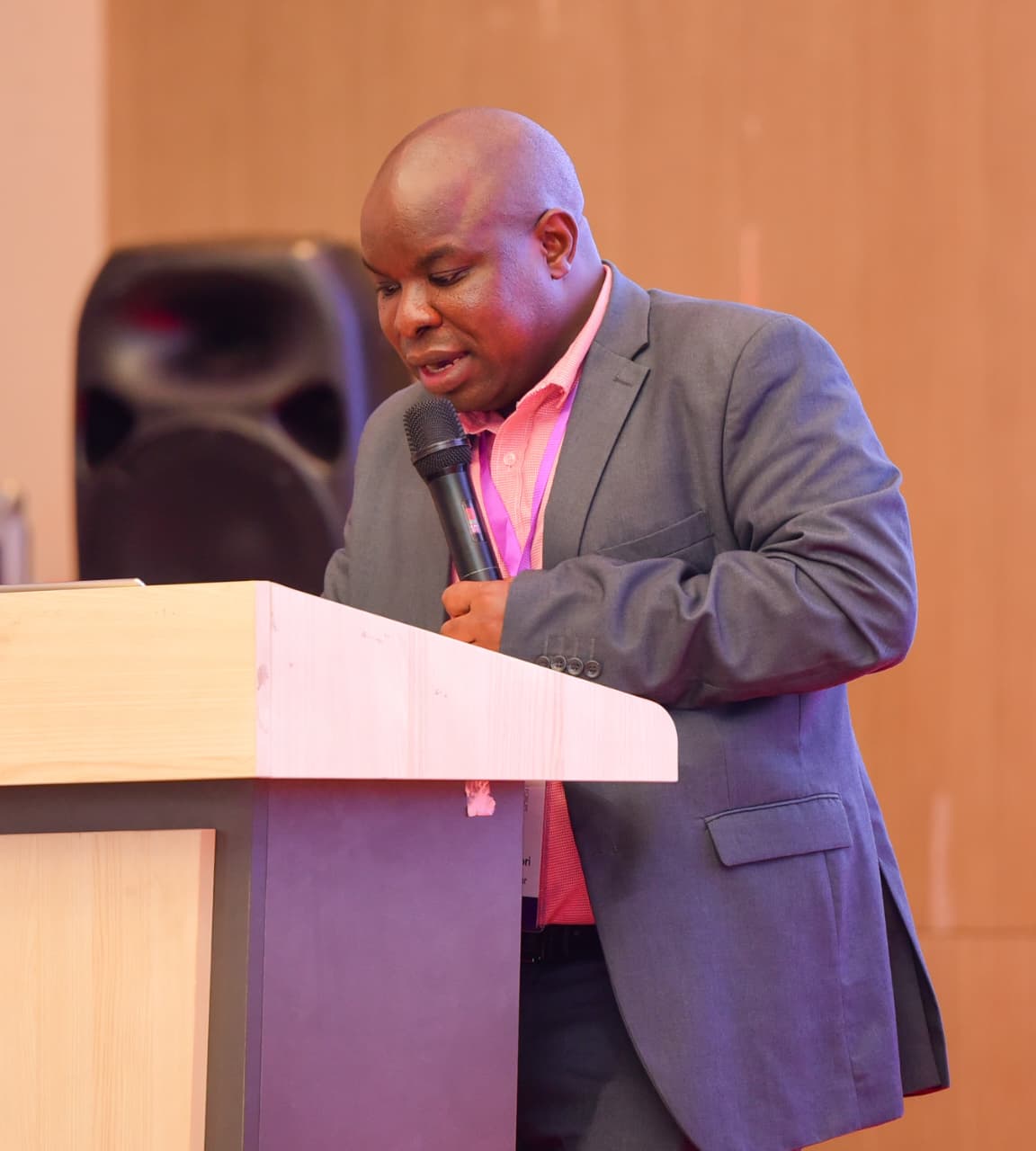
Photo Caption:Assistant Labour Commissioner, Child Labour Division at the Ministry of Labour and Social Protection, Artlibert Makori, speaks during the 2026 Freedom from Slavery Global Forum in Nairobi on October 5, 2026.
NAIROBI, Oct. 5, 2026 — The 2026 Freedom from Slavery Global Forum opened in Nairobi Monday with calls for stronger protection of survivors, greater accountability and coordinated action to address the systems that enable modern slavery.
The two-day Forum, convened by Free the Slaves under the theme “Freedom in a Changing World: Strengthening Protection, Accountability and Transforming the Systems Behind Modern Slavery,” has brought together government representatives, people with lived experience of modern slavery, civil society organisations, business leaders, academics and international experts.
Speaking during the opening of the Forum, Artlibert Makori, Assistant Labour Commissioner, Child Labour Division at the Ministry of Labour and Social Protection, said Kenya remained committed to eliminating forced labour, modern slavery, human trafficking and child labour.
“As an Alliance 8.7 Pathfinder Country, Kenya remains committed to accelerating action towards eliminating forced labour, modern slavery, human trafficking and child labour through stronger labour inspection, social protection, responsible business conduct, access to justice and meaningful engagement of survivors and communities,” Makori said.
Makori said poverty, conflict, climate change, irregular migration, unethical recruitment and misuse of technology were increasingly contributing to vulnerabilities to exploitation, requiring coordinated national, regional and international responses.
He said Kenya was strengthening Bilateral Labour Agreements and cooperation with destination countries to improve recruitment procedures, protect wages and contracts, expand access to grievance mechanisms and strengthen safeguards against trafficking and forced labour.
“Ethical recruitment and accountability must remain at the heart of the labour migration journey,” he said.
The Forum comes amid persistent global concerns over modern slavery, with an estimated 50 million people living in the practice on any given day in 2021, according to the Global Estimates of Modern Slavery 2022 produced by the International Labour Organization, Walk Free and the International Organization for Migration.
In Kenya, the Global Slavery Index 2023 estimates that 269,000 people were living in modern slavery, equivalent to five in every 1,000 people.
The National Council on Children’s Services has separately estimated that 17,500 Kenyans are trafficked annually, with half likely to be minors.
Bukeni Waruzi, Executive Director of Free the Slaves, said the scale of modern slavery required stakeholders to work together to identify solutions that address vulnerabilities within communities.
“We know that modern slavery is very prevalent in many communities and around the world and no one can do this alone,” Waruzi said.
Waruzi said poverty, corruption, climate change, migration and misuse of technology were among factors contributing to modern slavery, urging governments, businesses, civil society and survivors to strengthen cooperation and translate policies into action.
He said the Forum was providing an opportunity for stakeholders from different sectors to share approaches, build partnerships and strengthen responses to exploitation.
Survivor participation is also a central focus of the Forum. Shamere McKenzie, Chief Executive Officer of Sun Gate Foundation, survivor leader and co-chair of the Forum, said people with lived experience should have a meaningful role in shaping policies and solutions affecting survivors.
“As a survivor leader, I know what it feels like to have decisions made about your life without your voice ever being part of the conversation,” McKenzie said.
She said the Forum had affirmed that survivors’ lived experience was expertise and strengthened commitments to enable survivor leaders to participate in decisions that will shape the future of the movement.
Meanwhile, Ambassador John Richmond, Chief Impact Officer at Atlas Free and former US Ambassador-at-Large to Monitor and Combat Trafficking in Persons, said traffickers were taking advantage of new technologies, including the internet and generative artificial intelligence.
Richmond said technology could also be used to identify traffickers, establish who they were exploiting, provide services to victims and strengthen accountability.
“The people of good will can also use technology to find the traffickers, figure out who they are exploiting, provide care and services to those victims and hold the traffickers accountable,” Richmond said.
He called for greater political will and resources to combat trafficking, saying prevention and enforcement required the involvement of communities, law enforcement, businesses, educators and health institutions.
The Forum continues Tuesday with discussions on responsible business and supply-chain regulation, ethical recruitment, survivor leadership, recovery, forced marriage, child domestic work, refugee trafficking risks and technology-facilitated trafficking.
Participants are also expected to advance the Principles for Aligned Action to End Modern Slavery, aimed at strengthening a coordinated response that centres lived-experience expertise, reinforces accountability and translates shared priorities into sustained action.