
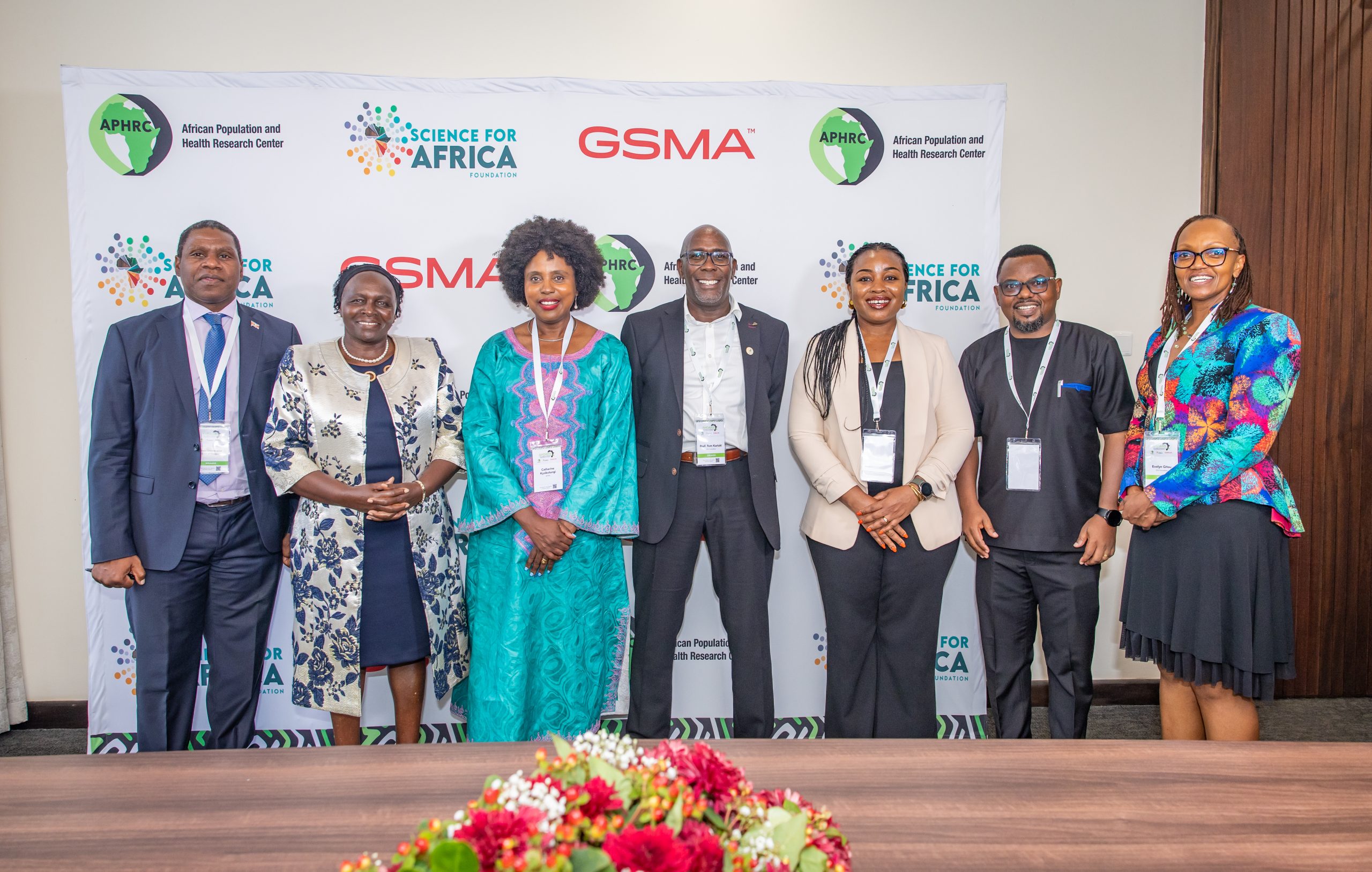
Photo caption: Stakeholders during the launch of the Africa Evidence Outlook report at the 3rd Africa Health and Development Annual Research Symposium in Nairobi.
NAIROBI, November 11,2026 – African governments and research institutions have been urged to strengthen investment in data governance, digital infrastructure and local research capacity to safeguard the continent’s ownership of knowledge systems amid growing demand for data driven by artificial intelligence (AI).
A new report, the Africa Evidence Outlook, warns that despite progress in developing policies and regulatory frameworks for data and AI, African countries risk losing control of their knowledge assets unless they establish sustainable systems for managing, financing and utilising data.
Speaking during the launch of the report at the 3rd Africa Health and Development Annual Research Symposium (AHDARS) in Nairobi, African Population and Health Research Center (APHRC) Executive Director Dr. Catherine Kyobutungi said African countries must move beyond policy commitments and translate existing frameworks into practical systems that safeguard the continent’s data ownership and sovereignty.
“Africa is clear on its future data direction relooking at data governance, ownership and sovereignty. We as Africans need to turn Africa data commitments into reality including the Malabo Convention, the AU Data Policy Framework, and the continental AI strategy,” she said.
Kyobutungi noted that ownership of data would determine who controls the technologies and knowledge developed from African research and on whose terms they are deployed.
The report, produced through an analysis of data and knowledge portfolios of APHRC, the Science for Africa Foundation (SFA Foundation) and GSMA, examines more than 20 systems across health, education, genomics, research data and AI.
Unveiled under the theme “Building African-Centered Data and Knowledge Systems: Pathways to New Models and New Power,” it notes that many African data systems remain dependent on short-term projects, external funding and infrastructure beyond the continent’s control, limiting their long-term sustainability.
The report further identifies gaps in implementing continental data governance frameworks, including the Malabo Convention and the African Union Data Policy Framework, citing inadequate financing, limited technical capacity and insufficient digital infrastructure.
Africa contributes approximately 2.8 per cent of global scientific knowledge but holds less than one per cent of the world’s computing capacity. Evidence reviewed from 67 institutions across 28 countries also revealed significant constraints in data storage, software, internet connectivity and reliable energy.
Despite the challenges, the report highlights initiatives demonstrating how African institutions can retain control of sensitive information while facilitating international research collaboration.
Among them are the African Population Cohorts Consortium (APCC) and the Data Architecture Systems and Standards for APHRC (DASSA), which enable researchers to analyse data without necessarily transferring sensitive datasets outside their institutions or countries.
SFA Foundation Chief Executive Officer Dr. Tom Kariuki said data sovereignty should focus on controlling access and use rather than restricting the movement of information.
“Data sovereignty in Africa is not about restricting data movement but rather setting the terms of access, use, and sharing,” he said.
Kariuki added that such arrangements allow researchers across different jurisdictions to collaborate while ensuring African institutions retain authority and accountability over their data.
The report proposes eight interventions to strengthen African ownership of research and knowledge systems, including increased investment in digital infrastructure, improved data discoverability and stronger institutional financing models.
It also calls for locally generated data to be used in testing and validating AI tools and digital systems deployed in health and public services to ensure they respond to African needs and contexts.
GSMA Head of Africa Angela Wamola said sustainable digital health systems required more than technological solutions, emphasising the importance of strong institutions, supportive policies, skilled personnel and trusted systems.
“Sustainable digital health needs more than technology. It requires strong institutions, enabling policy, skilled people and trusted systems,” she said.
Wamola said the Digital Health Index supports African governments in identifying gaps and directing investments towards strengthening health systems and improving access to quality healthcare.
The report calls on governments to prioritise data and knowledge infrastructure, universities and research institutions to strengthen local expertise, technology companies to develop context-responsive solutions and development partners to provide sustained and flexible financing.
It emphasises that Africa’s ability to benefit from the growing value of AI will depend on its capacity to own, govern and effectively utilise the data and knowledge generated within the continent.